 Everett
 Composite Decking in North Everett: Built for the Weather We Actually Get
North Everett sits close enough to the water that homes here deal with a different set of conditions than decks built inland. Salt-tinged air off Puget Sound, long stretches of driving rain from fall through spring, and a moss season that can run six months or more all work against a deck that isn't built or maintained correctly. Composite decking has become the go-to choice for a lot of homeowners in this part of Snohomish County precisely because it handles those conditions better than wood does — but "composite" isn't a single product, and installing it correctly in this climate takes more than screwing boards to joists.
This page covers what we look at when we're building or replacing a deck for a North Everett home specifically: the drainage details, the fastening choices, the substructure decisions, and the maintenance reality that actually matters here.
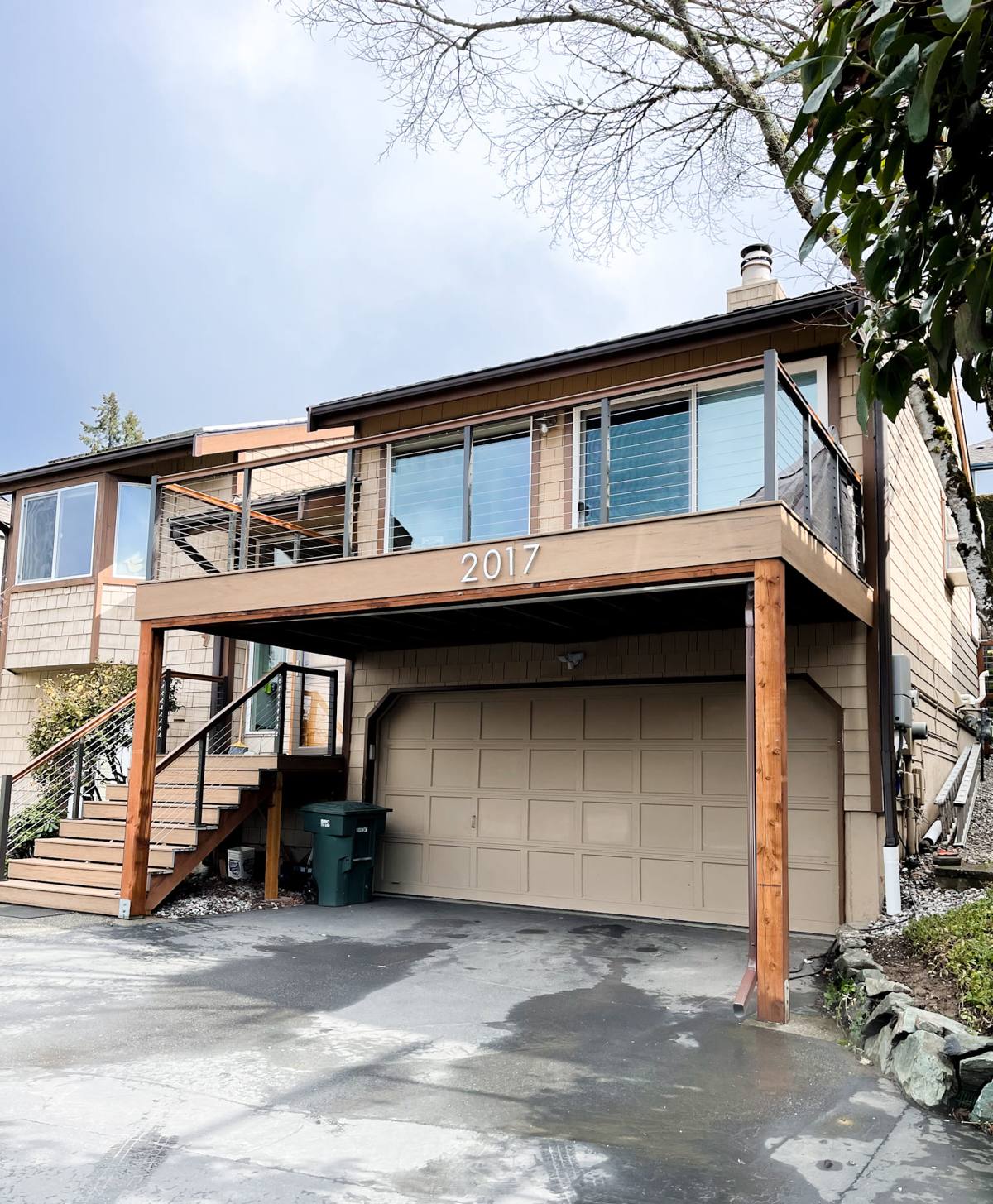
What North Everett's Climate Does to a Deck
Every deck in Western Washington deals with rain. North Everett decks deal with rain plus a few extra variables that push the maintenance and durability equation in a specific direction.
Salt Air and Moisture
Homes closer to the water pick up airborne salt that accelerates corrosion on exposed metal fasteners and hardware. It doesn't rot composite boards the way it can degrade untreated wood, but it does mean the fasteners, brackets, and any exposed structural hardware need to be rated for it. Standard interior-grade screws or under-spec'd connectors will corrode faster near the water than they will a few miles inland.
Driving Rain
Wind-driven rain off the Sound doesn't just fall straight down — it gets pushed sideways into ledger connections, under rail posts, and into any gap where flashing was skipped or done casually. A deck that's technically "waterproofed" on paper can still take on water at the house connection if the flashing detail wasn't built for rain coming in at an angle.
Moss and Algae
Shaded, damp conditions for much of the year mean moss and algae growth is a near-constant issue on any exterior surface that holds moisture, including decking. Composite boards vary a lot in how well they resist this — surface texture, cap technology, and board spacing all affect how fast a deck greens up and how hard it is to clean once it does.
Why Composite Makes Sense Here — With Honest Caveats
Composite decking doesn't rot, doesn't need annual staining, and resists the freeze-thaw and moisture cycling that's hard on wood in this climate. For a lot of North Everett homeowners, that's the whole appeal: less upkeep, more consistent appearance year to year. But composite isn't maintenance-free, and it isn't immune to the local climate — it just fails differently than wood does if it's installed wrong.
- Moisture doesn't rot composite, but poor drainage still causes problems — standing water under boards can lead to mold, staining, and in some products, board swelling at cut ends that aren't properly capped or sealed.
- Not all composite is equally moss-resistant — cheaper, more porous boards can actually hold moisture and grow algae faster than a well-sealed wood deck would in the same spot.
- Color and heat matter more here than people expect — darker boards in a mostly-overcast climate still absorb enough heat on the rare sunny day to matter for bare feet, and lighter colors show less of the pollen and organic debris common under our tree cover.
- Substructure still has to be built for our conditions — composite decking is only as good as what's underneath it, and that framing is still wood or metal that needs to be protected from the same rain and moisture the composite is resisting.
What a Correct Composite Deck Build Involves
A composite deck that holds up in North Everett isn't just about the boards. Most of the problems we get called out to fix on other contractors' composite decks trace back to the substructure and the details, not the decking material itself.
Ledger Board and House Connection
Where the deck attaches to the house is the single most important waterproofing detail on the whole project. That connection needs proper flashing that directs water out and away from the house framing, not just a bead of caulk behind the ledger board. Given the amount of driving rain North Everett gets, we treat this detail as non-negotiable regardless of what decking material sits on top.
Joist Protection
Composite boards resist moisture, but the joists underneath are typically still pressure-treated lumber. Joist tape or a comparable protective barrier over the top of each joist keeps water from sitting in fastener holes and wicking into the wood over time — a detail that's easy to skip and hard to notice until the substructure starts failing years later.
Ventilation and Drainage Under the Deck
Composite decking needs airflow underneath it to shed the moisture that inevitably gets between and under boards during our wet months. Decks built low to the ground, or built without attention to slope and drainage, hold moisture longer and are more prone to the mold and staining issues that give composite decking a bad reputation when it's really an installation issue.
Fastening Method
Hidden fastener systems give a cleaner look and, done right, reduce the surface penetrations where water and grime collect. Face-screwing is sometimes the more practical or cost-effective choice depending on the board profile and layout. Either way, the hardware needs to be corrosion-resistant given the salt air this close to the water.
Board Layout and Cutting
Cut ends of composite boards expose the core material, which is more absorbent than the capped surface. Every cut end that isn't hidden in a fascia board or properly finished is a potential moisture entry point. Careful layout planning minimizes exposed cuts, and any that remain get properly treated or capped.
Comparing Composite Decking Options
Composite decking spans a wide range of quality and price, and the differences matter more in a wet, moss-prone climate than they would somewhere drier. Here's a general breakdown of how the common tiers stack up for a North Everett install:
| Factor | Entry-Level Composite | Mid-Tier Capped Composite | Premium Capped Composite |
|---|---|---|---|
| Moisture resistance | Moderate — more porous core | Good — full or partial cap | Excellent — full cap, engineered core |
| Moss/algae resistance | Lower, textured surfaces hold grime | Improved surface texture | Best-in-class surface engineering |
| Fade resistance (overcast climate still fades) | Fair | Good | Very good, often longer warranty |
| Typical warranty | 10-15 years, limited | 25 years | 25-50 years |
| Upfront cost | Lowest | Mid-range | Highest |
We'll walk you through actual product options and current pricing during your estimate — the table above is meant to help you understand the trade-offs, not to quote a job sight unseen.
Our Process for North Everett Deck Projects
- On-site assessment. We look at drainage, sun/shade exposure, proximity to mature trees (a factor in moss and debris load), and the condition of any existing structure being replaced.
- Substructure evaluation. If we're replacing an existing deck, we check the ledger connection, joists, and footings before ever discussing decking material — a beautiful composite surface over a compromised substructure isn't a job we'll do.
- Material selection. We go over composite tiers, colors, and board profiles based on your budget and how the space will actually be used.
- Permitting. Deck projects in Everett and unincorporated Snohomish County often require permits depending on size, height, and attachment to the structure — we handle that process rather than leaving it on you.
- Build. Proper flashing, joist protection, ventilation, and fastening as outlined above — not shortcuts to save a day of labor.
- Walkthrough. We go over basic seasonal maintenance specific to our climate before we consider the job finished.
Maintaining a Composite Deck in a Moss-Prone Climate
Composite decking cuts down on maintenance dramatically compared to wood, but "low-maintenance" isn't "no-maintenance" — especially with a moss season as long as ours.
- Sweep off leaves, needles, and organic debris regularly in fall — trapped organic matter is what feeds moss and algae growth.
- Rinse the deck periodically through the wet months rather than letting grime build up over an entire winter.
- Use a soft-bristle brush and a cleaner rated for composite decking if moss does take hold — pressure washers on the wrong setting can damage the cap surface.
- Keep gutters and downspouts near the deck clear so runoff isn't dumping directly onto the deck surface or the ledger connection.
- Check railing posts and any structural hardware annually for corrosion, particularly if the home is within a mile or two of the water.
Why Hire a Crew That Already Works in North Everett
A deck built to a generic national spec sheet doesn't account for what North Everett actually throws at it. Crews who work this area regularly know which composite products actually resist moss versus which ones just claim to, what flashing details hold up against wind-driven rain off the Sound, and how to plan drainage and ventilation for a climate that stays damp for months at a time. That local experience shows up less in what a deck looks like on installation day and more in how it performs three, five, and ten winters later.
We're not going to tell you every other composite deck in the area was built wrong — but we've replaced enough substructures under decks that looked fine on the surface to know that the details underneath matter as much as the boards on top, especially here.
Get a Straight Answer on Your North Everett Deck Project
If you're weighing composite decking for a home in North Everett, we're glad to come take a look, walk through your specific site conditions, and give you a straightforward assessment — no pressure, no upsell script. Use the form below to request a free estimate.