 Everett
 Roof Replacement Built for North Everett's Weather
North Everett sits close enough to Puget Sound and the Snohomish River delta that salt-laden air, wind-driven rain, and shade-heavy lots are just part of owning a home here. A roof that would hold up fine in a drier inland climate can wear out early on this side of the county if it wasn't installed with these conditions in mind. When we replace a roof in North Everett, we're not just swapping old shingles for new ones — we're building a system that's meant to handle salt air corrosion on metal components, sustained wind-driven rain, and months of shade and moisture that feed moss and algae growth.
This page covers what a proper roof replacement looks like for this specific area: the failure patterns we see most often on North Everett roofs, what materials and details actually matter here, and how our process works from first look to final walk-through.
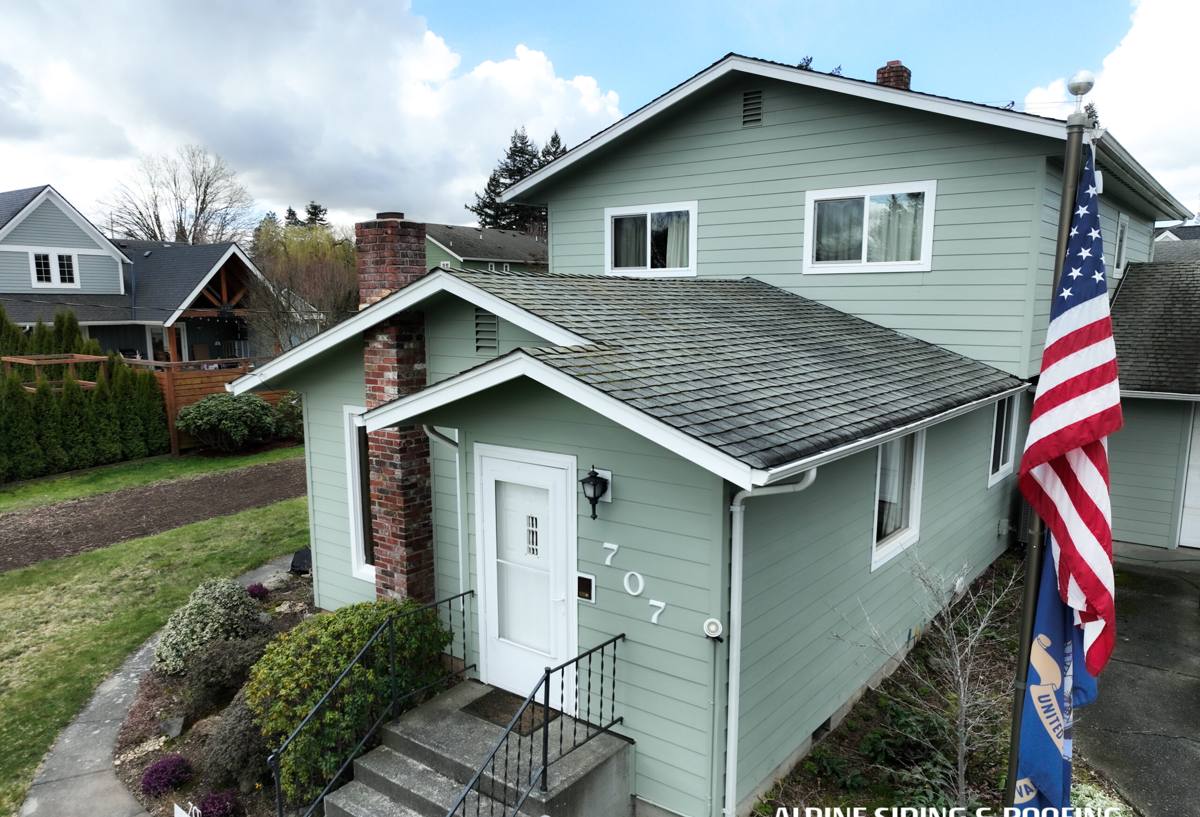
Why North Everett Roofs Wear Differently
Salt Air and Metal Fatigue
Proximity to Puget Sound means airborne salt settles on everything, including roofs. Over years, that salt content accelerates corrosion on unprotected metal flashing, fasteners, and vent components. A roof replacement that uses bare or lower-grade galvanized metal in these areas will show rust and pitting well before a comparable roof further inland. We spec corrosion-resistant metals and fastener coatings specifically because of this exposure, not as an upsell — it's a maintenance and longevity issue.
Driving Rain, Not Just Rain
Everett gets plenty of straightforward rainfall, but the wind off the Sound and through the valley often pushes rain sideways during storms. That matters because a roof only needs to shed water well when it falls straight down — driving rain tests every lap, seam, and penetration on the roof for its ability to resist water being forced upward or sideways under shingles and flashing. Underlayment coverage, flashing laps, and fastening patterns all need to account for that, especially at ridges, valleys, and anywhere the roof meets a wall or chimney.
Moss Season Is Most of the Year
Between shade from mature trees common in North Everett's older neighborhoods and a wet season that runs long, moss and algae have a lot of time to establish themselves. Moss holds moisture against the roofing material, works into shingle laps, and can lift edges over time — which is how a moss problem turns into a leak problem. A roof replacement is the best opportunity to build in real resistance to this, rather than fighting moss every year after the fact.
What a Correct Roof Replacement Includes
A full tear-off and replacement done right isn't just about the shingles on top. Here's what we consider non-negotiable on any North Everett roof:
- Complete tear-off to the deck — no roofing over existing layers, so we can actually see and fix what's underneath
- Deck inspection and repair of any rot, soft spots, or delamination before anything new goes down
- Ice-and-water shield or equivalent self-adhered membrane at eaves, valleys, and penetrations, sized for our rain patterns rather than the bare minimum code allows
- Synthetic underlayment across the full field, correctly lapped for wind-driven rain resistance
- Corrosion-resistant flashing at all walls, chimneys, skylights, and roof-to-roof transitions
- Proper intake and exhaust ventilation balance to manage moisture and reduce the damp, shaded conditions moss thrives in
- Fastening patterns matched to the manufacturer's high-wind specification, not just the standard pattern
Skipping any one of these doesn't always show up right away. It shows up in year four or five, usually as a leak that traces back to a shortcut nobody told the homeowner about.
Material Considerations for This Area
We install a range of roofing systems, and the right choice depends on the home, the budget, and how much moss and moisture resistance matters to the homeowner. Algae-resistant shingles (using copper or zinc granules) are worth the modest upcharge on most North Everett homes given how long moss season runs here. Metal roofing performs well against wind-driven rain and sheds moss more readily due to its smooth surface, but requires careful attention to fastener corrosion resistance and expansion detailing given the salt air. We're upfront about the maintenance trade-offs of each option rather than pushing whichever is easiest for us to install.
| Factor | Standard Asphalt Shingle | Algae-Resistant Shingle | Metal Roofing |
|---|---|---|---|
| Moss/algae resistance | Lower — needs regular cleaning | Higher — built-in resistance | High — smooth surface sheds debris |
| Wind-driven rain performance | Good with correct install | Good with correct install | Very good with correct seaming |
| Salt air / coastal exposure | Standard fasteners can corrode over time | Same as standard, upgraded fasteners recommended | Requires coated fasteners and panel spec rated for coastal use |
| Typical lifespan (installed correctly) | 20-25 years | 25-30 years | 40-50+ years |
| Upfront cost | Lowest | Moderate increase | Highest |
Signs a North Everett Roof Needs Replacing, Not Patching
Not every roof problem calls for a full replacement, and we'll tell you honestly when a repair is the right call. But there are signs that point toward the roof being past the point where patching makes financial sense:
- Granule loss heavy enough that you're finding shingle grit in gutters every season
- Moss growth that returns within months of cleaning, especially on north-facing slopes
- Multiple past repairs in different areas of the roof rather than one isolated spot
- Visible sagging along the roofline or soft spots when walked
- Daylight visible through the roof deck from the attic, or consistent moisture staining on rafters
- Shingles curling, cracking, or lifting at edges across large sections rather than a few isolated spots
If a roof is showing two or more of these, replacement is usually the more cost-effective path over the next several years compared to repeated repairs.
Our Process for North Everett Roof Replacements
1. On-Site Assessment
We walk the roof, check the attic for ventilation and moisture issues, and look at how the current roof has handled this property's specific exposure — tree cover, wind direction, slope orientation. This tells us what actually needs to change, not just what needs to be replaced.
2. Straight-Talk Estimate
We explain what we found, what we recommend, and why — including where a lower-cost option is reasonable and where we think it's a false economy given our climate. No pressure, no inflated urgency.
3. Tear-Off and Deck Repair
Full removal of the old roofing, deck inspected board by board, and any rot or damage repaired before anything new is installed. This is also when hidden issues from past leaks typically surface, and we'll show you what we find.
4. Installation to Spec
Underlayment, flashing, ventilation, and the roofing material itself installed to manufacturer specification and matched to this area's wind and moisture exposure — not the minimum needed to pass inspection.
5. Final Walk-Through
We walk the finished roof with you, cover what maintenance (if any) it needs going forward, and make sure gutters, downspouts, and drainage around the home are working with the new roof rather than against it.
Why a Locally Experienced Crew Matters Here
Roofing crews that mostly work drier, inland regions sometimes underestimate how much salt air and driving rain change the details that matter — flashing choices, fastener grade, ventilation balance, and how much algae resistance is worth paying for upfront. A crew that regularly works North Everett and the surrounding Snohomish County area has already seen which shortcuts fail here and which upgrades are actually worth it, rather than applying a one-size-fits-all approach built for a different climate.
That local experience also means we're not guessing about how a roof needs to perform through a Pacific Northwest winter storm cycle or a long, damp shoulder season — we're building for exactly that, because it's what we see year after year in this neighborhood.
Maintenance After Replacement
A new roof done right needs less maintenance than most homeowners expect, but a few habits extend its life meaningfully in this climate:
- Clean gutters at least twice a year, more often if there's heavy tree cover over the roof
- Have moss or algae growth treated early rather than left to spread, even on a resistant shingle
- Trim back overhanging branches to reduce shade, debris buildup, and physical damage risk
- Have the roof visually checked after any major windstorm
If your North Everett roof is showing its age or you just want an honest read on where it stands, we're glad to take a look. The estimate is free, there's no pressure, and you'll get a straight answer about whether replacement makes sense yet — use the form below to get started.