 Everett
 Siding Built for North Everett's Weather, Not Just Its Curb Appeal
North Everett sits close enough to Puget Sound and Port Gardner Bay that homes here take on a specific combination of punishment: salt-laden air drifting in off the water, wind-driven rain that hits siding sideways instead of straight down, and long stretches of grey, damp months where moss and algae get a real foothold on anything that stays wet. A siding installation done right in this neighborhood has to account for all three of those things at once, not just look good on install day. That's the standard we hold every North Everett project to.
This page covers what we actually do when we install siding on a North Everett home — the materials, the process, and the details that separate a job that lasts twenty-plus years from one that starts showing problems in five.
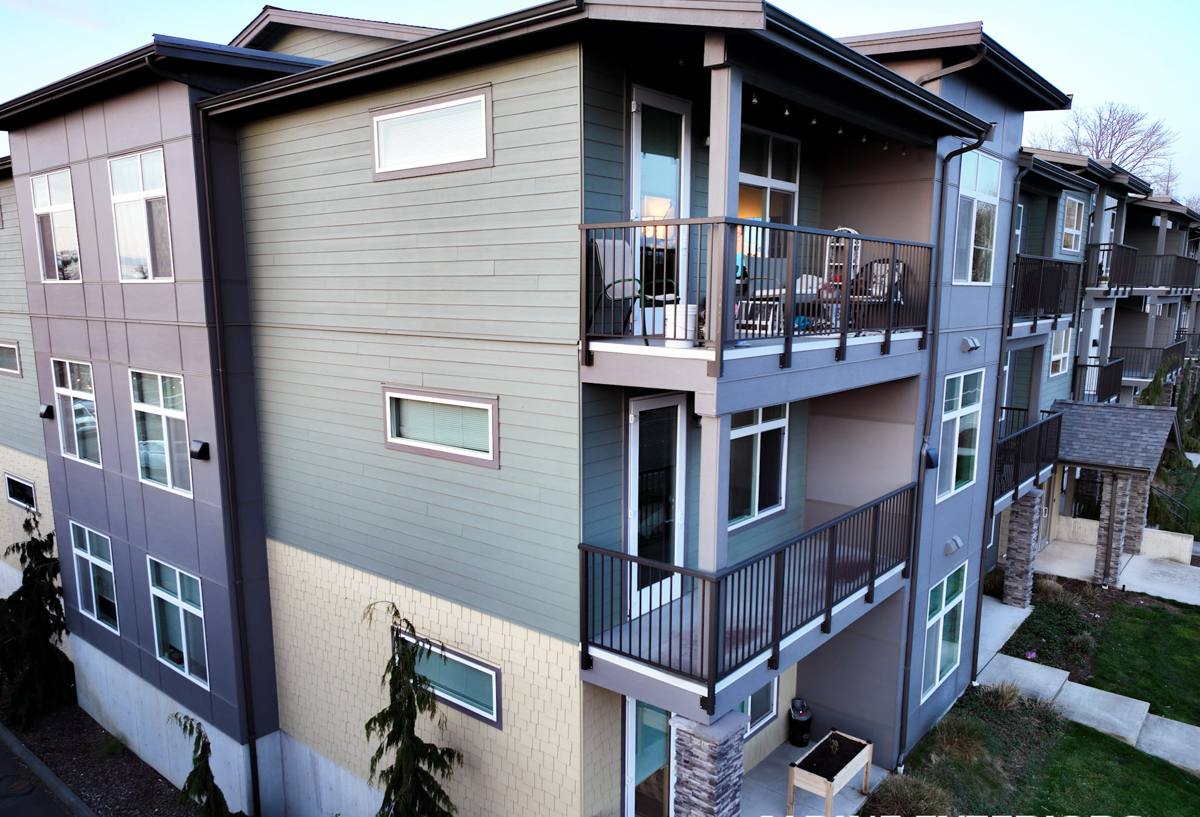
What Snohomish County's Climate Does to Siding Over Time
Every siding material reacts differently to sustained moisture exposure, and North Everett gets more of it than most inland Snohomish County neighborhoods because of its proximity to the water.
Salt Air
Airborne salt accelerates corrosion on fasteners, trim flashing, and any metal components in a siding system. It also breaks down cheaper coatings faster than manufacturers' lab tests in drier climates would suggest. Siding and trim need finishes and fastener specs that are actually rated for this kind of exposure, not just "exterior grade" in a generic sense.
Driving Rain
Wind off the Sound doesn't just drop rain on a roof — it pushes it horizontally into wall assemblies, seams, and butt joints. A siding system that relies on caulking alone to keep water out will eventually fail here. What matters more is the water-resistive barrier behind the siding, correct flashing at every penetration, and installation details that shed water rather than just resist it.
Moss and Algae Season
Everett's long wet season, especially October through April, means siding stays damp for extended stretches with limited direct sun to dry it out, particularly on north-facing walls — common in North Everett's tree-covered lots. Materials that absorb moisture into their core swell, cup, and eventually rot from the inside, and that damage often shows up under the paint long before it's visible from the street.
Why We Install Only James Hardie Fiber Cement
We made a decision as a company to install one siding system: James Hardie fiber cement. We don't install vinyl, LP SmartSide, primed wood, or cedar, and that's a deliberate standard, not a sales pitch. Fiber cement doesn't absorb water into a wood-fiber core the way engineered wood products can, and it won't warp, crack, or become brittle from repeated wet-dry cycling the way vinyl can over enough seasons in a coastal climate. It's also non-combustible, which matters increasingly to insurers and to homeowners thinking about long-term risk.
For a neighborhood dealing with salt air, driving rain, and a real moss season every single year, we think that trade-off is worth it. Hardie's HZ5 product line is engineered specifically for regions with this kind of moisture exposure, and the factory-applied ColorPlus finish holds color and resists the fading and chalking that field-applied paint struggles with over time.
What a Correct Siding Installation Actually Involves
The siding board itself is only part of the system. Most siding failures we see on older North Everett homes trace back to what's underneath or around the boards, not the boards themselves.
- Water-resistive barrier: A continuous, correctly lapped weather barrier behind the siding, with all seams taped or sealed per manufacturer spec.
- Flashing at every penetration: Windows, doors, hose bibs, vents, and light fixtures all need proper flashing so water is directed out and down, not behind the siding.
- Rainscreen or drainage gap: A gap between the siding and the water barrier lets any moisture that does get in dry out instead of sitting against the wall sheathing — especially important on the shaded, damp-prone sides of a home.
- Correct fastening: Fiber cement has specific nailing patterns and fastener types; over-driven or under-driven nails are one of the most common causes of premature siding problems.
- Proper clearances: Siding needs to sit above grade, decks, and roof lines by the manufacturer's minimum clearance so it isn't wicking up ground moisture or splash-back.
- Caulking as backup, not primary defense: Sealant fills small gaps; it should never be the only thing standing between a joint and the weather.
Skipping any one of these steps might not show up as a problem for a year or two. In a climate like North Everett's, it usually shows up eventually — as a soft spot, a stain, or moss creeping into a seam that should have been sealed.
Our Installation Process
- On-site assessment: We walk the exterior, check existing siding and sheathing condition, and note problem areas — shaded walls, low clearances, existing moisture damage.
- Tear-off and sheathing check: Old siding comes off and we inspect the sheathing underneath for rot or soft spots before anything new goes up.
- Weather barrier installation: A new, continuous water-resistive barrier goes on, correctly lapped and sealed.
- Flashing and drainage details: Windows, doors, and penetrations get properly flashed; drainage gap material is installed where called for.
- Hardie board installation: Boards are installed to manufacturer fastening specs, with correct clearances at grade, decks, and rooflines.
- Trim, caulking, and final detailing: Trim is fitted, joints sealed, and touch-up finishing completed.
- Final walkthrough: We review the finished job with the homeowner before considering it done.
Signs a North Everett Home Needs New Siding
Homeowners often wait until siding looks obviously bad before calling, but by then the underlying sheathing may already be compromised. Watch for:
- Persistent moss or algae staining that returns quickly after cleaning, especially on shaded or north-facing walls
- Soft, spongy spots when you press on the siding, particularly near the bottom courses
- Paint that's peeling or bubbling repeatedly in the same spots
- Visible cupping, warping, or gaps at seams and butt joints
- Rising energy bills that suggest the wall assembly is no longer performing as insulation
- Interior signs like musty smells or discoloration on walls that back up to exterior siding
Cost Factors for a North Everett Siding Project
Every home is different, but these are the main variables that move the price of a siding installation up or down. We give exact numbers only after seeing the home in person.
| Factor | Why It Matters |
|---|---|
| Home size and wall complexity | More square footage and more corners, gables, and dormers mean more material and labor |
| Tear-off scope | Full removal of old siding down to sheathing costs more than working over a sound existing layer, but is often the right call given sheathing risk in this climate |
| Sheathing repair needs | Rot or moisture damage found during tear-off adds cost but has to be fixed before new siding goes on |
| Hardie product line and profile | Lap siding, panel systems, and trim combinations vary in material cost |
| ColorPlus vs. field paint | Factory-finished ColorPlus costs more up front but reduces long-term maintenance and repainting |
| Access and site conditions | Mature trees, tight lot lines, or difficult access can add labor time |
Choosing a Contractor Who Already Works North Everett
A crew that already understands this specific stretch of Snohomish County will make different judgment calls than one used to drier, inland conditions — where to add extra flashing, which walls need a drainage gap most, how much clearance to leave at grade given the rain patterns here. Before hiring anyone for a siding project in North Everett, it's worth checking:
- Are they licensed and insured to do exterior work in Washington State?
- Do they install to the manufacturer's actual written specifications, not just "how we've always done it"?
- Will they inspect and address sheathing condition, not just cover it up with new siding?
- Do they explain flashing and drainage details, or only talk about board color and style?
- Can they speak specifically to coastal Snohomish County conditions rather than generic siding advice?
Caring for Your Siding After Installation
Correctly installed Hardie siding is low-maintenance, but "low" isn't "none," especially in a climate that grows moss well. A periodic soft wash to remove algae and moss buildup, an annual check of caulking at trim joints, and keeping gutters clear so water isn't dumping down a wall are the main things that keep a good installation performing for decades. None of that replaces correct installation — it just protects the investment once it's in.
If you're weighing a siding project on a North Everett home, we're glad to walk the exterior with you and give you a straight, no-pressure assessment of what your home actually needs. Use the form below to request a free estimate.