 Everett
 Why North Everett Windows Wear Out Differently
North Everett sits close enough to Puget Sound that salt-laden air is a daily fact of life for the building envelope, not an occasional nuisance. Add Snohomish County's long wet season, driving rain that comes in sideways off the water, and months of shade and moss growth on north-facing walls, and you get a climate that is genuinely harder on window assemblies than most of the country deals with. Wood sashes swell and stick. Aluminum frames pit and corrode faster near the water. Seals that would last two decades in a dry climate can start failing in twelve or fifteen years here because they are under near-constant moisture load.
None of that means your windows are doomed — it means the installation and the materials have to be chosen and executed with this specific climate in mind. A window that's a fine choice in Spokane or Yakima is not automatically the right choice in a marine climate like ours, and an installation method that works in a dry region can trap moisture here instead of shedding it.
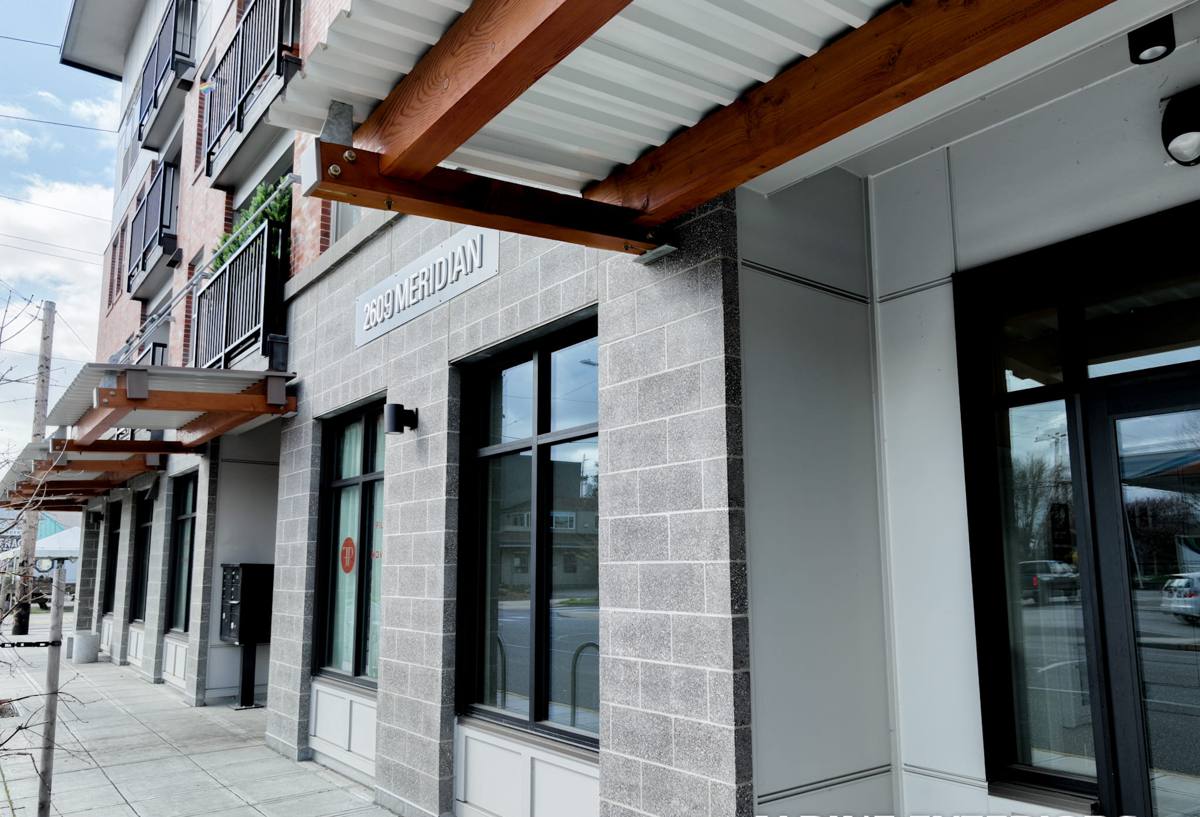
Signs Your Windows Are Losing the Battle
Most window failure in this area shows up gradually, and homeowners often adjust to it without realizing how much comfort and energy they're losing. Watch for these signs, especially on walls that face the weather or sit in persistent shade:
- Fogging or a hazy film between the panes — the sealed gas fill has failed and moisture has gotten between the glass
- Soft or discolored wood at the sill or lower corners of the frame
- Windows that are hard to open, or that no longer latch tight
- Visible moss, algae, or black streaking on the frame or sill
- Cold drafts near the frame edges even when the window is fully closed
- Condensation forming on the inside of the glass regularly through fall and winter
- Paint or finish that's peeling specifically around the window opening, not the wall in general
Any one of these on its own might just need caulking or a minor repair. Several of them together, especially soft wood at the sill, usually mean the window and often some of the surrounding framing need to come out.
What a Correct Window Replacement Actually Involves
The window unit itself is only part of the job. In a climate that gets this much wind-driven rain, how the window is integrated into the wall matters as much as the window's quality rating. A correct installation includes:
Flashing and Water Management
Every opening needs flashing that directs water out and away from the framing, layered correctly with the house wrap or weather-resistive barrier so water sheds downward and outward rather than getting trapped behind the siding. This is the step that gets skipped most often on rushed jobs, and it's the one that causes rot years later, hidden behind the wall where nobody sees it until there's a real problem.
Sealing Without Sealing In Moisture
Sealant belongs on the outside face of the window to block wind and rain, but the assembly still needs a way to let any trapped moisture escape rather than sealing it into the wall cavity. Getting this balance wrong is a common cause of hidden rot in older Pacific Northwest homes.
Fastening and Shimming
The window has to be plumb, level, and square, and shimmed correctly so it isn't stressed by the building settling over time. A window installed slightly out of square will bind, leak, and wear its seals unevenly for its entire life.
Interior and Exterior Trim
Trim isn't just cosmetic — it's part of the water management system on the exterior side and part of the air seal on the interior side. Both need to be reinstalled or replaced correctly, not just caulked over.
Choosing the Right Frame Material for This Climate
There's no single "best" window material — each has real trade-offs, and the right choice depends on your home's exposure, your budget, and how much upkeep you want to take on.
| Frame Material | How It Handles Our Climate | Maintenance | Typical Trade-Off |
|---|---|---|---|
| Vinyl | Good moisture resistance, won't rot or corrode | Low — occasional cleaning | Can flex more in large sizes; color/finish options are more limited |
| Fiberglass | Very stable in temperature swings, strong moisture resistance | Low | Higher upfront cost than vinyl |
| Wood (clad exterior) | Good if the exterior cladding is intact; interior wood needs protection from condensation | Moderate to high — exterior clad reduces this, bare wood does not | Best appearance for some homes, but the highest long-term maintenance if not clad |
| Aluminum | Weakest match for salt air — prone to pitting and corrosion near the Sound | Moderate | Thermally inefficient unless thermally broken; we're selective about where we recommend it |
For most North Everett homes, especially anything within a mile or two of the water, we steer people toward vinyl or fiberglass for the moisture and salt-air resistance, and reserve wood-clad options for homes where the architectural style calls for it and the owner understands the maintenance commitment. We're not tied to one manufacturer — the right call depends on your home, not on what's easiest for us to sell.
Full-Frame Replacement vs. Insert Replacement
There are two basic approaches, and which one is right depends on the condition of your existing frame:
- Insert (pocket) replacement: The new window goes inside the existing frame, which stays in place. Faster, less disruptive, and less expensive — but only appropriate if the existing frame is solid, square, and free of rot.
- Full-frame replacement: The entire window and frame come out down to the rough opening, including flashing and sometimes surrounding sheathing. Necessary when there's any rot, water damage, or the frame is out of square. It costs more and takes longer, but it's the only honest option once water has gotten into the wall.
We won't recommend an insert replacement over a window frame that's showing soft wood or water staining just to save you money up front — that approach just seals a problem behind new glass instead of fixing it, and it tends to come back worse.
Glazing and Energy Performance for a Marine Climate
Snohomish County's climate is mild compared to much of the country, but the persistent damp and long heating season still make glazing choice worth getting right. Double-pane windows with a low-E coating are the standard baseline here and perform well for most homes. Triple-pane adds meaningful sound dampening and a modest efficiency gain, which some homeowners value on busier streets or larger, colder-feeling rooms — but it's a real cost increase, and for most North Everett homes it's optional rather than necessary. We'll walk through what makes sense for your specific rooms and orientation rather than defaulting to the most expensive option.
Our Process, Start to Finish
- On-site assessment: We look at every window being considered, check the sills and surrounding framing for hidden moisture damage, and measure precisely.
- Honest scope and estimate: You get a clear picture of which windows need full-frame replacement versus insert replacement, and why, along with a straightforward cost breakdown.
- Ordering and scheduling: Windows are ordered to your home's exact openings. We schedule around weather where we can, since installation quality depends on working in reasonably dry conditions.
- Removal and inspection: Old windows come out carefully, and we inspect the rough opening before anything new goes in — this is where hidden rot or flashing problems get caught.
- Correct flashing, install, and seal: New windows go in plumb, level, square, properly flashed, and sealed to shed water rather than trap it.
- Trim and cleanup: Interior and exterior trim finished, work area cleaned, and everything checked for smooth operation before we consider the job done.
Why a Crew That Already Works North Everett Matters
A window contractor who mostly works drier inland climates can still do competent work, but they're making judgment calls about flashing details, moisture barriers, and material choices without the daily feedback of seeing how those choices hold up against Puget Sound weather over the following winters. A crew that regularly works North Everett homes has already seen which details fail here and which ones hold up — where moss tends to collect and why that matters for water flow, how salt air affects different metals and finishes over time, and how to sequence a job around our rain patterns instead of guessing. That local pattern recognition is hard to substitute for.
Questions Worth Asking Before You Hire Anyone
- Will you inspect the rough opening for rot before installing new windows, not just after?
- What's your approach to flashing and water management, specifically?
- Do you recommend insert or full-frame replacement for my situation, and why?
- What warranty coverage applies to the window itself versus the installation labor?
- Can you walk me through why you're recommending this frame material for my home's exposure?
A contractor who can answer these clearly and specifically, without vague reassurances, is worth more than one offering the lowest number on paper.
If your windows are fogging, sticking, drafty, or showing soft wood at the sills, it's worth having someone look before another wet season adds to the damage. We offer free, no-pressure estimates for North Everett homeowners — use the form below to get one scheduled.