 Everett
 Why Riverside Decks Take More Punishment Than People Expect
Riverside sits close enough to the water and the tree cover that a deck here lives a harder life than the same structure would in a drier inland climate. Everett's marine air carries salt and moisture that settle into wood grain and metal fasteners alike. Add Snohomish County's long wet season — months where a deck can go without a real drying-out period — and you get the two problems that show up on almost every deck replacement call we run in this neighborhood: rot at the framing and fastener points, and a slick green film of moss and algae across the boards themselves.
None of this is unique to any one house in Riverside. It's a function of geography — tree canopy that shades decks from the sun that would otherwise dry them out, and prevailing weather that pushes driving rain sideways into railings, skirting, and stair stringers. A deck built without that in mind will look fine for a season or two and then start showing problems in exactly the spots you can't see until you go looking.
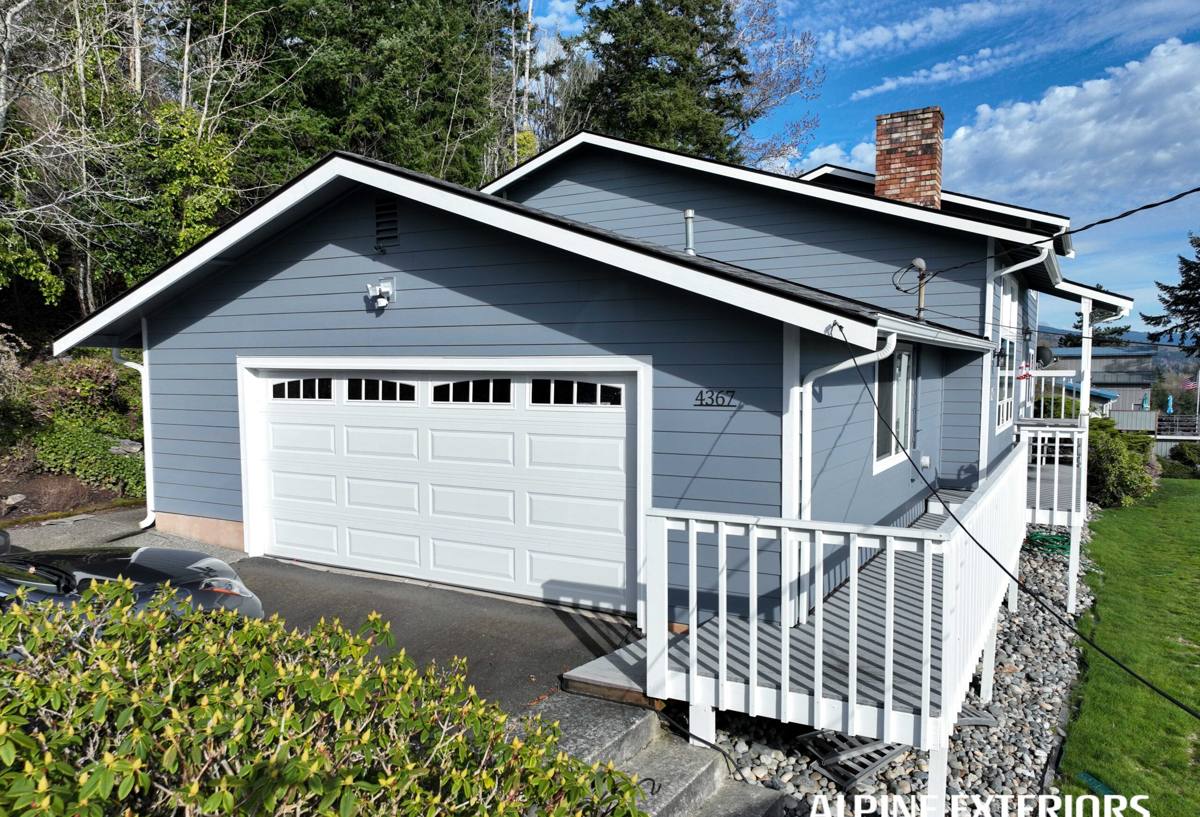
What Composite Decking Is Actually Solving For
Composite decking — boards made from a blend of wood fiber and plastic, usually with a protective cap layer — exists because painted or stained wood decking needs constant upkeep to survive conditions like ours. Wood decking isn't a bad product, but it asks for something most homeowners don't have time for: annual cleaning, periodic sealing, and quick repair of any board that starts to cup or check before rot gets a foothold.
Composite boards don't absorb water the way wood does, so they don't swell, splinter, or host the kind of surface rot that eventually eats a wood deck from the top down. That matters more in Riverside than in a lot of places, because the combination of shade and rainfall here means boards rarely get a long, uninterrupted dry stretch. A material that shrugs off standing moisture instead of soaking it in is doing real work, not just saving you a weekend of staining.
What Composite Doesn't Solve
Composite decking resists rot in the boards themselves, but it doesn't make moss and algae disappear. Any horizontal surface in a shaded, damp yard will grow a biofilm eventually — composite included. The difference is that composite surfaces clean up with a deck brush and mild cleaner instead of requiring a pressure washer aimed carefully enough not to blow out softened wood fibers. And composite doesn't fix a poorly built substructure — the framing underneath still has to be built to shed water, or you're just putting a good deck surface on top of a problem that will show up eventually as a soft spot, a squeak, or a rail post that's gone loose.
Composite vs. the Alternatives
| Material | How it handles Riverside's moisture | Moss & algae behavior | Upkeep |
|---|---|---|---|
| Pressure-treated wood | Absorbs water; needs sealing to slow rot at fasteners and end grain | Grows moss readily in shade; textured grain holds spores | Annual cleaning, periodic sealing/staining |
| Cedar or other natural wood | Some natural rot resistance but still absorbs moisture over time | Similar to treated wood; smoother grain helps slightly | Regular sealing to maintain appearance and resistance |
| Capped composite | Core resists moisture absorption; cap sheds water at the surface | Can still grow film in deep shade; cleans off easily | Periodic washing, no sealing or staining |
| PVC decking | Fully synthetic, essentially immune to moisture absorption | Same surface-level growth possible in shade | Lowest upkeep; higher material cost |
We install composite most often in Riverside because it lands in the sweet spot between upfront cost and long-term performance for this climate. PVC is a legitimate option for a shadier, wetter lot where an owner wants to minimize maintenance even further, and we'll say so plainly if your site calls for it — the goal is the right material for your yard, not a single default.
What a Correct Composite Deck Build Involves
The board itself is the part homeowners think about, but most of the failures we get called to fix trace back to the framing and flashing details underneath. In a climate that stays wet as long as ours does, these details aren't optional extras:
- Ledger board flashing that actually directs water away from the house rim joist, not just a bead of caulk
- Joist tape over the top of every joist so fastener penetrations don't become entry points for moisture
- Hidden fastener systems or coated screws rated for the specific composite brand being installed
- Proper joist spacing for composite's span ratings, which differ from dimensional lumber spacing
- Ventilation gaps at board ends and against the house to let air move underneath instead of trapping damp
- Post bases and hardware rated for ground contact and moisture exposure, not standard interior-grade fasteners
- Drainage planning so water crossing or dripping through the deck has somewhere to go besides pooling against the foundation
Skip any one of these and the composite boards on top can look perfect while the structure underneath quietly deteriorates — which is exactly the kind of problem that's expensive to fix later and cheap to build correctly the first time.
How We Approach a Riverside Composite Deck
1. Site Assessment
We look at sun exposure, tree cover, drainage slope, and how the deck ties into the house before we talk product. A deck tucked under mature trees needs different ventilation and board-gap decisions than one that gets afternoon sun.
2. Product Selection
We walk through composite lines from manufacturers like Trex, TimberTech, and Fiberon, along with PVC alternatives where appropriate, and explain the real differences in cap technology, color retention, and warranty terms — not just price.
3. Permitting
Deck work in Everett and Snohomish County typically requires a building permit once you're past a certain height or attached to the structure. We handle that paperwork so it's not sitting on your desk.
4. Framing and Flashing First
Before a single composite board goes down, the substructure gets built or evaluated to current standards — ledger flashing, joist tape, and hardware rated for our moisture exposure.
5. Installation
Boards go down with the fastening system matched to that product line, proper expansion gaps (composite moves with temperature more than people expect), and clean transitions at stairs, borders, and picture-framing details if you've chosen them.
6. Walkthrough
We go over basic care with you before we leave — what to expect in year one, how to clean the surface, and what a normal weathering-in period looks like versus something worth a call.
Living With Composite Decking Here
Composite is low-maintenance, not no-maintenance. In a neighborhood like Riverside, where shade and moisture combine to grow moss and algae film faster than in an open, sunny yard, a seasonal wash-down with a stiff deck brush and a composite-safe cleaner keeps the surface looking like new and keeps it from getting slick underfoot. Gutters and downspouts near the deck are worth checking too — a clogged gutter dumping extra water onto or near the deck edge undoes a lot of the good the framing details are supposed to do.
Railings and fastener heads are worth a glance once or twice a year as well. Composite boards themselves won't rot, but any exposed metal hardware is still subject to the same salt-air corrosion as everything else on a coastal property, and catching a loose post base early is a five-minute fix instead of a rebuild.
Cost Factors on a Riverside Composite Deck
| Factor | Why it moves the price |
|---|---|
| Deck size and shape | Square footage and the number of angles, cutouts, or stair sections all add labor and material |
| Substructure condition | Reusing sound existing framing costs less than rebuilding rotted joists or a failing ledger connection |
| Composite tier | Entry-level capped composite, premium composite, and PVC each carry different material costs |
| Railing and fastener choice | Hidden fastener systems and upgraded railing materials add cost over basic options |
| Height and access | Elevated decks or difficult site access add labor time for framing and material handling |
| Permit and inspection scope | Attached, elevated decks typically require more inspection steps than a simple ground-level build |
We won't quote a number without seeing the site, but these are the variables that actually move a bid — worth knowing before you start collecting estimates so you can compare them on equal footing.
Why It Matters That We Already Work This Neighborhood
A crew that's built and repaired decks around Riverside knows which yards hold water, which lots stay shaded most of the day, and where salt-laden weather off the water hits hardest. That's not something you can fully account for from a set of house plans — it comes from having stood on decks in this specific pocket of Everett and seen how they age. It shapes decisions on joist spacing, drainage routing, and which composite lines actually hold their color and grip here, rather than just what a spec sheet promises.
It also means straightforward answers about permitting, realistic timelines that account for our wet season, and a crew that isn't guessing at how Snohomish County's climate treats a deck over ten or fifteen years.
Questions Worth Asking Before You Hire
- Will you inspect and, if needed, upgrade the framing and flashing, or just install boards over what's there?
- What fastening system do you use, and is it rated for the composite brand you're installing?
- Do you pull the required Everett/Snohomish County permit, or is that on me?
- What's the manufacturer's warranty on the board line you're recommending, and what voids it?
- How do you handle drainage and ventilation given how much shade and rain this yard gets?
- Can you walk me through maintenance specific to a shaded, damp lot like this one?
If you're weighing a new composite deck or replacing a tired wood one in Riverside, we're happy to take a look and give you a straightforward, no-pressure estimate — just fill out the form below.