 Everett
 Why Riverside's Setting Is Hard on Ordinary Siding
Riverside sits close to the water, and that proximity shapes everything about how siding ages here. The combination of salt-tinged air moving up from Puget Sound and the Snohomish River corridor, near-constant winter rain, and long stretches of shaded, damp shoulder seasons creates a punishing environment for exterior materials. It's not one dramatic weather event that wears siding out in this neighborhood — it's the slow, repeated cycle of moisture soaking in, drying out, and soaking in again, month after month, year after year.
Salt air accelerates corrosion on fasteners and trim, driving rain finds every gap in flashing and caulking that wasn't done right the first time, and the moss and algae that thrive in Snohomish County's shade and humidity don't just look bad — they hold moisture against a wall's surface far longer than open air would. Siding that isn't engineered and installed with this specific combination in mind tends to show its age early: swelling, delaminating, staining, or rotting well before it should.
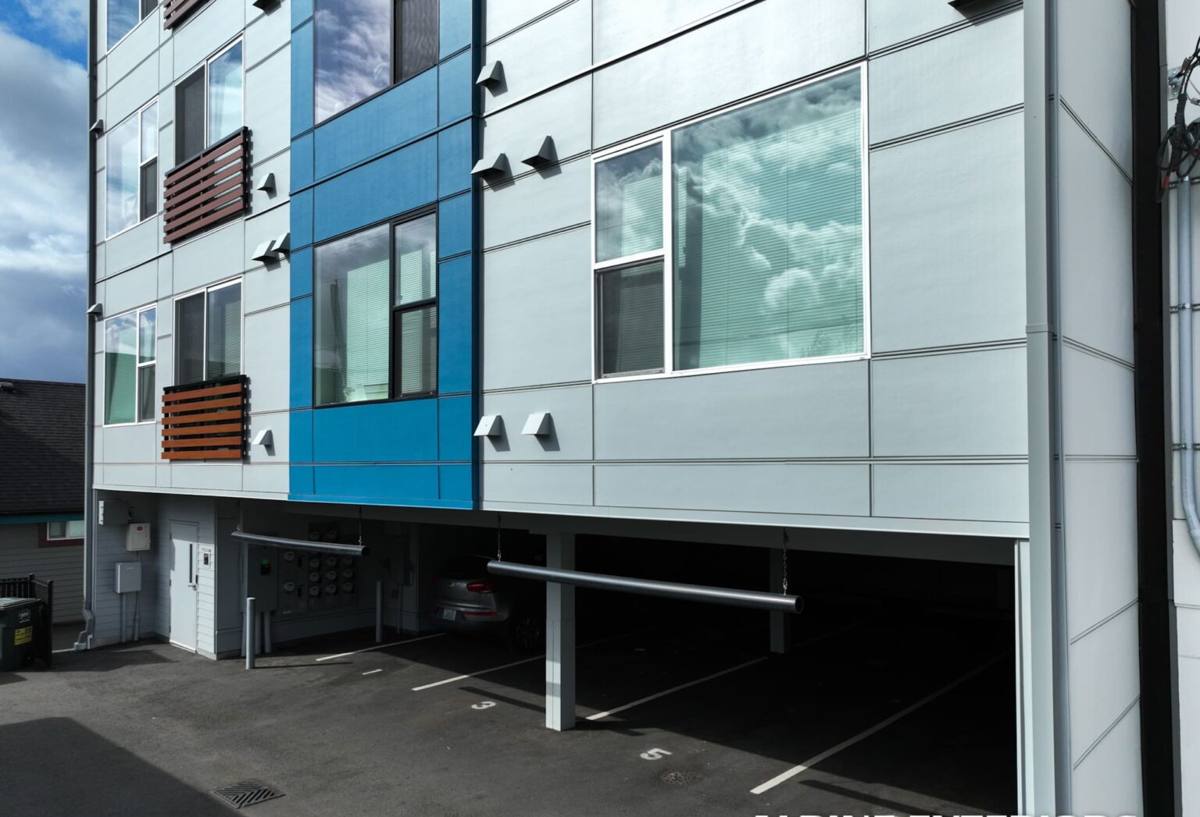
What Riverside Homes Actually Need From Their Siding
A siding system built for this stretch of Everett has to do three things well at once: shed water fast, resist the organic growth that damp shade encourages, and hold up to salt-laden air without the fasteners or finish breaking down. That's a different set of demands than siding installed on a dry east-side property, and it's why we treat Riverside jobs as their own category rather than a copy-paste of a standard install.
Moisture Management Comes First
Every layer behind the visible siding matters as much as the siding itself. A weather-resistive barrier installed correctly, properly lapped and sealed flashing at every window, door, and roofline intersection, and the right drainage gap behind the panels are what actually keep water out of the wall assembly. Riverside's rain load means there's no margin for shortcuts here — a flashing detail that's "close enough" on a drier property becomes a callback within a year or two this close to the river.
Resistance to Moss, Algae, and Mildew
Shade, humidity, and cooler temperatures give moss and algae a long growing season in this part of Snohomish County. Siding material and finish quality both play into how much organic growth actually takes hold, and how easy it is to clean off without damaging the surface underneath.
Why We Install James Hardie Fiber Cement — Nothing Else
We standardized on James Hardie fiber cement siding company-wide, and Riverside is a good example of why. Hardie's HZ5 product line is engineered specifically for climate zones like the Pacific Northwest, meaning it's formulated to handle prolonged moisture exposure without the swelling, warping, or rot risk that comes with wood-based or engineered-wood siding products. It's non-combustible, dimensionally stable in wet conditions, and finished with Hardie's factory-applied ColorPlus coating, which is baked on under controlled conditions rather than field-applied — a real advantage in a neighborhood where you don't get many dry, stable days in a row for on-site painting or staining to cure properly.
We don't install vinyl, LP SmartSide, primed wood, or other fiber cement brands. That's a deliberate standard, not a sales pitch — we've seen how each of those alternatives performs over time in exactly this kind of climate, and we'd rather put one product on Riverside homes and stand behind it fully than offer a menu of options with different failure points.
What a Correct Fiber Cement Install Involves Here
James Hardie siding performs the way it's rated to perform only when it's installed to the manufacturer's specifications — and in a high-moisture, salt-air neighborhood, the margin for installation error is smaller than it would be elsewhere.
- Proper fastener spacing and type — corrosion-resistant fasteners driven correctly, not overdriven or underdriven
- Correct clearance between siding and grade, roofline, decks, and patios so water has somewhere to go
- Fully lapped and sealed weather-resistive barrier with no gaps at penetrations
- Flashing integrated at every window, door, and horizontal trim transition — not just caulked over
- Panel joints sealed with a high-quality, flexible sealant rated for the exposure, not general-purpose caulk
- Correct panel gapping and expansion allowance per Hardie's published install guide
- Verified ventilation and drainage plane behind the siding, not a sealed-tight assembly that traps moisture
Skipping any one of these doesn't necessarily show up right away. It shows up two or three winters later, when water that should have drained out instead found its way behind a panel.
How Our Process Works on a Riverside Job
1. Assessment and Moisture Check
We start by evaluating the existing siding, sheathing, and any visible signs of past water intrusion — staining, soft spots, or organic growth patterns that tell us where moisture has been getting in. This also tells us whether a full tear-off is needed or whether the substrate underneath is sound.
2. Prep and Weather Barrier
Old siding and any compromised sheathing come off, the wall is inspected, and a new weather-resistive barrier goes on with proper lapping and sealed penetrations before a single piece of Hardie siding goes up.
3. Flashing and Trim Details
This is where most siding failures in this climate actually originate, so we treat window and door flashing, roof-to-wall transitions, and trim details as the part of the job that determines whether the siding lasts 10 years or 40.
4. Installation to Hardie Spec
Panels go up following James Hardie's published fastening, clearance, and sealing requirements — the same standard that keeps the manufacturer's warranty intact.
5. Final Walkthrough
We check caulking lines, fastener finish, and clearances before calling the job done, and walk the property with the homeowner so there are no surprises.
Moss, Algae, and Long-Term Maintenance in Riverside
Even the right siding needs a little upkeep in a shaded, damp neighborhood. Hardie's factory finish resists staining and growth better than field-applied paint or raw wood, but keeping gutters clear, trimming back vegetation that shades the siding, and an occasional gentle rinse go a long way toward keeping moss and algae from getting a foothold. What you want to avoid is pressure-washing at close range or with too much force — it can force water behind panels or damage the ColorPlus finish, which defeats the purpose of a factory-cured coating.
Cost Factors on a Riverside Fiber Cement Project
Every property is different, but the same variables tend to drive cost up or down on jobs in this neighborhood. Rather than quote a number that won't fit your specific home, here's what actually moves the estimate:
| Factor | Why It Matters |
|---|---|
| Tear-off vs. overlay | Removing old siding to inspect and repair sheathing adds labor but is often necessary given local moisture history |
| Existing water damage | Rotted sheathing or framing found during tear-off requires repair before new siding can go on |
| Home size and complexity | Multiple stories, dormers, and trim details all add labor time |
| Siding profile chosen | Lap siding, shingle-style panels, and board-and-batten each involve different install time and material cost |
| Trim and accessory work | Corner boards, fascia, and soffit work done alongside siding affects total scope |
| Access and site conditions | Tight lots, landscaping, or limited equipment access near the river can add time |
Signs Your Riverside Home's Siding May Need Attention
- Visible moss, algae, or persistent green or black staining that returns after cleaning
- Bubbling, peeling, or chalky paint on wood or engineered wood siding
- Soft spots or give when pressed near the base of walls or under windows
- Warping, buckling, or panels pulling away from the wall
- Rising heating bills that suggest air and moisture are moving through the wall assembly
- Visible gaps in caulking or trim that weren't there a few years ago
None of these mean a home is in crisis, but they're worth a professional look before another wet season passes.
Why a Crew That Already Works Riverside Matters
A contractor who's worked this specific stretch of Everett knows how the river's proximity and Snohomish County's rainfall patterns actually behave against a wall, not just in general terms but in the details that matter — where moss tends to build up first, which orientations take the worst driving rain, and how much clearance a given lot actually needs at grade. That local pattern recognition, combined with strict adherence to James Hardie's installation requirements, is what separates a siding job that looks good on install day from one that's still performing correctly a decade later.
If you're weighing a siding project on your Riverside home, we're glad to take a look and walk you through what your property specifically needs — no pressure, no upsell, just a straight assessment. Use the form below to request a free estimate.