 Everett
 Building New in Riverside? Get the Windows Right the First Time
New construction is the one point in a home's life where windows can be installed exactly the way they should be — flashed correctly, sequenced with the weather-resistive barrier in the right order, and set with full access to the rough opening before siding, trim, or drywall closes everything in. Riverside sits close enough to the water and the Snohomish River corridor that homes here take a steady diet of moist air, wind-driven rain, and long stretches of gray, damp weather. Get the window installation wrong at the framing stage and you won't see the consequences for a year or two — by then it's hidden behind finished walls and much more expensive to fix.
We install new-construction windows for builders and homeowners throughout Everett and Snohomish County, and Riverside jobs get the same standard every other neighborhood does: proper flashing sequence, correct fastening for the window's design pressure rating, and materials chosen for a marine-influenced, high-moisture climate rather than a catalog photo.
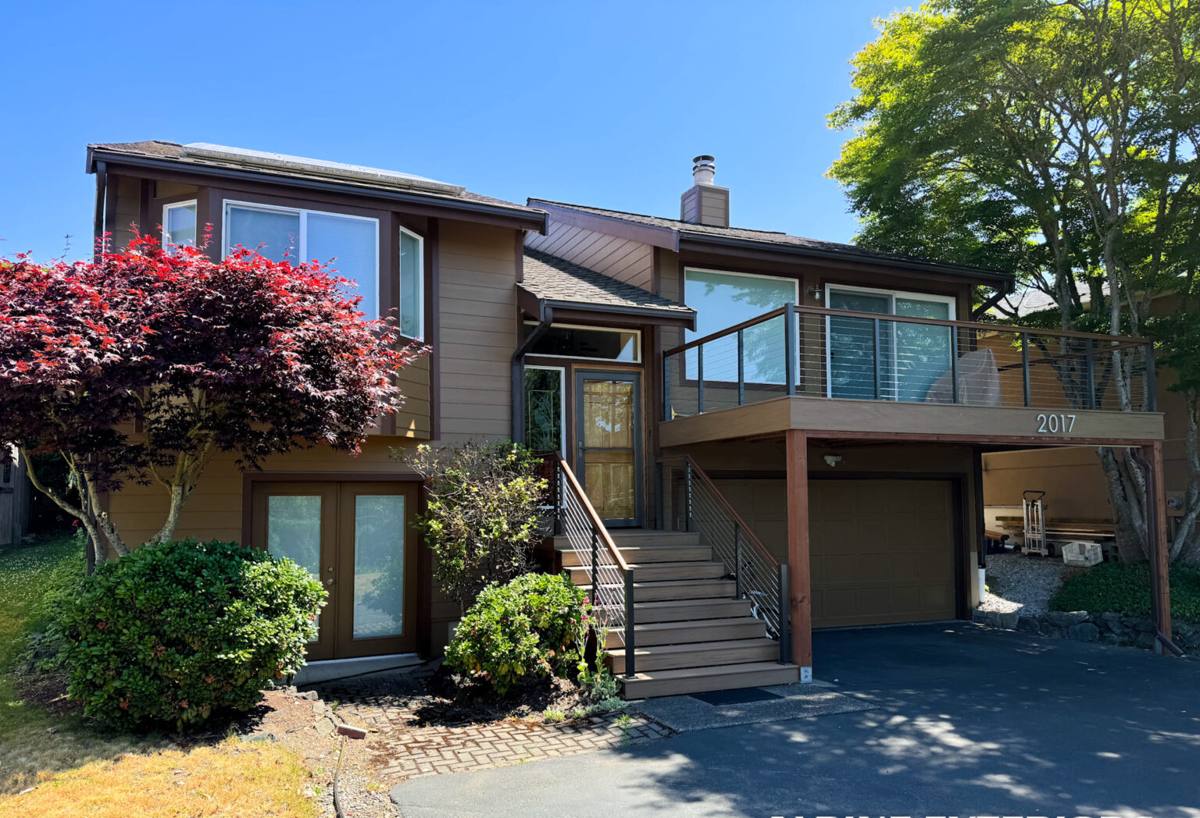
What Riverside's Climate Actually Does to a Window Opening
Everett's weather isn't dramatic, but it's relentless. That's the part new-construction crews sometimes underestimate.
Salt Air and Metal Fatigue
Proximity to Puget Sound means a light but constant load of salt in the air, especially on breezier days. Over years, that air accelerates corrosion on unprotected fasteners, cheap window hardware, and uncoated metal flashing. It doesn't ruin a window in one season — it just means the wrong materials age faster than they should.
Driving Rain
Rain in this area rarely falls straight down. Wind off the Sound and the river valley pushes it sideways against west- and south-facing walls, which is exactly the condition that exposes a poorly lapped flashing detail or a window set without a sloped sill pan. A leak from wind-driven rain often shows up nowhere near where the water actually got in, which is why the installation detail matters more than the window brand.
A Long Moss and Mildew Season
Shade, moisture, and mild temperatures mean moss and mildew have a long growing window here — on roofs, on siding, and in the corners of window trim where debris collects and stays damp. Window and trim materials that trap moisture against wood, or trim profiles with flat ledges that hold standing water, give moss and mildew exactly what they need.
What a Correct New-Construction Window Job Involves
New-construction installation is different from a retrofit or "pocket" replacement — the window goes in before the exterior finish, with the nailing fin exposed and full access to integrate it with the wall's water management system. That access is an advantage if it's used correctly, and a liability if it's rushed.
The Sequence That Actually Keeps Water Out
- Rough opening is checked for square, level, and correct sizing before the window ever gets set.
- A sloped sill pan flashing goes in first, so any water that reaches the sill drains back outward instead of pooling.
- The window is set, shimmed, and fastened per the manufacturer's design-pressure and fastening schedule — not just "however many nails fit."
- Jamb and head flashing are integrated with the weather-resistive barrier in a shingle-lap order — each layer overlapping the one below it so water is always directed down and out, never trapped behind the barrier.
- Every seam that needs sealant gets it, and every seam that shouldn't be sealed (like the bottom of the sill pan, which needs to drain) is left open on purpose.
That last point trips up a surprising number of installs. Sealing the sill flashing airtight on all four sides feels thorough, but it turns the sill into a bathtub instead of a drain pan the first time water gets past the sash.
Choosing the Right Window for This Climate
For Riverside's conditions, we generally steer homeowners toward:
- Vinyl or fiberglass frames with corrosion-resistant hardware — better long-term behavior in salt-influenced air than unprotected metal components.
- Dual-pane, low-E glass rated for the Pacific Northwest's mild-but-damp climate, which helps with both comfort and condensation control on cold, wet days.
- Trim profiles and sill details that shed water rather than pool it, cutting down on the moss and mildew buildup this area is prone to.
- Manufacturer flashing and installation instructions followed exactly — window warranties are often void if the installer deviates from the documented method, which matters more here than in drier climates.
Comparing New-Construction Windows to Retrofit Windows
| Factor | New-Construction Window | Retrofit / Pocket Window |
|---|---|---|
| When it's used | New builds, additions, or full exterior tear-offs | Replacing an existing window without disturbing siding |
| Flashing access | Full access to integrate with the water-resistive barrier | Limited — relies on the existing wall assembly staying sound |
| Best-case weather performance | Higher, when installed correctly, since flashing is fully integrated | Good, but dependent on the condition of what's already there |
| Typical use in Riverside | New homes, additions, garage conversions | Older homes needing window upgrades without re-siding |
If your Riverside project is new construction or you're already opening up the walls, new-construction windows are almost always the right call — you get one shot to build the water management right, and it's worth taking.
Our Process for Riverside New-Construction Projects
1. Plan Review and Product Selection
We look at the building plans, elevations, and any builder or architect specs before recommending window lines. Orientation matters here — a west-facing wall catching wind-driven rain off the Sound gets more scrutiny on flashing detail than a sheltered, east-facing wall.
2. Coordination With Framing and Siding Crews
Window installation on a new build has to land at the right point in the schedule — after the weather-resistive barrier is up, before siding closes the wall. We coordinate timing with builders and other trades so the sequence isn't rushed or done out of order.
3. Installation to Manufacturer Spec
Every window is flashed, fastened, and sealed to the manufacturer's documented method, which keeps the product warranty intact and gives the assembly its best chance against Everett's rain and moisture.
4. Final Walkthrough
Before we leave, every opening gets checked — operation, seal, flashing laps, and fastening — so nothing is left for the siding crew to cover up over a problem.
Why Local Experience Matters for This Job
New-construction window installation looks similar everywhere on paper, but the details that actually matter change with the climate. A crew used to installing in a dry inland market may not think twice about flashing sequence or sill drainage, because in their climate, minor mistakes don't show up for a decade, if ever. In Everett — and especially in a neighborhood like Riverside, close to the water and exposed to driving rain — those same shortcuts show up in two or three wet seasons as staining, soft trim, or interior moisture problems.
Working Snohomish County regularly means we see how these details actually perform over time: which flashing tapes hold up, which sill details drain cleanly, and which trim profiles fight moss instead of collecting it. That's the kind of knowledge that doesn't come from a spec sheet.
A Simple Checklist for Homeowners and Builders
- Confirm the sill pan is sloped and left open at the bottom to drain, not fully sealed.
- Ask whether flashing is integrated in proper shingle-lap order with the weather-resistive barrier.
- Confirm fastening follows the window manufacturer's design-pressure schedule, not a generic pattern.
- Choose corrosion-resistant hardware given the area's salt-air exposure.
- Pick trim and sill profiles that shed water rather than hold it, to cut down on moss and mildew.
- Get installation confirmed in writing as meeting manufacturer specs, so the warranty stays valid.
Timing and Cost Factors
New-construction window costs vary with window count, size, glass package, and how the project is staged with other trades. Rather than quote a blanket number that won't reflect your specific plans, we walk the plan set (or the framed opening, if it's already up) and give a written estimate based on what's actually going in. Broadly, expect pricing to scale with window size and glazing upgrades more than with brand name — the flashing and installation labor is a fixed cost of doing the job right, regardless of which window line you choose.
If you're building, adding on, or opening up walls on a Riverside property and want windows installed the way this climate actually requires, we're happy to walk the plans with you and provide a free, no-pressure estimate — just fill out the form below.