 Everett
 Window Replacement Built for Riverside, Not Just Everett in General
Riverside sits close enough to the Snohomish River and Puget Sound's marine air that windows here take a different kind of beating than windows twenty miles inland. It's not one dramatic storm that does the damage — it's the daily grind of damp air, wind-driven rain hitting the same wall for months at a time, and long stretches of gray, low-sun weather where moss and mildew get a head start on wood, vinyl, and even aluminum. A window that would hold up fine in a drier climate can start failing here years ahead of schedule if it wasn't installed with this specific environment in mind.
When we talk about window replacement in Riverside, we're not just swapping glass and calling it done. We're looking at how a window will perform through another decade of Snohomish County winters — the flashing details, the frame material, the sealant, and the install technique all matter more here than they would in a milder, drier part of the state.
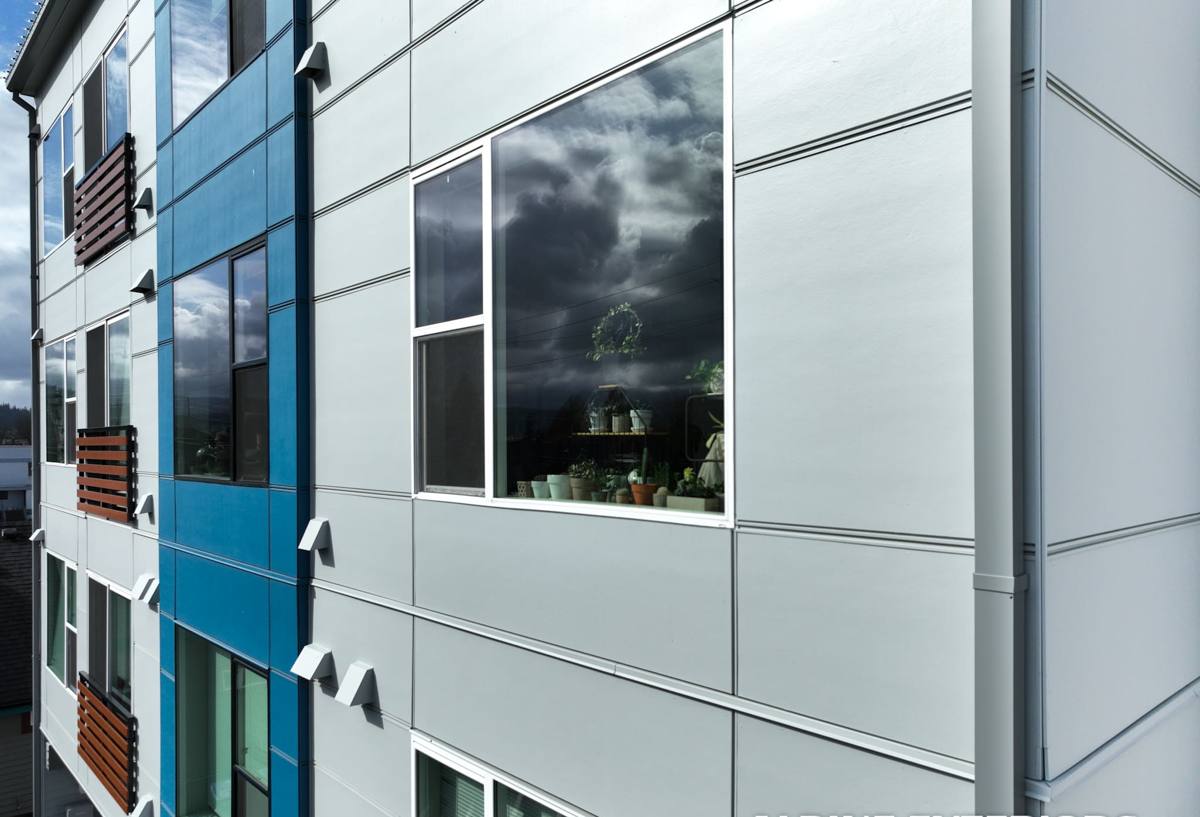
What Salt Air, Driving Rain, and Moss Season Actually Do to Windows
Moisture Finds the Weak Points
Older wood-frame windows are the most common casualty. Once the exterior paint or finish starts to fail, moisture works into the wood at the corners and the bottom rail — the parts that catch the most standing water during a hard rain. From there it's a slow process of soft spots, swelling, and eventually rot that no amount of caulk will fix.
Aluminum and Old Vinyl Have Their Own Problems
Aluminum frames conduct cold straight through, so on damp winter mornings you'll often see condensation forming on the inside of the frame — and where there's regular condensation, there's eventually mold on the sill and trim. Early-generation vinyl windows weren't always built with UV-stable compounds or fully welded corners, so after enough freeze-thaw cycles and driving rain, the seals at the corners can separate just enough to let water in behind the frame, where you won't see it until the wall around it starts showing damage.
Moss and Mildew Are a Maintenance Problem, Not Just a Cosmetic One
Everett's long moss season means anything shaded — north-facing walls, windows tucked under eaves or near mature trees — stays damp longer after every rain. That constant dampness is exactly what mildew needs to take hold on sills, tracks, and exterior trim. It's rarely the window glass itself failing; it's what's happening in the wood or composite around it.
Signs a Riverside Home Needs Window Replacement, Not Just Repair
- Fogging or a permanent haze between the panes of a double-pane window — the seal has failed and the gas fill is gone
- Soft, spongy, or darkened wood at the sill or bottom corners of the frame
- Visible daylight or a noticeable draft around the frame when it's windy
- Windows that are difficult to open, close, or lock — often a sign the frame has swollen or warped
- Recurring condensation on the inside of the glass or frame through the winter months
- Paint that keeps peeling or bubbling on the interior sill no matter how often it's repainted
- A musty smell near the window that doesn't go away with cleaning
If you're only seeing one or two of these and the frame itself is still solid, a repair or re-glazing might genuinely be the more sensible move. We'll tell you that directly if that's what we find — replacement isn't always the right answer, and we'd rather be honest about it than sell a job that isn't needed.
What a Correct Window Replacement Involves Here
The window unit itself is only part of the job. In a climate like Riverside's, the installation details are what actually determine whether the new window lasts fifteen years or thirty.
Flashing and Water Management
Every opening gets properly flashed so water that reaches the wall is directed back out, not trapped behind the siding. This is the single most common shortcut in a rushed installation, and it's the one that causes the most expensive damage down the road — hidden rot that isn't discovered until siding or trim is pulled off years later.
Air and Moisture Sealing
We use appropriate sealants and backer rod at the frame perimeter, not just a bead of caulk over the trim. Done right, this stops both drafts and the slow moisture intrusion that leads to mold inside the wall cavity.
Proper Fit and Shimming
A window that's shimmed level and square operates smoothly and seals evenly for its whole life. One that's slightly racked to fit a rough opening will bind, wear unevenly, and often leak at the corners within a few years.
Interior and Exterior Finish Work
Trim, caulking lines, and touch-up paint or stain are finished cleanly so the window looks and performs like part of the house — not like an afterthought.
Choosing a Frame Material for This Climate
There's no single "best" window material for every home — it depends on your home's age, style, and budget. Here's how the common options actually perform in a wet, marine climate like Everett's.
| Frame Material | Moisture Performance | Maintenance | Best Fit |
|---|---|---|---|
| Vinyl | Good — won't rot, resists moisture well | Low; occasional cleaning | Most homes, especially budget-conscious replacements |
| Fiberglass | Excellent — very stable in wet/dry cycles | Low | Homes wanting long-term durability and minimal upkeep |
| Wood (properly clad) | Good if cladding is intact; vulnerable if damaged | Moderate to high on unclad wood | Historic or period-style homes where wood interior trim matters |
| Aluminum | Poor — prone to condensation and heat loss | Low, but performance issues persist | Rarely our recommendation for this climate |
For most Riverside homes we lean toward vinyl or fiberglass because they hold up to sustained damp weather without the ongoing maintenance wood requires. If you have a home where wood windows are part of the character — an older craftsman or similar — a well-clad wood window can still be the right call; it just needs a more disciplined maintenance schedule to stay ahead of the moisture.
Our Process for a Riverside Window Replacement
- On-site assessment: We look at each window from both sides, check for hidden rot around the frame, and note which openings need extra flashing attention.
- Accurate measurement and product selection: Every opening is measured individually — older homes rarely have perfectly uniform openings, even between windows that look identical.
- Removal and inspection of the opening: Once the old window is out, we check the sheathing and framing underneath for any moisture damage before the new unit goes in. This is often where problems that weren't visible from outside get caught.
- Installation with proper flashing and sealing: The steps described above — flashing, shimming, sealing — happen on every window, not just the ones that look like they need it.
- Finish work and walkthrough: Interior and exterior trim finished, operation checked on every window, and a final walkthrough so you know exactly what was done.
Why It Matters to Hire a Crew That Already Works in Riverside
A crew that regularly works in and around Everett already knows what this specific stretch of Snohomish County does to a house. That's not a small thing. It means knowing which older homes in this area are more likely to have undersized or non-standard window openings, understanding how the moss and mildew pattern shows up differently on a shaded north wall versus a sun-exposed south wall, and knowing which flashing details actually hold up through a wet Pacific Northwest winter versus which ones just look fine on install day.
It also means being familiar with the City of Everett's permitting requirements for window replacement, so the paperwork side of the job doesn't become a surprise partway through. A contractor who's done this work locally, repeatedly, isn't guessing at any of it.
What Drives the Cost of a Window Replacement Project
Every home is different, so we won't quote a number without seeing the job — but a few factors consistently move the price up or down:
| Factor | Why It Affects Cost |
|---|---|
| Number of windows and sizes | Larger or custom-sized openings cost more per unit than standard sizes |
| Frame material chosen | Fiberglass and wood typically cost more than standard vinyl |
| Condition of the existing opening | Hidden rot or framing repair adds labor and material beyond the window itself |
| Number of stories / access | Second-story or hard-to-access windows take longer and require more setup |
| Trim and finish work needed | Full trim replacement costs more than reusing sound existing trim |
We'll walk through each of these with you during the estimate so you know exactly what's driving the number, not just what the final total is.
Get a Straightforward, No-Pressure Estimate
If your windows in Riverside are showing any of the signs above, or you're just planning ahead before the next wet season sets in, we're happy to come take a look and give you an honest read on what's actually needed. There's no cost and no pressure — just a clear picture of your options. The form below is the easiest way to get started.