 Everett
 Edmonds Roofs Take a Different Kind of Beating
Edmonds sits close enough to Puget Sound that salt-laden air is part of daily life for homes near the bluff and waterfront, while homes further up the hill deal with the same driving rain and heavy tree cover that defines roofing in Snohomish County. That combination — salt air, wind-driven rain, and shade from mature conifers — ages a roof differently than it would inland. Fasteners corrode faster near the water. Rain finds its way sideways under poorly lapped flashing during a southwesterly storm. And shaded, north-facing slopes stay damp long after the rest of the roof has dried out, which is exactly where moss and algae get their foothold.
A roof repair in Edmonds needs to account for all of that, not just patch the spot that's leaking. We've worked on enough roofs in this area to know that the visible problem — a stain on the ceiling, a curled shingle, a gutter overflowing during a storm — is often a symptom of a slower issue that's been building for a season or two under the surface.
Signs a Roof Needs Repair, Not Full Replacement
Most homeowners call us because something specific caught their attention. The good news is that a targeted repair is often enough, provided the underlying roof structure and decking are still sound. Here's what typically points to a repair rather than a full tear-off:
- A ceiling stain that appears after a specific storm and doesn't keep spreading week to week
- One or two areas of missing, cracked, or curled shingles rather than widespread wear across the whole roof
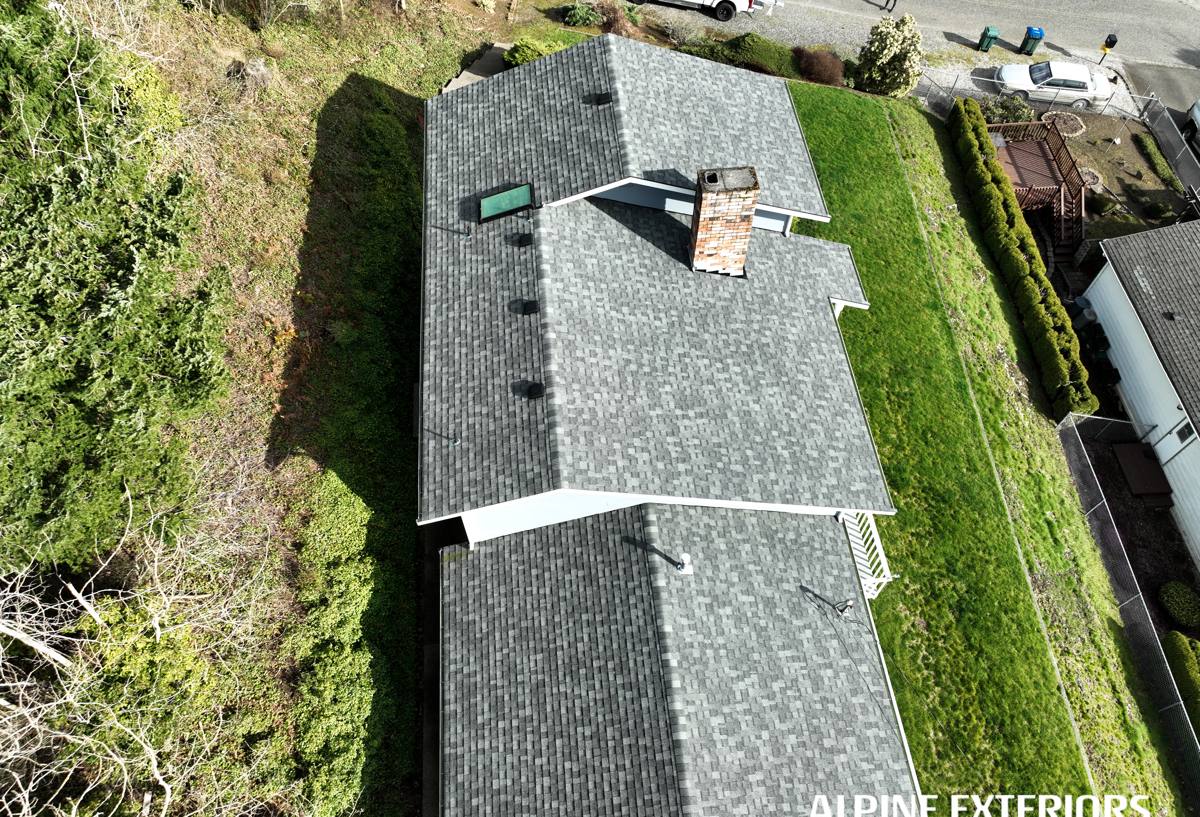
- Flashing that's visibly rusted, lifted, or separated around a chimney, skylight, or roof-wall intersection
- Moss buildup concentrated on one shaded slope while the rest of the roof looks reasonably clean
- A roof that's under 15-20 years old with isolated damage from wind, a fallen branch, or a poorly done prior repair
If the decking underneath is soft, spongy, or visibly rotted across a large area, or if the shingles are uniformly brittle and granule-bare from age, repair becomes a short-term fix at best. We'll always tell you honestly which category your roof falls into before we recommend a scope of work.
What a Correct Roof Repair Actually Involves
A repair that actually holds up through a Pacific Northwest winter is more than swapping a few shingles. It means understanding why the original assembly failed and fixing that root cause, not just covering it.
Flashing First
A large share of the leaks we find in Edmonds trace back to flashing, not shingles — around chimneys, skylights, dormers, and anywhere a roof plane meets a wall. Flashing has to be layered correctly with the underlayment and siding so water sheds outward at every step, not just caulked over a gap. Caulk is a temporary patch, not a repair; it dries out and cracks within a season or two of driving rain.
Underlayment and Decking
Once we pull back the damaged shingles, we check the underlayment and the decking beneath it. If water has been getting in for a while, the plywood or OSB decking can be soft or delaminated. Replacing shingles over compromised decking just hides the problem — it needs to be cut out and replaced with matching thickness material before anything goes back on top.
Shingle and Material Matching
For repairs on an existing roof, matching the shingle profile, color, and exposure to the surrounding field matters more than people expect. A mismatched patch is more than a cosmetic issue — different shingle lines can have slightly different thicknesses and nailing patterns, which affects how well the repair ties into the existing roof and sheds water at the seams.
Ridge Vents and Airflow
We also check ridge and soffit ventilation while we're up there. Poor attic airflow traps moisture underneath the roof deck, which accelerates rot and can cause the exact kind of localized decking failure that leads to repeat leaks in the same spot even after a patch.
Moss, Algae, and Everett's Long Wet Season
Snohomish County's wet season runs long, and shaded roof slopes rarely get enough direct sun to dry out fully between storms. That's the environment moss and algae need. Left alone, moss does more than look bad — it holds moisture against the shingle surface, lifts shingle edges as it grows, and works its way under tabs and around flashing, creating entry points for water that wouldn't otherwise exist.
Removing moss is only half the job. If we scrape it off without addressing why it grew there, it comes back within a year or two. Where it makes sense, we look at zinc or copper strip options near the ridge, which use rainwater runoff to inhibit regrowth over time, and we make sure nearby branches are trimmed back enough to let a slope get some sun and airflow. None of this stops moss permanently in a climate like ours, but it slows the cycle significantly and protects the repair work underneath.
Repair vs. Replacement: How We Help You Decide
| Factor | Repair Likely Makes Sense | Replacement Worth Considering |
|---|---|---|
| Roof age | Under 15-20 years | Approaching or past manufacturer's expected lifespan |
| Damage extent | Isolated to one area or slope | Widespread across multiple slopes |
| Decking condition | Solid, dry to the touch | Soft, delaminated, or rotted in multiple spots |
| Leak history | First occurrence or single known cause | Recurring leaks in different locations |
| Granule loss | Localized | Uniform and heavy across the whole roof |
We walk every roof with this kind of honest side-by-side in mind. Our goal isn't to sell the bigger job — it's to tell you which category your roof genuinely falls into and let you make the call with real information.
How Our Repair Process Works
1. Inspection
We start on the roof, not just from a ladder at the eave. That means checking flashing points, ridge lines, valleys, and the underside of the decking from the attic where accessible, so we're diagnosing the actual cause rather than guessing from the ground.
2. Diagnosis and Written Scope
Before any work starts, we explain what we found, why it happened, and exactly what the repair will involve — materials, the areas we'll open up, and what we expect to find underneath. If there's a chance the scope grows once we open a section (common with hidden decking damage), we tell you that up front rather than surprising you mid-job.
3. The Repair
We remove only what needs to come off, replace damaged decking and underlayment where present, correct the flashing detail causing the leak, and match shingles as closely as the existing roof allows.
4. Cleanup and Check
Every job ends with a magnetic nail sweep of the ground and a walk-through of the repair area with you, including photos of what was found underneath before we closed it back up.
What to Expect From a Well-Done Repair
- Flashing that's properly layered with underlayment, not just caulked over
- Decking replaced in kind wherever it was found soft or delaminated
- Shingles matched as closely as possible in profile and exposure
- Nails driven correctly, not overdriven or underdriven, which is a common cause of early failure
- Ridge and soffit ventilation checked, not ignored
- A clear explanation of root cause, not just a patch over the symptom
What Affects the Cost of a Roof Repair
Repair costs vary based on a handful of real factors rather than a flat per-square-foot rate, which is why we always inspect before quoting. Roofs with straightforward, accessible damage in a single area cost less than roofs with steep pitches, multiple stories, or hidden decking damage that isn't visible until we open the section. Material availability matters too — matching an older, discontinued shingle line sometimes takes more effort than working with a newer, common product. We'll walk you through the specific factors driving your quote rather than giving a generic range that doesn't reflect your actual roof.
Why Hiring a Crew That Already Works in Edmonds Matters
A roofer who works Edmonds and the surrounding Everett area regularly has already seen how local conditions play out on real roofs — which flashing details fail first near the water, which slopes hold moss longest under mature tree cover, and how driving rain off the Sound tends to find its way into roofs that would hold up fine in a drier climate. That local pattern recognition speeds up diagnosis and helps avoid repairs that look fine on paper but don't hold up through the next wet season.
It also means someone who's actually accountable close to home — not a crew that drove in from out of the area for one job and is hard to reach if something needs a follow-up look after the next big storm.
Get an Honest Look at Your Roof
If you've spotted a stain, a curled shingle, or moss creeping across a shaded slope, it's worth having someone take an honest look before it turns into a bigger repair. We offer free, no-pressure estimates for roof repair work in Edmonds and throughout Snohomish County — use the form below to get started.