 Everett
 Roofs in North Everett Work Harder Than Most
North Everett sits close enough to Port Gardner Bay and Puget Sound that salt-laden air is a constant, low-grade stressor on every exposed roofing material in the neighborhood. Add Snohomish County's long, wet fall-through-spring stretch of driving rain, and you have a climate that doesn't destroy roofs overnight — it wears them down at the seams, the fasteners, and the flashing details that most people never think about until water shows up somewhere it shouldn't.
Then there's moss. Everett's tree cover, shade patterns, and near-constant moisture give moss and algae a long growing season on north-facing and shaded roof slopes — which describes a lot of North Everett's older, tree-lined streets. Left alone, moss doesn't just look bad. It lifts shingle edges, holds water against the roof deck, and accelerates the exact kind of wear that turns a small repair into a bigger one.
A roof repair done right in this neighborhood has to account for all three of these pressures — salt exposure, sustained rain, and moss — not just patch the visible problem and move on.
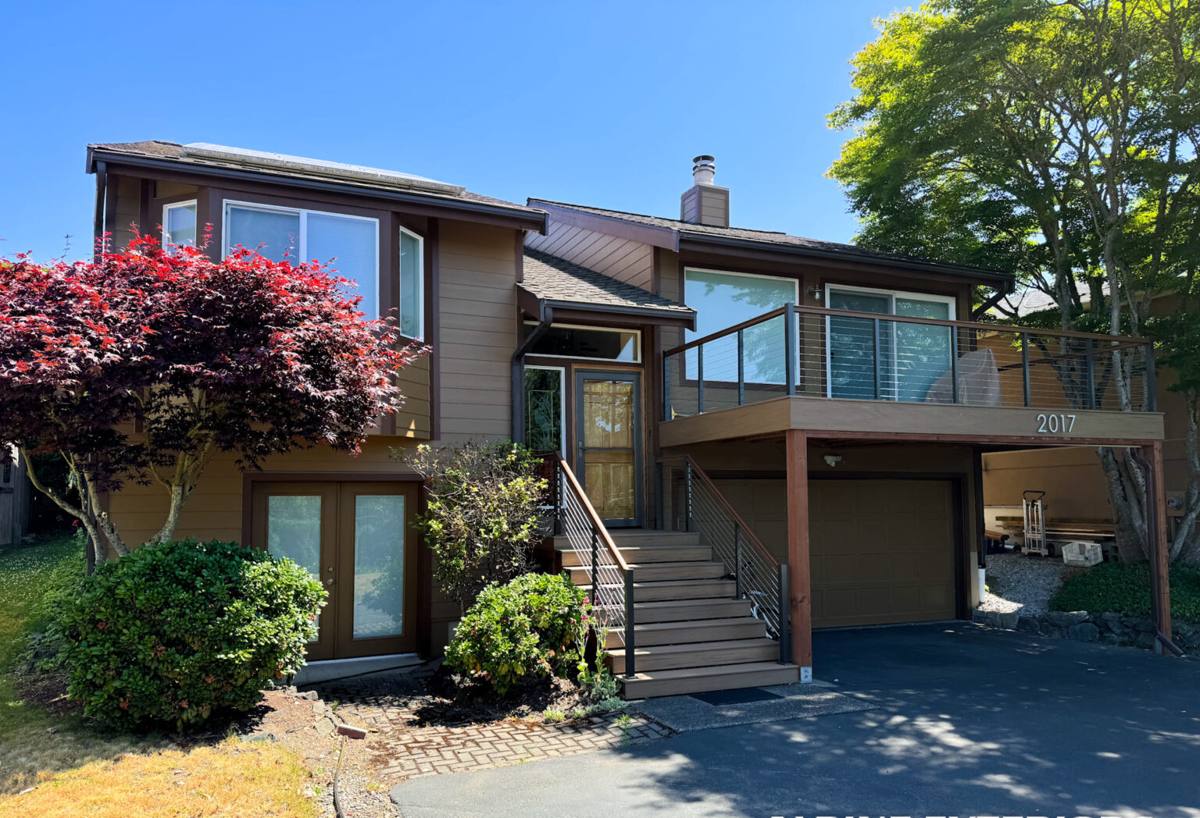
What Actually Fails First on a Local Roof
Most roof repair calls in this area don't start with "the roof is falling apart." They start with a stain on a ceiling, a curling shingle someone spotted from the yard, or a contractor doing a gutter cleaning who mentioned something looked off. In our experience working roofs in this part of Everett, the failure points tend to cluster in the same handful of places:
- Flashing around chimneys, skylights, and roof-to-wall transitions — the metal or sealant that bridges two different roof planes
- Valleys, where two roof slopes meet and water volume concentrates
- Fasteners and shingle edges that have been lifted by wind-driven rain over multiple storm seasons
- Moss-choked sections on shaded, north-facing slopes where organic growth has held moisture against the deck
- Pipe boots and vent seals, which are rubber or plastic components that degrade with age faster than the roofing material around them
None of these are dramatic failures on their own. But driving rain finds the smallest gap, and salt air accelerates corrosion on any exposed metal fastener or flashing edge. A pinhole-sized gap in March can be a soaked section of decking by winter.
Signs It's Repair Time, Not Replacement Time
One of the most common questions we get is whether a problem area means the whole roof is done. Usually, it doesn't. A roof repair makes sense when the damage is localized and the roofing material elsewhere is still sound. Watch for:
- A ceiling stain that appears after a heavy rain and doesn't grow between storms
- One or two shingles that are cracked, curling, or missing while the surrounding field looks intact
- Visible daylight or water staining around a single chimney, skylight, or vent
- Moss buildup concentrated on one slope rather than the whole roof
- A recent storm event — wind, a falling branch, hail — with damage limited to a specific area
If instead you're seeing granule loss across most of the roof, multiple soft or spongy spots on the decking, or the roof is simply old enough that repairs have become frequent, that's a different conversation — and an honest contractor will tell you that directly instead of running up repair invoices on a roof that's genuinely at the end of its service life.
What a Correct Repair Actually Involves
It's Not Just Matching Shingles
A roof repair that holds up through another Everett winter has to address the water path, not just the visible surface. That means pulling back surrounding shingles to inspect the underlayment and decking beneath the damaged area, checking for soft or delaminated wood, and confirming that flashing details are actually shedding water correctly — not just caulked over.
Flashing Is Where Repairs Succeed or Fail
Given how much of our climate's damage originates at transitions — chimneys, walls, valleys, skylights — flashing work is the part of a repair that matters most and gets rushed most often. Correct flashing repair means properly lapped metal that directs water downhill under gravity, not sealant used as a substitute for proper metal work. Sealant has its place as a secondary barrier, but it degrades faster than metal, especially with salt air in the mix, and it should never be the primary defense at a critical joint.
Matching Materials Without Cutting Corners
Whenever possible, we match the existing shingle type, color, and exposure so a repair blends in rather than becoming a visible patch. When an exact match isn't available — which happens on older roofs — we'll walk you through the options honestly rather than installing something mismatched and hoping you don't notice.
Roofing Systems Common on North Everett Homes
North Everett has a mix of housing stock, from older single-story homes to newer construction, and the roofing material affects how a repair should be approached.
| Roofing Type | Common Repair Needs | Climate Consideration |
|---|---|---|
| Asphalt/composition shingle | Wind-lifted or cracked shingles, worn flashing, granule loss | Most common; moderate moss resistance depends on shingle age and coating |
| Cedar shake | Split or curled shakes, moss and moisture retention between courses | Needs more frequent moss management in shaded, damp areas |
| Metal roofing | Fastener backout, sealant washer failure, seam issues | Handles moss and rain well but salt air demands corrosion-resistant fasteners |
| Flat or low-slope (membrane) | Seam separation, ponding water, membrane punctures | Drainage design matters more than material in a high-rainfall climate |
Whatever the system, the underlying principle is the same: water has to keep moving downhill and off the roof, and every repair has to restore that path rather than just cover a hole.
How Our Repair Process Works
1. Honest Assessment First
We start with a full inspection, not just a look at the spot you called about. A leak in one room can originate several feet away from where it shows up inside, so we trace the actual water path before proposing a fix.
2. A Clear, Written Scope
You'll get a plain-English explanation of what's failing, what we're going to do about it, and why — including whether we think repair is the right call versus a longer-term plan toward replacement.
3. The Repair Itself
Work is done with attention to the details that actually determine longevity: proper underlayment integration, correctly lapped flashing, fasteners suited to a salt-air environment, and shingle or material matching where practical.
4. A Final Check for Related Issues
Since we're already on the roof, we'll flag anything else worth knowing about — a moss patch starting to establish, a gutter that's not draining, a vent boot showing early wear — so small issues stay small.
Moss, Algae, and Ongoing Roof Care
Because moss season runs long in this part of Snohomish County, a repair without a maintenance conversation is only half the job. Homeowners in North Everett can extend the life of a roof — and reduce how often repairs are needed — with a few consistent habits:
- Keep overhanging branches trimmed back to reduce shade and debris buildup on the roof
- Clear gutters and valleys of leaves and needles at least twice a year, more often under heavy tree cover
- Address moss growth early with proper removal methods rather than aggressive pressure washing, which can strip granules and shorten shingle life
- Have flashing and pipe boots visually checked every couple of years, since these components age faster than the roofing field around them
- Watch for the early ceiling stain or musty smell that signals a slow leak before it becomes a visible one
Repair vs. Replacement: What Actually Drives the Decision
| Factor | Favors Repair | Favors Replacement |
|---|---|---|
| Age of roofing material | Well within expected lifespan | At or past typical service life for the material |
| Extent of damage | Localized to one area or slope | Spread across most of the roof |
| Decking condition | Solid, no soft spots found | Soft, delaminated, or repeatedly wet decking |
| Repair history | First or infrequent repair | Recurring repairs in different spots each year |
| Underlying cause | Isolated storm damage or a single failed detail | Systemic wear from age, sun, and moisture across the whole roof |
We'll never push a full replacement when a solid repair will genuinely hold — but we also won't keep billing you for repeated patches on a roof that's telling you it's done. Broad honest pricing for a straightforward local roof repair typically runs from a few hundred dollars for a minor flashing or shingle fix up to a few thousand for more involved work like valley or decking repair; the assessment is what determines where a specific job lands.
Why Hiring a Crew That Works This Area Matters
A roofing crew that regularly works North Everett has already seen how salt air corrodes fasteners faster near the water, how driving rain finds gaps at specific flashing details common to the housing stock here, and how moss establishes on the shaded slopes typical of this neighborhood's mature tree cover. That familiarity shows up in the assessment — knowing what to check first, and knowing which shortcuts don't hold up here even if they'd pass in a drier inland climate.
It also means accountability. A contractor who works this neighborhood regularly has a reason to get the repair right the first time and to stand behind it, rather than doing a one-off job and moving on.
Get a Straightforward Roof Assessment
If you've got a stain, a curling shingle, or a moss patch you've been meaning to deal with, it's worth having it looked at before another rainy season adds to the damage. We offer free, no-pressure estimates for roof repair work in North Everett — use the form below to get one scheduled.