 Everett
 Roof Replacement in Port Gardner: A Different Climate Challenge
Port Gardner sits close to the water, and that changes what a roof has to deal with compared to homes further inland in Snohomish County. Homes here take on salt-laden air off Port Gardner Bay, long stretches of driving rain that comes in sideways off the water, and a moss season that runs longer than most homeowners realize. A roof replacement in this neighborhood isn't just about swapping old shingles for new ones — it's about building a roof system that can shrug off marine air, shed heavy rain without backing up under the edges, and resist moss long enough that you're not fighting it every spring.
We work roofs across Everett and greater Snohomish County, but Port Gardner homes get a specific approach because of where they sit. That means different flashing choices, different attention to ventilation, and a different eye for where moss and moisture tend to cause trouble first.
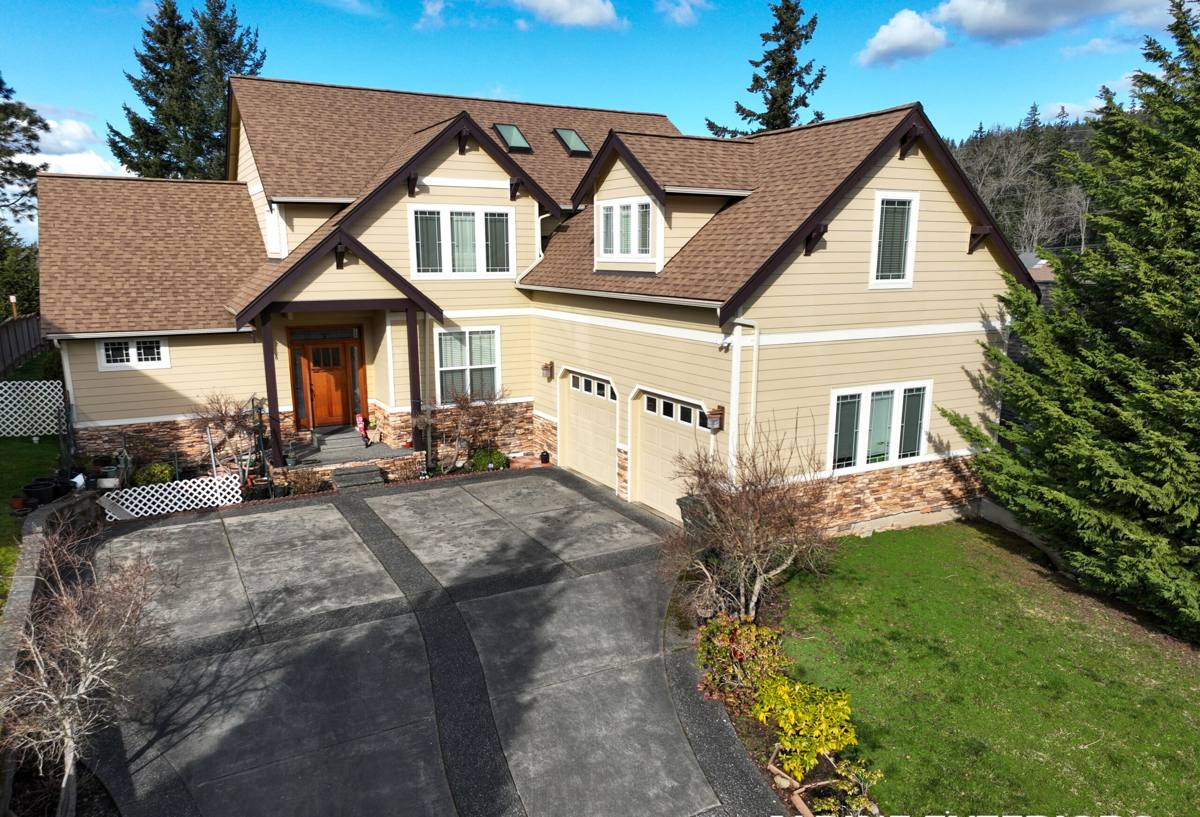
Signs It's Time to Replace, Not Repair
Not every roof problem means a full replacement — plenty of leaks and worn spots can be patched. But there's a point where repairs stop making financial sense and start just delaying the inevitable. If you're seeing more than one of the following, it's worth having the whole roof evaluated rather than chasing individual repairs:
- Shingles that are cupping, curling at the edges, or losing their granules in visible patches
- Moss growing thick between shingle courses, not just on the surface
- Dark streaking or algae staining across large sections, especially on north-facing slopes
- Ceiling stains, soft spots in the attic decking, or daylight visible through the roof boards
- Shingles missing or torn loose after a windstorm, especially if it's happened more than once
- A roof that's 20+ years old and has never been fully replaced or re-decked
- Flashing around chimneys, vents, or valleys that's rusted, lifted, or was never properly sealed
If you're only seeing one or two of these and the roof is otherwise sound, a repair may be the right call. We'll tell you that honestly during an inspection — we don't push a full replacement when a targeted fix will hold up.
What Salt Air Off Port Gardner Bay Does to a Roof
Metal Flashing and Fasteners
Salt air accelerates corrosion on anything metal — flashing, drip edge, nail heads, and vent caps included. On homes further from the water, standard galvanized flashing can last the life of the roof. Closer to Port Gardner Bay, that same flashing can start showing rust and pitting years earlier, which opens the door to leaks at exactly the spots where a roof is most vulnerable: valleys, chimneys, and roof-to-wall transitions. We spec corrosion-resistant flashing and fasteners for homes in this area as a standard, not an upgrade, because replacing flashing again in eight years costs more than doing it right the first time.
Shingle Wear and Granule Loss
Salt-laden moisture also speeds up the breakdown of asphalt shingle surfaces over time, especially on roofs that already take a beating from wind and rain. Granule loss exposes the asphalt underneath to UV and moisture, which shortens the shingle's effective life. It's not dramatic or sudden — it's a slow fade that shows up as a roof needing replacement at year 18 instead of year 25.
Driving Rain: Getting the Water Path Right
Underlayment and Ice-and-Water Barrier
Wind-driven rain off the Sound doesn't fall straight down — it gets pushed sideways and can work its way up under shingles at eaves, valleys, and low-slope sections. A synthetic underlayment rated for high wind and water resistance is the baseline here, and we install self-adhering ice-and-water barrier at eaves, valleys, and around every roof penetration, not just where code requires it. That membrane is what keeps water out even if wind gets under the shingle edge.
Flashing Details
Most roof leaks don't come from the open field of shingles — they come from flashing details: where a roof meets a wall, where a chimney or skylight interrupts the roof plane, or where two roof slopes meet in a valley. In a driving-rain climate, sloppy flashing work is the single most common cause of leaks we find when we tear off an old roof. Getting the step flashing, counter-flashing, and valley metal right is where a roof replacement earns its keep.
Ventilation
Rain and moisture management doesn't stop at the shingles. A roof needs balanced intake and exhaust ventilation so moist air isn't trapped in the attic, condensing on the underside of the decking. In a wet climate, poor ventilation shortens the life of the roof deck itself and can lead to mold and rot that has nothing to do with the shingles above. We check and correct ventilation as part of every replacement, not as an optional add-on.
Moss Season and Roof Longevity in Snohomish County
Why Shaded Roofs Suffer Most
Port Gardner's tree cover and marine layer mean roofs here often stay damp longer than roofs in drier, sunnier parts of the county. North-facing slopes and sections shaded by trees are the first places moss takes hold, and once it's established, it holds moisture against the shingle surface and works its way under the tabs, lifting them over time. Moss isn't just cosmetic — left long enough, it shortens the life of an otherwise sound roof.
Building Moss Resistance Into the New Roof
A roof replacement is the right time to get ahead of moss instead of fighting it every spring. That includes installing zinc or copper strips near the ridge on shaded sections, which release trace metals that discourage moss growth as rain washes over the roof, and making sure there's no organic debris trapped under the new roofing where moss can start. It's a small addition at install time that saves a lot of maintenance headaches later.
Choosing a Roofing Material for This Climate
There's no single "best" roofing material — the right choice depends on your budget, how long you plan to stay in the home, and how much maintenance you want to take on. Here's how the common options stack up for a Port Gardner home specifically:
| Material | Typical Lifespan | Salt Air / Moisture Handling | Relative Cost | Best Fit |
|---|---|---|---|---|
| 3-Tab Asphalt Shingle | 15–20 years | Fair — more prone to granule loss near the water | Lowest | Budget-conscious, shorter-term ownership |
| Architectural (Laminate) Shingle | 25–30 years | Good with proper flashing and ventilation | Moderate | Most Port Gardner homes — balance of cost and durability |
| Standing Seam Metal | 40–50+ years | Very good when properly coated and fastened | Higher | Homeowners planning to stay long-term or wanting minimal maintenance |
| Cedar Shake | 20–30 years with upkeep | Requires regular maintenance to resist moss and rot in this climate | Higher | Homeowners committed to ongoing maintenance for the look |
For most Port Gardner homes, a mid-to-upper-tier architectural shingle with proper underlayment, flashing, and moss-resistant details hits the right balance — but we'll walk through the real trade-offs for your specific roof and budget rather than steering everyone toward the same product.
Our Roof Replacement Process, Step by Step
- Inspection and assessment — We get on the roof, check the decking, flashing, ventilation, and attic condition, and take photos so you can see what we see.
- Written estimate with material options — You get a clear, itemized quote covering more than one material tier, with the trade-offs explained honestly.
- Permitting — We handle any required permit with the city or county so there's no gap in your paperwork.
- Scheduling around weather — We plan tear-off and install for a dry window whenever possible, given how much rain this area gets.
- Tear-off and deck inspection — Old roofing comes off and the decking gets inspected; any soft or rotted sections are replaced before anything new goes down.
- Underlayment, ice-and-water barrier, and flashing — This is where most of the roof's real weather resistance comes from, and we don't rush it.
- New roofing installation — Installed to manufacturer spec so your warranty stays valid.
- Ventilation check — Intake and exhaust are verified and corrected if the existing setup was inadequate.
- Cleanup and walkthrough — Site is cleared of debris and nails, and we walk the finished roof with you before calling the job done.
Why Hire a Crew That Already Works Port Gardun
A roofing crew that mostly works drier, inland areas can still do competent work, but they won't necessarily think to spec corrosion-resistant flashing by default, or know which slopes in this neighborhood tend to hold moss longest, or plan installs around the reality of a marine-influenced rain pattern. That local pattern recognition is built from doing the work here repeatedly, not from a general roofing background.
We also know the practical side of working in Everett and Snohomish County — what the permitting process looks like, how weather windows tend to run through the fall and winter, and how to sequence a job so your home isn't exposed to open sky longer than it needs to be. None of that shows up in a generic roofing brochure, but it's the difference between a roof that performs well here for decades and one that needs attention again in five years.
Get a Straight Answer About Your Roof
If your roof is showing its age, or you just want an honest opinion on whether repair or replacement makes more sense, we're happy to take a look. There's no pressure and no sales script — just a clear assessment and a written estimate you can take your time with. Use the form below to request a free estimate for your Port Gardner home.