 Everett
 Port Gardner's Waterfront Exposure Is Different From the Rest of Everett
Homes in Port Gardner sit close to the water, many on the bluff overlooking Port Gardner Bay, which means they take on a combination of weather stresses that inland Everett homes see less of. Wind off Puget Sound carries a fine salt mist onto exterior walls. That same wind drives rain sideways into siding, soffits, and trim rather than letting it fall straight down and run off. And the shade, humidity, and near-constant moisture that come with living this close to the water add up to a moss season that runs longer here than in drier parts of Snohomish County.
None of that is a reason to avoid siding a home in Port Gardner — it just means the installation has to be done with that exposure in mind. A siding job that would hold up fine in a sheltered inland neighborhood can fail early on a bluff-facing wall if the details aren't adjusted for wind, salt, and standing moisture. This page focuses specifically on what siding installation looks like when it's done right for this part of Everett.
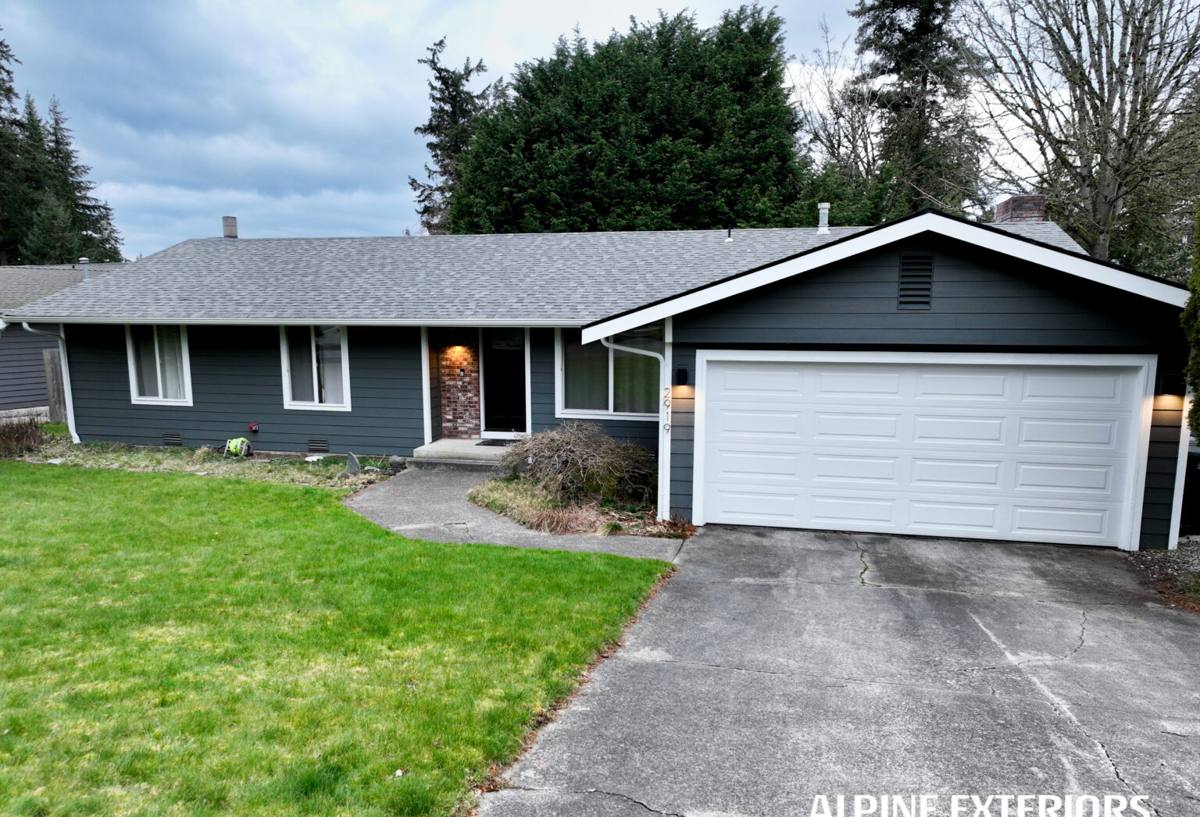
What Salt Air, Driving Rain, and Moss Actually Do to a Wall
Salt air and slow corrosion
Airborne salt doesn't just sit on the surface of siding — it works its way into fasteners, flashing, and any exposed metal trim. Over years, that accelerates corrosion in anything not rated or protected for coastal exposure. It also tends to hold moisture against a wall longer than plain rainwater does, which keeps the surface damp even after a storm has passed.
Wind-driven rain and the wall behind the siding
On a bluff exposed to weather coming off the bay, rain doesn't just wash down a wall — it gets pushed sideways and upward into laps, seams, and trim joints. If the water-resistive barrier, flashing, and drainage plane behind the siding aren't installed correctly, that wind-driven water finds its way behind the cladding instead of running off it, and the sheathing pays the price long before the siding itself shows a problem.
Moss and prolonged moisture contact
Moss needs shade, moderate temperatures, and moisture that doesn't dry out quickly — conditions that describe a lot of north- and west-facing walls in this neighborhood for much of the year. Moss holding moisture against a wall for extended periods keeps that surface wetter, longer, than open sun-exposed siding elsewhere in Everett, which is exactly the kind of condition that punishes any product sensitive to sustained water contact.
What a Correct Installation Has to Get Right in Port Gardner
A working drainage plane
Any water that gets past the siding needs a clear path down and out, not a dead space where it sits against the sheathing. That means a properly lapped water-resistive barrier and a drainage gap behind the siding, installed continuously — not interrupted at random points because a detail got rushed.
Flashing at every transition
Windows, doors, roof-to-wall intersections, and any deck or porch ledger are the places wind-driven rain finds a way in. Flashing at these transitions has to be layered so water sheds down and over the layer below it at every point, with special attention to any wall that faces the water directly.
Fastening built for wind exposure
Homes on an exposed bluff see higher sustained wind loads than sheltered inland lots. Fastener type, spacing, and embedment need to match that exposure — not just meet the minimum spec for a calmer site a mile inland.
Clearance from grade and vegetation
Keeping the bottom edge of the siding at the right clearance from soil, decking, and landscaping reduces the splash-back and shade conditions that let moss and mildew take hold in the first place. It's a small detail that has an outsized effect on how much moss maintenance a homeowner deals with later.
Why We Install Only James Hardie Fiber Cement
We don't install vinyl, LP SmartSide, Cemplank, Allura, or primed wood siding, and on a job like this the reasons matter more than usual. Vinyl can warp and doesn't stand up well to sustained wind-driven rain intrusion behind panel laps. Wood-based and treated-wood products are organic material — no matter how well they're primed, they remain more vulnerable to the kind of prolonged moisture and moss growth this neighborhood produces. Other fiber cement brands vary in how consistently they're manufactured and warranted, and we've standardized on the one product line we can install to a single spec and stand behind fully.
James Hardie fiber cement is non-combustible, dimensionally stable, and manufactured in climate-specific formulations. For the Pacific Northwest, Hardie's HZ5 product line is engineered specifically for regions with sustained moisture exposure like ours — which is exactly the profile of a bluff-facing home near Port Gardner Bay. The factory-applied ColorPlus finish is baked on under controlled conditions, which holds color and resists the kind of moisture staining and fading that repainted or field-finished siding struggles with over time near salt air. It also comes with a strong transferable warranty, which matters on a coastal-exposed home where the manufacturer's own confidence in the product is worth something.
How Our Installation Process Works
- Site and exposure assessment — we look at which walls face the water and prevailing wind, existing moss and moisture patterns, and the condition of the sheathing underneath the current siding.
- Tear-off and sheathing inspection — old siding comes off and we check the wall assembly underneath for rot, soft spots, or prior water intrusion before anything new goes up.
- Water-resistive barrier and drainage plane — installed continuously and lapped correctly, with the drainage gap sized to actually move water rather than trap it.
- Flashing at every penetration and transition — windows, doors, roof lines, and any attached structures get flashed in the correct order, water-shedding layer over layer.
- Hardie panel or plank installation — fastened to Hardie's specification, with fastener choice and spacing adjusted for this site's wind exposure.
- Trim, caulking, and touch-up — factory-finished ColorPlus material minimizes field painting, and any cut edges are sealed per manufacturer instructions.
- Cleanup and final walkthrough — we walk the finished job with the homeowner before calling it done.
Signs a Port Gardner Home Needs New Siding Soon
- Moss or dark streaking that returns within months of cleaning, especially on shaded or bay-facing walls
- Siding that feels soft, spongy, or gives slightly when pressed near the bottom edges or below windows
- Paint that's peeling or bubbling rather than just fading — a sign moisture is trapped underneath
- Visible cupping, warping, or gaps opening up at panel seams and corner trim
- Rusty streaking around fasteners or metal trim, a common early sign of salt-air corrosion
- A musty smell or visible staining on interior walls that back up to exterior siding
Cost Factors for Siding Installation in Port Gardner
| Factor | Why It Matters Here |
|---|---|
| Wall exposure | Bluff-facing and water-facing walls often need more careful flashing and fastening detail than sheltered walls |
| Condition of existing sheathing | Long-term moisture or moss exposure sometimes means sheathing repair is needed before new siding goes on |
| House size and complexity | More corners, trim, and window/door transitions mean more flashing detail and labor time |
| Siding profile and finish | Plank, panel, and shingle-style Hardie products carry different material and labor costs |
| Access | Bluff lots and steep or tight sites can affect staging, scaffolding, and material handling costs |
Why It Matters to Hire a Crew That Already Works in Port Gardner
A crew that's only worked calmer, inland Everett sites doesn't always think about wind exposure, salt air, or extended moss season as first-order concerns — they're used to installing to a general spec and moving on. A crew that already works this neighborhood knows which walls need extra attention before the tape measure even comes out, understands City of Everett permitting for this kind of project, and isn't guessing at how the local exposure should change the installation details described above.
Snohomish County has plenty of siding contractors, but experience specific to waterfront and bluff exposure in Everett is what actually shows up in how long a job lasts — not just how it looks the day it's finished.
Get a Straightforward Estimate
If your Port Gardner home is due for new siding, or you're just trying to figure out how much longer the current siding has, we're happy to take a look and give you a straight answer. The estimate is free, there's no pressure, and you can use the form below to get started.