 Everett
 Siding Replacement Built for Glenhaven's Weather
Glenhaven sits inside Everett, close enough to Puget Sound and the Snohomish River lowlands that homes here take a specific kind of beating year-round. Salt-tinged air moves in off the water, driving rain comes sideways during fall and winter storms, and a long, damp moss season settles into anything that stays shaded and wet for more than a few days at a time. None of that is unusual for Snohomish County, but it adds up differently on a house than it does on a fence or a deck. Siding is your home's largest single surface exposed to all of it, all year, and when it starts to fail, the damage is rarely limited to looks.
This page is about one thing: replacing the siding on a Glenhaven home the right way, with a product and installation method built to handle this specific climate rather than a generic one.
How Salt Air, Rain, and Moss Wear Down Siding Here
Salt Air
Even a few miles inland from the Sound, airborne salt accelerates the breakdown of paint films, fasteners, and any siding material that relies on a surface coating for protection. Over years, that shows up as chalking, fading, and coating failure well ahead of a manufacturer's stated life expectancy.
Driving Rain
Everett's storms don't just fall straight down — wind pushes rain sideways into wall assemblies, testing every seam, joint, and piece of flashing on a house. Siding that isn't installed with the right laps, gaps, and water-shedding details will eventually let moisture behind it, no matter how good the material itself is.
Moss and Sustained Moisture
North-facing walls, homes tucked under mature trees, and shaded side yards common in established Glenhaven lots stay damp longer after every rain event. That extended moisture window is exactly what moss, mildew, and algae need to take hold, and it's also what rots wood-based siding from the inside out if water finds a way behind the surface.
Signs a Glenhaven Home Needs Siding Replaced, Not Just Patched
Homeowners often call us for a repair and learn the problem is bigger than one board. A few signs point toward full replacement rather than a spot fix:
- Soft, spongy, or crumbling siding when pressed — a sign moisture has already reached the substrate
- Paint that won't hold no matter how often it's redone, or peeling within a year or two of a repaint
- Persistent moss or dark streaking that returns within weeks of cleaning
- Visible gaps, warping, or buckling panels, especially near corners and window trim
- Interior signs like musty smells, peeling interior paint, or soft drywall near exterior walls
- Siding installed more than 20-25 years ago, especially if it's wood, hardboard, or an older vinyl product
If more than one of these shows up in the same area of the house, the underlying wall assembly has likely been absorbing moisture for a while, and patching the visible symptom won't fix what's happening underneath.
Why We Install Only James Hardie Fiber Cement
We standardized on James Hardie fiber cement siding for every home we work on, including here in Glenhaven, and we don't install LP SmartSide, vinyl, Cemplank, Allura, primed spruce, or cedar. That's not a marketing position — it's a decision based on what actually holds up against salt air, wind-driven rain, and a long wet season without turning into a maintenance project for the homeowner.
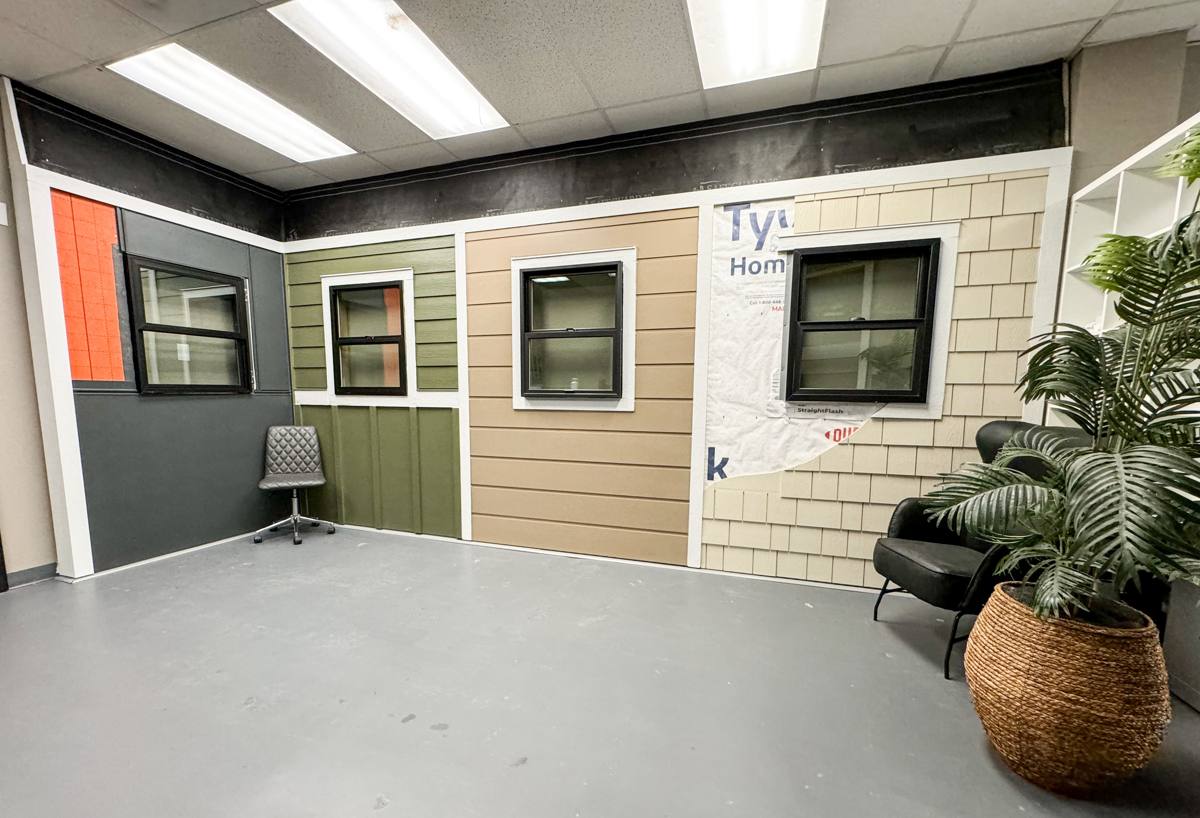
Fiber cement is non-combustible and dimensionally stable, meaning it doesn't expand, contract, and pull away from fasteners the way wood-based and some engineered products can as they cycle through wet and dry seasons. Hardie's ColorPlus factory finish is baked on under controlled conditions rather than field-applied, which matters directly for salt-air exposure — factory finishes resist chalking and fading far longer than site-applied paint, and touch-up is simpler when it's eventually needed. Hardie also engineers specific product lines (their HZ5 line, for example) for wetter, more humid climate zones like ours, which is a meaningful difference from siding built to a single national spec.
None of this means other products are junk — it means that after years of installing and repairing siding in this exact climate, this is the system we're willing to warranty and stand behind on a Glenhaven roofline.
What a Correct Siding Replacement Involves
The siding panel itself is maybe half the job. The other half — the part you can't see once it's finished — is what determines whether the house stays dry for the next 30 years.
Full Tear-Off and Inspection
We remove the old siding down to the sheathing so the crew can actually see the wall, not guess at its condition. This is where hidden rot, soft sheathing, or old moisture damage from a prior installation gets found and dealt with before anything new goes up.
Water-Resistive Barrier
A correctly installed weather-resistive barrier, lapped and sealed the right direction, is what actually keeps wind-driven rain from reaching the wood framing. This layer does more long-term work than the siding surface itself.
Flashing at Every Penetration
Windows, doors, hose bibs, vents, and roof lines are where water intrusion actually starts. Proper flashing details at each of these are non-negotiable, especially on a home taking rain from multiple directions in a windy storm.
Correct Fastening and Clearances
Hardie siding has specific manufacturer requirements for fastener type, spacing, and clearance from grade, decks, and roof lines. Skipping these details is the single most common reason fiber cement siding underperforms — it's almost never the product's fault, it's the installation.
Trim, Caulking, and Finish Work
Corners, trim boards, and caulk joints are finished to shed water outward rather than trap it, and touch-up coating is applied to any factory-finished cut edges.
Our Siding Replacement Process
- On-site assessment — we walk the exterior, check for moisture damage, and evaluate what's driving the need for replacement
- Free estimate — a clear, written scope and price, no pressure to decide on the spot
- Product and color selection — choosing the right Hardie line and ColorPlus finish for the home's exposure and style
- Tear-off and structural check — old siding removed, sheathing inspected and repaired as needed
- Weather barrier and flashing installation — the layer that actually keeps the house dry
- Siding installation to manufacturer spec — correct fastening, clearances, and joint treatment
- Trim, caulking, and final walkthrough — finishing details and a review with the homeowner before we call it done
What Siding Replacement Costs Depend On
Every Glenhaven home is different, so we don't quote a number until we've seen the house. The table below covers the main factors that move a project up or down in scope and cost.
| Factor | Why It Matters |
|---|---|
| Home size and wall complexity | More square footage, corners, and roof lines mean more material and labor |
| Condition of existing sheathing | Hidden rot found during tear-off adds repair work before new siding can go up |
| Siding profile and finish | Lap width, texture, and color options within the Hardie lineup affect material cost |
| Trim and detail work | Window casings, corner boards, and accent details add labor time |
| Access and site conditions | Tight lots, mature landscaping, or multi-story walls affect staging and labor |
| Tear-off and disposal | Removing and hauling old siding is priced separately from new installation |
Why It Matters That We Already Work in Glenhaven
A crew that's already worked on homes in this part of Everett knows how the neighborhood's tree cover, lot orientation, and exposure to weather off the Sound tend to affect a wall assembly before we ever pull the first piece of siding off. That's not a substitute for inspecting each house individually, but it does mean fewer surprises, a more accurate estimate up front, and a crew that isn't learning the local climate on your project. It also means we're a short drive away if a question comes up after the job is finished — not a company that installed once and moved on.
After Installation: What Upkeep Actually Looks Like
One of the real advantages of correctly installed Hardie fiber cement in this climate is how little it asks of a homeowner afterward. A periodic rinse to keep moss and grime from building up, a visual check of caulk lines every year or two, and prompt attention if a fastener ever backs out or a panel gets impact damage is about the extent of it. There's no repainting cycle to keep ahead of the way there is with wood or field-painted materials — the ColorPlus finish is designed to go a long time before it needs attention.
If your Glenhaven home's siding is showing its age or you're just planning ahead, we're happy to take a look and give you a straight answer about what it needs. Request a free, no-pressure estimate below and we'll walk the property with you.