 Everett
 North Everett's Climate Is Harder on Siding Than It Looks
North Everett sits close enough to Puget Sound that salt-laden air is a real, ongoing factor for exterior materials here — not just a coastal-town talking point. Add Snohomish County's long wet season, driving rain that comes in sideways off the water during winter storms, and months of shade and moisture that keep moss and algae established on north- and west-facing walls, and you have a climate that quietly works siding harder than most homeowners realize. It's rarely one dramatic failure. It's years of moisture cycling in and out of seams, fasteners, and butt joints that were never quite sealed right the first time.
That combination is exactly why siding replacement in this neighborhood needs to be treated as a moisture-management project first and a cosmetic upgrade second. Get the water management right and the new look takes care of itself. Skip it, and even an expensive material will disappoint you within a decade.
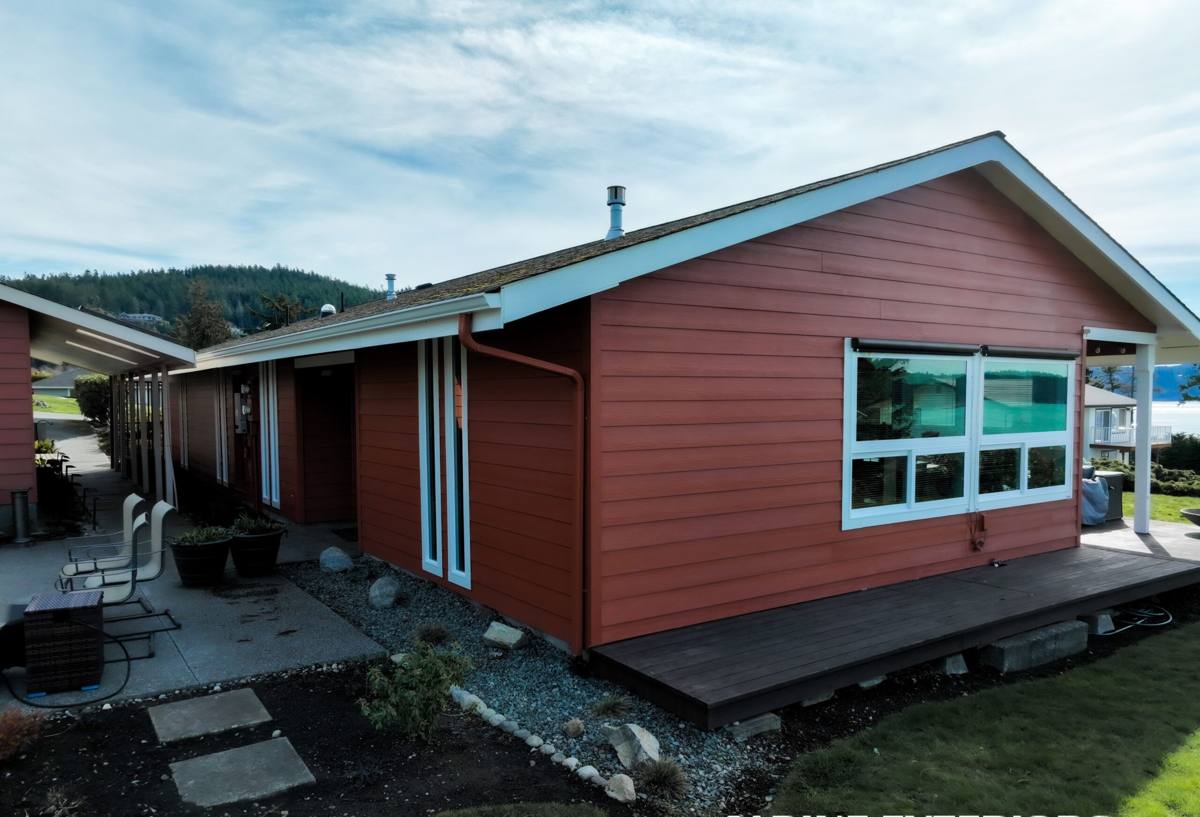
Signs Your North Everett Home's Siding Has Reached the End
Most siding doesn't fail all at once — it gives you warning signs for a year or two before real damage sets in. Homeowners in this area should watch for:
- Soft or spongy spots when you press on siding, especially near the bottom courses or under windows
- Persistent moss, algae, or black streaking that comes back within weeks of cleaning
- Paint that's bubbling, peeling, or chalking faster than the repaint cycle you'd expect
- Visible cupping, warping, or delamination on wood-based or engineered wood panels
- Gaps opening at butt joints, corners, or trim where caulk has failed
- Musty smells or discoloration on interior walls that share an exterior wall with damaged siding
- Siding that's simply outlived its expected service life and is due before it becomes a bigger repair
Any one of these on its own might be a minor repair. Two or three together, especially on a wall that takes direct weather off the Sound, usually means it's time to talk about full replacement rather than another round of patching.
What a Correct Siding Replacement Actually Involves
The material on the outside gets all the attention, but the layers underneath it are what actually keep a North Everett home dry. A replacement done right includes:
Full tear-off, not an overlay
Installing new siding over old is faster and cheaper, but it traps whatever moisture and rot are already in the wall assembly. We remove existing siding down to the sheathing so it can actually be inspected.
Sheathing inspection and repair
This is the step that matters most in a wet climate. Any soft, delaminated, or rotted sheathing gets identified and replaced before anything new goes up — covering damaged sheathing with attractive new siding just delays a much more expensive repair.
A proper water-resistive barrier
A correctly lapped and taped weather-resistive barrier is the home's real defense against driving rain. Siding sheds most of the water, but the barrier behind it handles what gets through.
Flashing at every penetration
Windows, doors, hose bibs, vents, and any other wall penetration need proper flashing integrated with the water-resistive barrier — not just a bead of caulk. Caulk is a maintenance item; flashing is a permanent detail.
Manufacturer-spec fastening and clearances
Correct nailing patterns, minimum clearances from grade and roofline, and proper gaps at butt joints all affect how the siding performs over 20-plus years, not just how it looks on installation day.
Why We Install Only James Hardie Fiber Cement
We install James Hardie fiber cement siding exclusively. We don't offer vinyl, LP SmartSide, Cemplank, Allura, primed spruce, or cedar, and that's a deliberate standard, not a lack of options.
Vinyl is affordable and low-maintenance, but it's a plastic product that expands and contracts with temperature swings, can warp or crack under impact, and simply melts if exposed to enough heat from a nearby grill or fire pit. Wood-based engineered siding like LP SmartSide performs well when kept dry and maintained on schedule, but it's still a wood product at its core — any breach in the coating or a missed caulk joint gives moisture a path in, and once wood-based siding starts to swell or delaminate, that section usually needs replacing. Cedar and primed spruce are attractive natural materials, but they demand a repainting and recaulking schedule that most homeowners underestimate, especially in a climate that stays damp for much of the year.
James Hardie fiber cement is cement, sand, and cellulose fiber — it doesn't rot, it's non-combustible, and it isn't a food source for the moss and mildew that thrive in North Everett's shade and moisture. Hardie's ColorPlus factory finish is baked on under controlled conditions, which holds color and resists fading and chipping far better than field-applied paint. Hardie also builds region-specific product lines engineered for exactly this kind of climate, backed by a strong transferable warranty. Installed to spec, it's the material we're comfortable standing behind on our own reputation.
How Common Siding Materials Compare in This Climate
| Material | Moisture & Rot Resistance | Coastal / Salt Air Performance | Maintenance Burden |
|---|---|---|---|
| Vinyl | Doesn't rot, but seams and panels can warp or crack | Can fade and become brittle over time | Low, but limited repair options once damaged |
| LP SmartSide / engineered wood | Good if coating stays intact; vulnerable once breached | Coating must be maintained on schedule | Moderate — regular caulk and paint upkeep required |
| Cedar / primed spruce | Natural wood; rots without diligent upkeep | Salt air accelerates weathering | High — repainting and sealing on a recurring cycle |
| James Hardie fiber cement | Does not rot; resists moisture-driven damage | Engineered for coastal and wet climates | Low — factory finish, occasional wash |
What Drives the Cost of a Siding Replacement
No two homes cost the same to re-side, and the honest answer to "what will this cost" always depends on a handful of factors we assess during the estimate:
| Factor | Why It Matters |
|---|---|
| Sheathing and framing condition | Rot discovered during tear-off adds repair work that can't be priced until the old siding is off |
| Home size and number of stories | More wall area and taller elevations mean more material, labor, and staging or scaffolding |
| Trim and architectural detail | Corners, dormers, and detailed trim work take more time than flat, simple elevations |
| Hardie product line and profile chosen | Lap width, texture, and product line (standard vs. climate-specific HZ lines) affect material cost |
| Access and site conditions | Tight lot lines, landscaping, or difficult truck access can add labor time |
We walk every home before quoting so the number reflects that specific property, not a generic square-footage estimate.
Our Process, Start to Finish
- Inspection and estimate — we walk the exterior, note problem areas, and explain what we're seeing before any work begins
- Tear-off — old siding comes off completely so the wall assembly can be evaluated
- Sheathing repair — any rot or damage found underneath is repaired before moving forward
- Water-resistive barrier and flashing — installed and integrated at every window, door, and penetration
- Hardie installation to manufacturer spec — correct fastening, clearances, and joint treatment
- Trim and finish work — trim, corners, and caulking completed to match the chosen Hardie profile and color
- Final walkthrough — we review the finished work with you before calling the job done
Why Local Experience in North Everett Specifically Matters
A siding crew that regularly works this neighborhood already knows what tends to hide under the surface here — the age range of the housing stock, the wall assemblies that were common when many of these homes were built, and which elevations typically take the worst of the wind-driven rain and salt exposure off the Sound. That familiarity shows up in faster, more accurate estimates and fewer surprises once tear-off starts. It also means we're used to navigating Everett and Snohomish County permitting requirements without adding delays to your project.
Keeping New Siding Looking Right for Decades
Once James Hardie siding is installed correctly, upkeep is minimal compared to what North Everett homeowners are often used to. An occasional gentle wash to keep moss and algae from establishing, a visual check after major storms, and prompt attention to any caulk joint that opens up are really all it takes. The ColorPlus factory finish means you're not on a repainting schedule the way you would be with wood or engineered wood siding, which matters in a climate where exterior paint jobs don't hold up as long as they do in drier parts of the country.
If your siding is showing wear, or you just want a straight answer on whether repair or full replacement makes sense for your home, we're happy to take a look. Reach out for a free, no-pressure estimate using the form below.