 Everett
 Why Silver Lake Homes Need a Roof Built for This Climate
Silver Lake sits in south Everett, close enough to Puget Sound to catch salt-laden air on top of the rain and gray skies that define a Snohomish County winter. Add the mature tree cover that shades many lots around the lake, and you get a roofing environment that's genuinely tougher than what a roof faces in a drier inland climate. Moisture sits longer, moss and algae get a head start in the shade, and any metal fastener or flashing detail that isn't rated for a marine-influenced environment starts working against the homeowner within a few years instead of a few decades.
Metal roofing can outlast almost anything else on the market here, but only when it's specified and installed with this specific climate in mind. A metal roof that's correct for a dry, sunny region isn't automatically correct for Silver Lake. This page covers what actually matters for a metal roof on a home in this part of Everett, and what to expect from a crew that installs and services them locally.
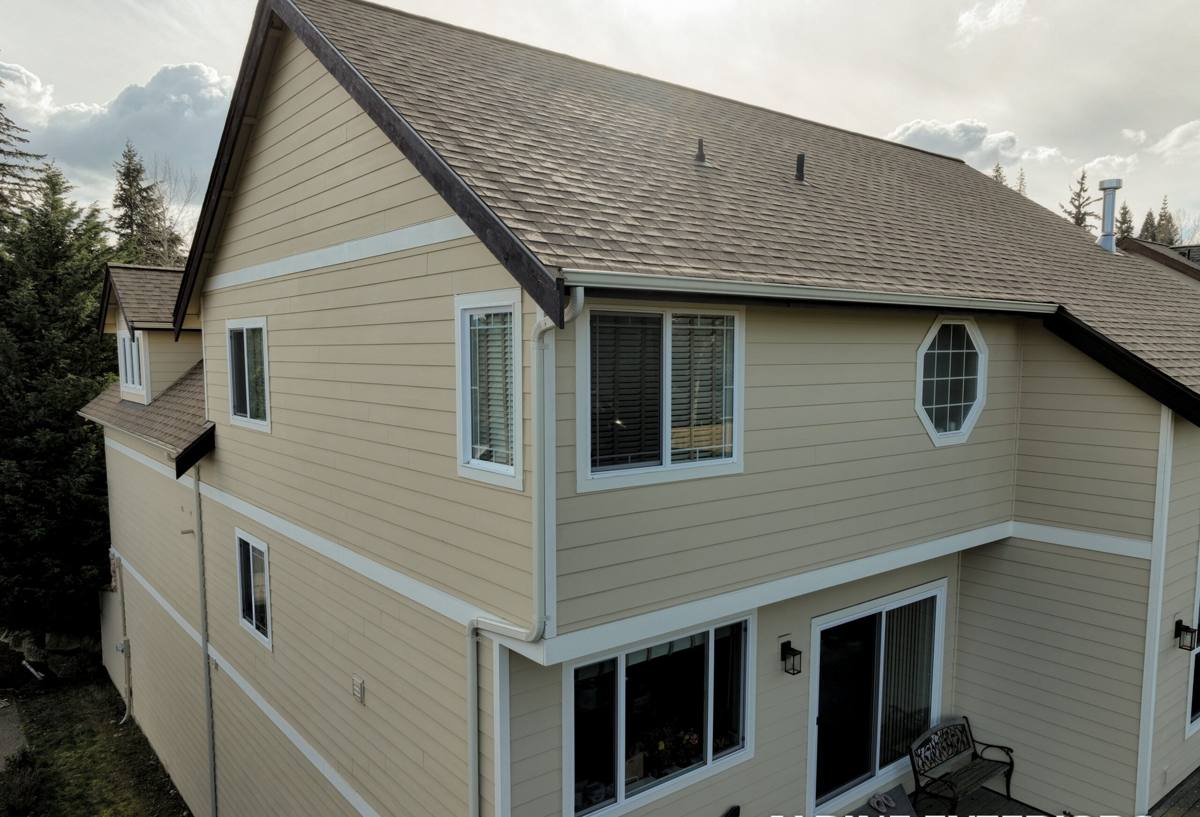
What a Correctly Installed Metal Roof Actually Involves
Metal roofing looks simple from the ground, which is part of why it's so easy to install poorly. The panels themselves are the least of it. What determines whether a metal roof performs for 40-plus years or starts leaking at year eight comes down to the details underneath and around the panels.
The Underlayment Matters More Than the Panel
In a climate that sees extended wet stretches, the underlayment beneath the metal is the real waterproofing layer, not the panel. We use synthetic or high-temperature ice-and-water-style underlayment at eaves, valleys, and penetrations rather than relying on the metal alone to shed every drop. Panels expand and contract with temperature swings, and wind-driven rain off the Sound can push water uphill under a panel edge if the underlayment and laps aren't done right.
Fastener and Flashing Compatibility
Every fastener, flashing piece, and trim component has to be metallurgically compatible with the panel material. Mixing incompatible metals against each other in a moist, salt-influenced environment sets up galvanic corrosion — the more active metal degrades faster wherever it contacts the other. This is a detail that's invisible on installation day and shows up as staining and pinholes years later, which is exactly why it has to be gotten right the first time.
Ventilation
A metal roof that traps moist attic air underneath it will condensate on the underside of the panels regardless of how good the exterior waterproofing is. Proper intake and exhaust ventilation keeps that moisture moving instead of settling into the deck and insulation.
Choosing the Right Metal Roofing System for a Silver Lake Home
Not all metal roofing is the same product wearing a different color. The three systems homeowners in this area typically consider perform very differently under the specific stresses of driving rain, salt air, and moss.
| System | Typical Lifespan | Maintenance Reality | Best Fit |
|---|---|---|---|
| Standing seam (concealed fastener) | 40-60 years | Low — no exposed fasteners to fail or re-seal | Homes wanting the lowest long-term upkeep, steeper or complex rooflines |
| Exposed-fastener panel | 25-40 years | Moderate — fastener washers age and need eventual replacement | Budget-conscious projects, simple roof shapes, secondary structures |
| Stone-coated steel | 30-50 years | Moderate — coating and granule surface need periodic inspection | Homeowners wanting a shingle or shake look with metal's underlying durability |
For a lot with heavy tree cover and shade — common around the lake — we lean toward recommending standing seam or stone-coated systems over exposed-fastener panels, simply because there are fewer penetration points for moss and debris to work into over time. That said, the right choice depends on the roof's pitch, shape, and the homeowner's budget, which is exactly what an on-site look is for.
Moss, Algae, and Debris: The Long-Term Maintenance Reality
Western Washington's extended wet season — realistically stretching from fall through spring — gives moss and algae far more time to establish than in most of the country. Shaded, north-facing slopes and roofs near mature trees are the most exposed. Metal roofing doesn't feed moss the way organic shingle surfaces can, but that doesn't make it immune. Moss and needle debris can still collect in valleys, behind chimneys, and along low-slope transitions, holding moisture against the panel and its fasteners far longer than an open, sun-exposed area would.
- Keep gutters and valleys clear of needles and leaf litter, especially into late fall
- Trim overhanging branches back from the roofline where practical
- Have moss growth removed before it mats down and holds standing moisture
- Avoid pressure washing metal panels — it can strip coatings and drive water under seams
- Schedule a walk-through inspection every couple of years, especially after major windstorms
A metal roof genuinely reduces the moss battle compared to shingles, but "reduces" isn't "eliminates." Anyone who tells a Silver Lake homeowner their roof will never need attention isn't being straight with them.
Salt Air and Corrosion: What Coastal-Adjacent Homes Need to Know
Everett's proximity to Puget Sound means airborne salt is a real factor for exterior materials, even a few miles inland. It's not the same exposure as a beachfront property, but it's enough that material choice and fastener quality matter more here than in a purely inland climate. This is one of the biggest differences between a metal roof that's correct for Silver Lake and one that's correct for eastern Washington.
Aluminum and properly coated steel both hold up well against this kind of exposure, but the coating and fastener quality make the real difference over time. We treat corrosion resistance as a baseline requirement for this area, not an upgrade — it's the reason we're careful about matching fastener metal to panel metal and specifying coatings rated for coastal-influenced environments rather than whatever is cheapest to source.
Our Metal Roofing Process From Estimate to Cleanup
The process is straightforward, but each step exists for a reason specific to this climate and this kind of roof.
- On-site assessment. We look at the existing roof deck, ventilation, pitch, tree exposure, and any moisture or moss patterns already showing up.
- System recommendation. Based on the roof shape and the homeowner's priorities, we recommend a panel type and finish, with honest trade-offs explained rather than a one-size-fits-all pitch.
- Deck prep and underlayment. Any soft or damaged decking gets addressed before anything else goes down, and the underlayment is installed with attention to valleys, eaves, and penetrations.
- Panel and flashing installation. Panels, trim, and flashing go in with matched, corrosion-resistant fasteners and correct overlap and clearance for expansion.
- Ventilation check. Intake and exhaust venting are verified or corrected as part of the job, not treated as optional.
- Final walk-through and cleanup. We review the completed roof with the homeowner and clear the site of debris and packaging.
Cost Factors for Metal Roofing in Silver Lake
Metal roofing costs more upfront than asphalt shingles, and the honest answer to "what will it cost" always depends on the specifics of the roof. These are the factors that actually move the number:
| Factor | Why It Matters Here |
|---|---|
| Panel system chosen | Standing seam runs higher than exposed-fastener panel due to labor and material |
| Roof pitch and complexity | Steep or cut-up rooflines around dormers and valleys take more time and material to flash correctly |
| Tear-off vs. overlay | Removing old roofing and inspecting the deck adds cost but is often necessary given moisture exposure in this area |
| Ventilation corrections | Homes with inadequate attic ventilation may need intake or exhaust upgrades as part of the job |
| Access and tree cover | Lots with mature trees near the roofline can add setup and debris-management time |
Rather than quoting a number that doesn't reflect a specific roof, we'd rather walk the property and give a real figure based on what's actually there.
Signs Your Current Roof Is Ready for a Metal Upgrade
- Shingles curling, cracking, or losing granules faster than expected for their age
- Moss returning within a season or two of being cleaned off
- Visible staining or dark streaking on north-facing or shaded slopes
- Frequent minor leaks around valleys, chimneys, or vents
- An upcoming re-roof where you'd rather not repeat the cycle again in 15-20 years
- Interest in reducing long-term moss and maintenance calls rather than managing them indefinitely
Why Hiring a Crew That Already Works in Silver Lake Matters
Metal roofing done wrong doesn't usually fail on day one — it fails quietly, three, five, or ten years out, once the wrong fastener has corroded or water has been finding its way under an underlayment lap that wasn't lapped correctly. A crew that regularly works in Silver Lake and the surrounding Everett neighborhoods has already seen how this specific combination of salt air, driving rain, and heavy tree cover plays out on real roofs, and builds accordingly instead of applying a generic install to a climate it wasn't designed for.
That local familiarity also means faster, more realistic answers when something does need attention down the road — no re-explaining the microclimate of your street to someone unfamiliar with it.
If you're weighing a metal roof for a Silver Lake home, we're happy to take a look and give you a straight assessment — no pressure, no inflated claims, just what the roof needs and what it would take to get it there. Use the form below to request a free estimate.