 Everett
 Asphalt Shingle Roofing Built for the Snohomish Climate
Homes in the Snohomish area of Everett sit close enough to the water that salt air is a daily fact of life, and far enough into the Pacific Northwest rainy season that a roof gets tested for months at a stretch. Add in the moss that thrives under tree cover through the fall and winter, and an asphalt shingle roof here has a different job than the same roof would have in a drier, inland climate. A correctly installed shingle roof in this neighborhood has to shed water fast, resist wind-driven rain at every seam, and stay clean enough that moss doesn't get a foothold in the granules. Get any one of those wrong and the roof will show it within a few seasons, not a few decades.
This page is about that one job, done right, for homes in this specific part of Everett. We're not going to give you a generic rundown of shingle roofing — we're going to talk about what actually matters when the roof in question is a few miles from Puget Sound and under a Snohomish County rain load for most of the year.
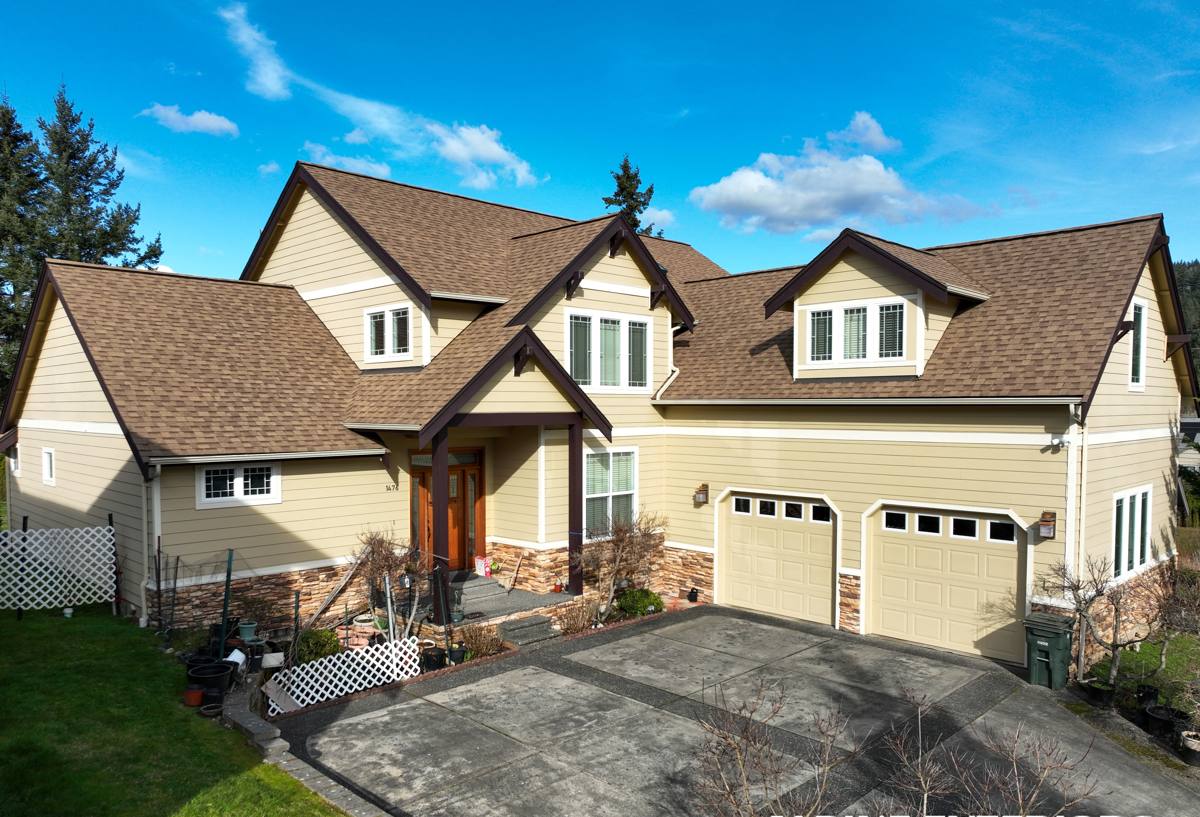
What Local Homes Actually Need From a Shingle Roof
Salt Air and Corrosion
Metal components are usually the first thing to suffer near the water — nails, flashing, and vent stacks corrode faster when they're exposed to salt-laden air year-round. A shingle roof is only as good as the metal tying it together, so fastener and flashing material matter more here than they would twenty or thirty miles inland.
Driving Rain
Everett doesn't just get rain, it gets rain pushed sideways by wind off the Sound. That means water finds its way under shingles at valleys, edges, and penetrations unless every layer underneath — underlayment, ice-and-water membrane at the vulnerable spots, proper shingle overlap — is installed with that wind-driven pattern in mind, not just a straight-down rain assumption.
Moss and Shade
A long moss season is one of the defining maintenance issues for roofs in this part of the county. Moss holds moisture against the shingle surface, works into the granule layer, and over time lifts shingle edges. Homes with mature trees or north-facing slopes see this the worst, and it's a slow, quiet kind of damage that's easy to miss until shingles start curling or granules start washing into the gutters.
What a Correct Installation Involves
A shingle roof done right in this environment isn't a different product than what's sold elsewhere — it's the same materials installed with more attention to the details that matter locally. That includes:
- Corrosion-resistant fasteners and flashing metal suited to a coastal-influenced climate
- Ice-and-water shield or equivalent membrane at eaves, valleys, and penetrations, not just where code minimums require it
- Proper shingle nailing pattern and exposure — under-nailing is a common shortcut that shows up as blow-offs in the first big windstorm
- Ventilation that actually balances intake and exhaust, so moisture from inside the attic isn't adding to what's already coming from outside
- Flashing details at chimneys, skylights, and wall intersections done with step flashing and counter-flashing, not just sealant
- A drip edge and gutter apron set up to keep water off the fascia, which matters more where rain volume is high for months at a time
None of this is exotic. It's standard trade practice done without cutting corners — but cut corners are exactly what shows up as leaks, moss colonies, and premature granule loss two or three years after a rushed install.
Choosing Shingles and Materials for This Area
| Factor | Why It Matters in Snohomish/Everett |
|---|---|
| Algae-resistant (AR) granules | Slows the growth of moss and algae that this climate's shade and moisture encourage |
| Wind rating | Driving rain usually comes with real wind — a shingle's wind warranty should match what actually blows through here, not a minimum-code number |
| Fastener material | Standard electro-galvanized nails corrode faster in salt-influenced air than higher-grade coated or stainless options |
| Underlayment type | Synthetic underlayment sheds wind-driven rain better than older felt products and holds up longer during a multi-day install if weather turns |
| Shingle weight/class | Heavier, laminated (architectural) shingles generally handle wind uplift and hold granules better than lighter three-tab shingles over the long run |
None of this locks a homeowner into the most expensive option on the shelf. It's about matching the shingle and the details around it to what the roof will actually face here, rather than defaulting to whatever's cheapest to install.
Our Process for a Snohomish Shingle Roof
1. Inspection and Assessment
We start by looking at the whole system, not just the shingles — decking condition, existing ventilation, flashing at chimneys and walls, and any moss or moisture staining that points to a problem underneath. On an older roof, what's happening under the shingles often matters more than the shingles themselves.
2. Tear-Off and Deck Check
A full tear-off lets us actually see the decking. Soft or water-stained sheathing gets replaced before anything new goes down — installing new shingles over compromised decking just hides the problem for a year or two.
3. Underlayment and Flashing First
This is where the driving-rain resistance actually comes from. Ice-and-water membrane at eaves and valleys, synthetic underlayment across the field, and new flashing at every penetration and wall intersection — done before a single shingle is laid.
4. Shingle Installation
Correct nailing pattern, correct exposure, and attention to how each course ties into valleys and hips. This is also where wind rating gets protected or lost — a shingle rated for high wind only performs that way if it's fastened the way the manufacturer specifies.
5. Ventilation Check
We confirm intake and exhaust are balanced. A roof that traps humid attic air will show moisture problems from the inside even if the outer shingle layer is flawless.
6. Final Walkthrough
We walk the roof and the ground with the homeowner, cover cleanup, and go over what routine moss and gutter maintenance should look like going forward given the property's tree cover and exposure.
Maintenance That Actually Fits This Climate
- Check for moss growth at least once a year, more often on shaded or north-facing slopes
- Keep gutters clear — clogged gutters back water up under the shingle edge, which is a bigger problem here given how much rain volume they have to handle
- Have flashing at chimneys, skylights, and walls checked periodically — these are the first spots to show a failure, well before the field of the roof does
- Trim back overhanging branches where practical to reduce shade and debris buildup that feeds moss
- Avoid pressure washing shingles — it strips granules and shortens the roof's life; moss removal should be done gently, with the right products and technique
Cost Factors to Expect
| Factor | How It Affects the Job |
|---|---|
| Roof size and pitch | Larger and steeper roofs take longer and require more safety setup |
| Layers to remove | A roof with an existing layer or two adds tear-off time and disposal cost |
| Decking condition | Rot or soft sheathing found during tear-off adds material and labor to replace it |
| Shingle grade chosen | Architectural/laminated shingles cost more upfront than three-tab but generally last longer under this climate's wind and moisture load |
| Ventilation upgrades | Adding or correcting intake/exhaust vents is a smaller add-on that pays off in attic and shingle longevity |
We'll always walk through actual numbers for your specific roof rather than quote a ballpark that doesn't reflect your home — every roof in this neighborhood has its own mix of pitch, shade, and exposure.
Why a Crew That Already Works This Neighborhood Matters
Roofing crews that work all over a region tend to install to a generic standard. A crew that already works in and around Snohomish and Everett has seen, repeatedly, which details actually fail here — which flashing spots leak first under wind-driven rain, which slopes hold moss the longest, which fastener choices hold up against the salt air and which don't. That's not a marketing point, it's just what repeated exposure to the same climate teaches a crew over time. It shows up in small decisions on the roof — an extra course of membrane at a valley, a flashing detail done with step-and-counter instead of sealant alone — that a homeowner never sees but absolutely benefits from.
It also means faster response if something does come up after the job — a crew based locally isn't scheduling a trip across the region to look at a callback.
Signs Your Current Roof Needs Attention
- Granules collecting in gutters or at the base of downspouts
- Shingle edges curling or lifting, especially on shaded slopes
- Visible moss or dark streaking across the shingle field
- Daylight or water staining visible in the attic near flashing points
- Missing or displaced shingles after a windstorm
Any one of these is worth a look before it turns into an interior leak. Given how long the rainy season runs here, small entry points have a lot of time to do damage before they're obvious from inside the house.
If you're in the Snohomish area of Everett and want a straight answer on what your roof actually needs, we're glad to come take a look. The estimate is free, there's no pressure, and you'll get a clear explanation of what we find — just fill out the form below to get started.