 Everett
 Storm Damage Roof Repair for Marysville Homes
Marysville sits close enough to Puget Sound that its roofs take on a specific kind of punishment. Salt-laden air off the water speeds up corrosion on flashing, fasteners, and any exposed metal. Fall and winter windstorms push driving rain sideways under shingle edges that would stay dry in a straight-down rain. And because this part of Snohomish County stays cool and damp for most of the year, moss gets a long runway to take hold on north-facing slopes and shaded valleys. None of this means a roof is doomed — it means storm damage here tends to be more layered than a single dramatic event, and repairs need to account for all three factors at once, not just the storm that finally got a homeowner's attention.
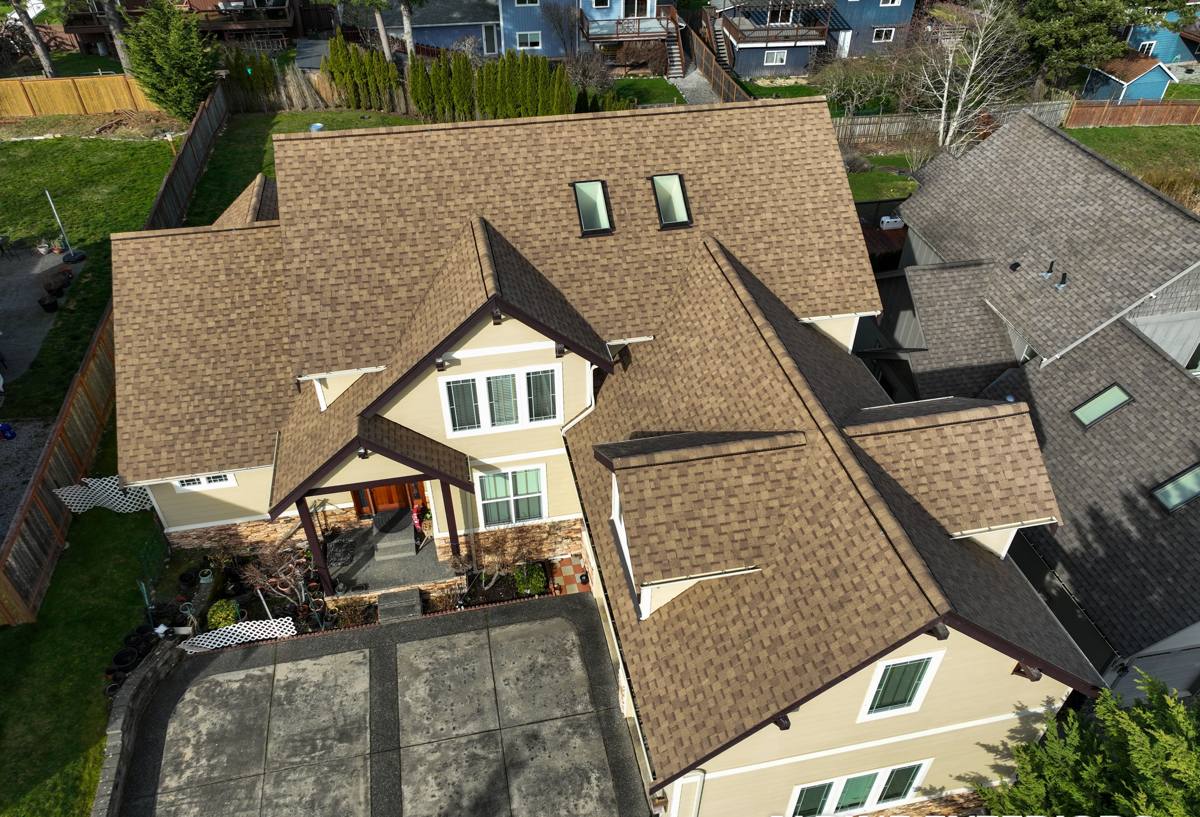
What Counts as Storm Damage in This Climate
When people think "storm damage," they usually picture missing shingles after a big windstorm. That's real, but around Marysville it's often only part of the picture. A hard wind event can lift shingle tabs just enough to break the seal without tearing anything off — the roof looks intact from the ground but is now vulnerable to wind-driven rain at every loosened tab. Combine that with months of standing moisture in a moss patch, and the underlayment beneath can be compromised well before a leak shows up inside the house.
Storm damage repair, done correctly, means treating the roof as a system: shingles, underlayment, flashing, fasteners, and ventilation all working together. A patch that only addresses the visible tear-off and ignores softened decking or a failed seal nearby is a repair that fails again in the next storm.
Common Damage Patterns We See Locally
- Lifted or creased shingle tabs from wind gusts, especially on roof edges and ridges
- Torn or missing shingles after a windstorm, exposing underlayment directly to rain
- Moss colonies lifting shingle edges and holding moisture against the roof deck
- Corroded or loosened flashing around chimneys, vents, and valleys from salt air exposure
- Granule loss on older shingles, reducing UV and weather protection even without visible tears
- Clogged gutters from moss and needle debris causing water to back up under the roof edge
Signs a Marysville Homeowner Shouldn't Ignore
Most roof damage doesn't announce itself with an obvious hole. It shows up as small signals that are easy to write off until they become an interior leak. Some of these you can check safely from the ground or attic — climbing onto a wet, mossy roof after a storm is not something we recommend doing yourself.
- Shingle pieces or granules collecting in gutters or at the base of downspouts after wind
- Dark streaking or green growth visible on the roof from the street, especially on shaded slopes
- A ceiling stain or musty smell in an upstairs room or attic after a heavy rain
- Daylight visible through the roof deck when viewed from inside the attic
- Flashing that looks bent, lifted, or separated around chimneys and roof-wall intersections
- Sagging or soft spots noticeable when walking near the attic floor
If any of these show up after a windstorm or heavy rain event, it's worth getting a professional look before the next system moves through. Small, fresh damage is inexpensive to fix. The same damage left through two or three more storms usually isn't.
What a Correct Repair Actually Involves
A storm damage repair isn't just replacing what's obviously missing. Our process on a typical repair includes:
- Full-slope inspection, not just the damaged area — wind and moss damage rarely stay confined to one spot
- Checking the decking underneath removed shingles for soft spots, staining, or rot before anything new goes down
- Replacing underlayment in the repair zone rather than reusing old material that may already be compromised
- Matching shingles as closely as possible in color and profile, understanding that some mismatch is unavoidable on an older roof
- Resealing and re-flashing any vents, valleys, or penetrations in the repair area, since flashing failure is a leading cause of repeat leaks
- Clearing moss and debris from the surrounding area so the repair isn't immediately undermined by the same conditions that caused the original damage
Skipping any of these steps is how a roof ends up with the same leak twice in one winter. It's also why two repair quotes for the "same" job can come in at very different prices — one may only cover shingles, the other covers the full repair scope.
Repair, Section Replacement, or Full Roof — Sorting It Out
Not every storm-damaged roof needs a full replacement, and not every roof can be saved with a patch. The right call depends on the roof's age, how widespread the damage is, and what condition the decking is in underneath. Here's how we think through it:
| Situation | Repair usually makes sense | Fuller replacement usually makes sense |
|---|---|---|
| Roof age | Under 12-15 years, shingles otherwise in good shape | Nearing or past the shingle's expected lifespan |
| Extent of damage | Isolated to one slope or a handful of areas | Spread across multiple slopes or recurring in the same spots |
| Decking condition | Solid, dry decking found under the damaged shingles | Soft, stained, or rotted decking in multiple areas |
| Shingle match | Discontinued or faded shingles where mismatch is minor | Shingle line discontinued and mismatch would be very visible |
| History | First significant damage event on this roof | Third or fourth repair call in a few years |
We'll always tell a homeowner honestly which category their roof falls into rather than defaulting to the bigger job. A well-executed repair on a roof with good bones will hold up fine through the next storm season.
Our Process, Start to Finish
We keep the process straightforward and try not to add stress to what's usually already a stressful situation:
- Inspection and photos — we walk the roof (weather permitting) and document what we find, including areas that aren't obvious from the ground
- Written scope and estimate — a clear explanation of what's damaged, what needs to happen, and what it costs, before any work starts
- Insurance documentation — if the homeowner is filing a claim, we provide the photos and scope needed to support it; we don't handle the claim itself, that's between the homeowner and their insurer
- Scheduling around weather — storm repair work needs a dry window, so we watch the forecast and schedule accordingly rather than rushing a repair into wet conditions
- The repair itself — completed by our own crew, not a subcontractor pulled in for the job
- Final walk-through — we go over the completed repair and the areas we checked but didn't need to touch
Insurance and Storm Claims: What We Can and Can't Do
Wind damage is often covered under a standard homeowner's policy in Washington, but coverage details, deductibles, and what counts as "storm-caused" versus "wear and tear" vary by policy and insurer. We're not insurance adjusters and won't pretend to be — what we can do is document damage clearly, provide an honest repair scope, and answer questions about what we're seeing on the roof so a homeowner can have an informed conversation with their adjuster. Be cautious of any contractor who pressures you to file a claim before an inspection has even happened, or who promises a specific claim outcome. That's not how legitimate insurance claims work, and it's a common pattern with storm-chasing crews that show up after a big weather event and are gone before winter's over.
Why Hiring a Crew That Already Works Marysville Matters
After a windstorm moves through Snohomish County, it's common to see out-of-area crews going door to door offering fast repairs. Some are legitimate. Many aren't licensed in Washington, won't be around if a repair fails months later, and don't know the specific conditions that make roofs in this area fail in the first place — the moss cycle, the salt air, the way wind tends to funnel across certain exposures near the water. A crew that works Marysville regularly has seen how local roofs age, knows what a repair needs to hold up through another wet Snohomish County winter, and is still reachable if a question comes up after the work is done. That local accountability is worth as much as the repair itself.
If you've noticed storm damage on your Marysville roof — or just want a second opinion after a windy week — we're happy to take a look. Fill out the form below for a free, no-pressure estimate, and we'll give you a straight answer about what your roof actually needs.