 Everett
 Why West Everett Decks Need a Different Approach
West Everett sits close enough to Puget Sound that salt-laden air, wind-driven rain, and heavy tree cover all show up in how a deck ages. Homes here deal with a longer wet season than inland Snohomish County, plus moss and algae that take hold fast on anything that stays damp and shaded. A deck built without that in mind — wrong fastener, poor drainage, boards laid tight against a wall — will show problems within a couple of seasons: soft spots, green film, warped boards, or rot creeping in around ledger boards and posts.
Composite decking is a strong fit for this environment because it doesn't absorb water the way wood does and won't rot from the inside out. But composite isn't maintenance-free or mistake-proof. It still needs the right substructure, the right ventilation, and the right installation details to actually perform the way the manufacturer's warranty assumes it will. That's the gap we focus on for West Everett homeowners — not just selling a material, but installing it so it holds up to the specific conditions of this neighborhood.
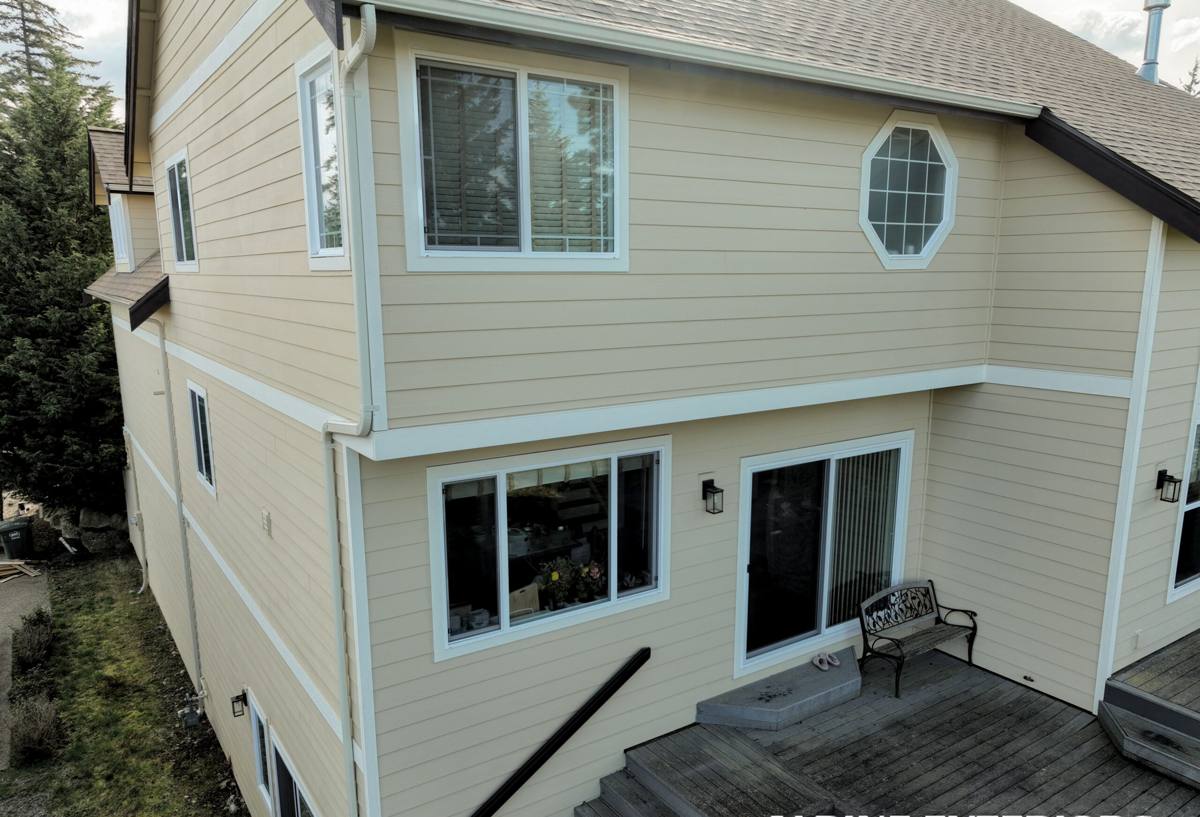
What the Local Climate Actually Does to a Deck
Salt Air and Moisture
Proximity to the Sound means airborne salt settles on outdoor surfaces and accelerates corrosion on unprotected metal — fasteners, brackets, and hidden hardware. Combined with near-constant moisture through fall, winter, and spring, this is a rough combination for anything that isn't rated for coastal exposure.
Driving Rain and Runoff
Storms coming off the water often bring rain sideways, which pushes water into places a flat, overhead-only rain pattern wouldn't reach — under railings, behind fascia boards, and into any gap where flashing was skipped. Decks that don't shed water properly end up holding moisture against framing long after the rain stops.
Moss and Algae Season
Shaded yards, tree cover, and long stretches of overcast, damp weather give moss and algae a long runway to establish themselves on deck surfaces, especially on the north and shaded sides of a home. Once established, moss holds moisture directly against the board surface, which is exactly the condition that shortens the life of lower-grade composite products and turns a walking surface slick and unsafe.
What a Correctly Built Composite Deck Includes
A composite deck that's going to perform well in West Everett's conditions isn't just composite boards nailed to a frame. The details below are where a deck either holds up for decades or starts showing problems in year three.
- Pressure-treated or coated framing rated for ground contact and wet exposure, not standard interior-grade lumber
- Corrosion-resistant, coastal-rated fasteners and hardware — stainless or heavily coated, not standard galvanized
- Proper joist spacing matched to the specific composite product's span rating, not just "what we usually use"
- Flashing and drainage detailing at the ledger board where the deck meets the house, so water is directed away from the wall framing
- Airflow underneath the deck surface so moisture doesn't get trapped between the boards and the frame
- Board gapping set correctly for composite's expansion and contraction, which behaves differently than wood
- Hidden fastener systems where appropriate, which reduce surface penetration points where moisture and grime can collect
Where Homeowners Get Burned
The most common corner-cutting we see on composite installs isn't the board brand — it's what's underneath. A crew can install a premium composite board on undersized joists, standard fasteners, and no ledger flashing, and it will look fine on install day. The failure shows up eighteen months to three years later, after a couple of wet Snohomish County winters have worked on the parts nobody sees.
Composite vs. Wood for a Shaded, Damp West Everett Lot
| Factor | Composite Decking | Traditional Wood |
|---|---|---|
| Moisture absorption | Minimal; won't swell or rot from water contact | Absorbs moisture; prone to rot without diligent upkeep |
| Moss and algae resistance | Better resistance, especially with capped composite; still needs cleaning | Porous surface holds moisture, moss establishes faster |
| Maintenance | Periodic cleaning, no staining or sealing required | Annual sealing or staining recommended for coastal exposure |
| Upfront cost | Higher material cost | Lower material cost |
| Long-term cost | Lower over 15-20 years due to reduced upkeep | Higher over time from repeated maintenance and repairs |
| Appearance consistency | Consistent color and grain over time | Grays and weathers unevenly without maintenance |
Neither material is automatically the right answer for every yard. A well-maintained cedar deck can still look good for years if the owner keeps up with sealing. But for homeowners who want to spend weekends doing something other than deck upkeep, composite's reduced maintenance burden is usually the deciding factor — particularly on shaded West Everett lots where wood dries out slowly between rain events.
Our Process for a West Everett Composite Deck
1. On-Site Assessment
We walk the specific site — sun exposure, tree cover, drainage slope, proximity to the house's siding and foundation — because those factors change the framing, ventilation, and product recommendations. A deck on a shaded, north-facing slope needs different attention than one in an open, sunnier spot.
2. Product and Layout Discussion
We go over composite board options, color and grain choices, railing systems, and layout with the homeowner before any material is ordered, including honest trade-offs between product tiers.
3. Demo and Framing
If we're replacing an existing deck, we remove it and inspect the ledger connection and any framing that's being reused. Any wood framing that's compromised gets replaced — we don't build a new deck surface on top of a bad frame.
4. Flashing and Waterproofing
Ledger board flashing and any necessary waterproofing membrane go in before framing is closed up. This step is invisible once the deck is finished, but it's the single biggest factor in whether the house-to-deck connection stays dry.
5. Installation
Boards go down per the manufacturer's spacing and fastening specifications, with attention to expansion gaps, especially important given our seasonal temperature swings between wet winters and warmer, drier summers.
6. Final Walkthrough
We walk the finished deck with the homeowner, cover basic care, and answer questions about warranty coverage on both the composite product and our installation work.
Maintaining a Composite Deck Through Everett's Wet Months
Composite decking is low-maintenance, not no-maintenance. In a climate like Snohomish County's, a small amount of seasonal care goes a long way toward keeping a deck looking and performing the way it should.
- Sweep or rinse debris off the surface regularly, especially fallen leaves and needles that trap moisture
- Clean visible moss or algae promptly with a soft-bristle brush and a cleaner rated for composite — avoid pressure washers on high settings, which can damage the board surface
- Check that gaps between boards stay clear of debris so water can drain through rather than pooling
- Inspect railing posts and stair connections once or twice a year for movement or loosening hardware
- Keep gutters and downspouts near the deck clear so runoff isn't dumping extra water directly onto the deck surface
Sun and Shade Balance
Fully shaded decks under heavy tree cover tend to need moss treatment more often than decks with some direct sun exposure, since sunlight helps dry the surface between rain events. If a property is heavily wooded, we factor that into board recommendations and talk through realistic cleaning frequency during the estimate.
Why Hire a Crew That Already Works in West Everett
A contractor who mainly works drier, inland areas can still install composite decking competently on paper, but they may not have direct experience with how quickly moss establishes on a shaded coastal lot, how far sideways rain can travel under a railing, or which framing details matter most given the salt air near the Sound. Those aren't things a spec sheet tells you — they're things you learn from building and maintaining decks in this specific area over time.
Working locally in Everett and Snohomish County also means we're available for warranty follow-up, seasonal questions, or a quick look at a deck years down the line — not a one-time crew that's hard to reach once the invoice is paid.
Getting Started
Whether you're replacing an aging wood deck or planning a new composite deck from scratch, the right approach depends on your specific lot — sun exposure, drainage, and how the deck ties into your home. We're happy to walk your property, answer questions honestly about what your yard needs, and put together a straightforward estimate. There's no pressure and no obligation — just use the form below to get started.