 Everett
 Custom Windows Built for West Everett's Weather
West Everett sits close enough to Port Gardner Bay and the greater Puget Sound that homes here take on a specific mix of punishment: salt-tinged air off the water, wind-driven rain that hits window walls sideways rather than straight down, and long stretches of gray, damp months where moss and mildew get a head start on anything with a weak seal. Windows in this part of Everett don't fail because of one dramatic storm — they fail slowly, from years of moisture finding its way past tired weatherstripping, degraded flashing, or a frame that was never sealed correctly in the first place. Custom window work here has to account for that reality from day one, not patch it later.
When we talk about "custom" windows, we mean units sized, configured, and detailed to fit your specific openings and your home's specific exposure — not a one-size-fits-all box pulled off a shelf. That matters more in West Everett than in drier inland climates because every gap, every mismatched reveal, and every shortcut in flashing becomes a moisture entry point that Snohomish County's wet season will find.
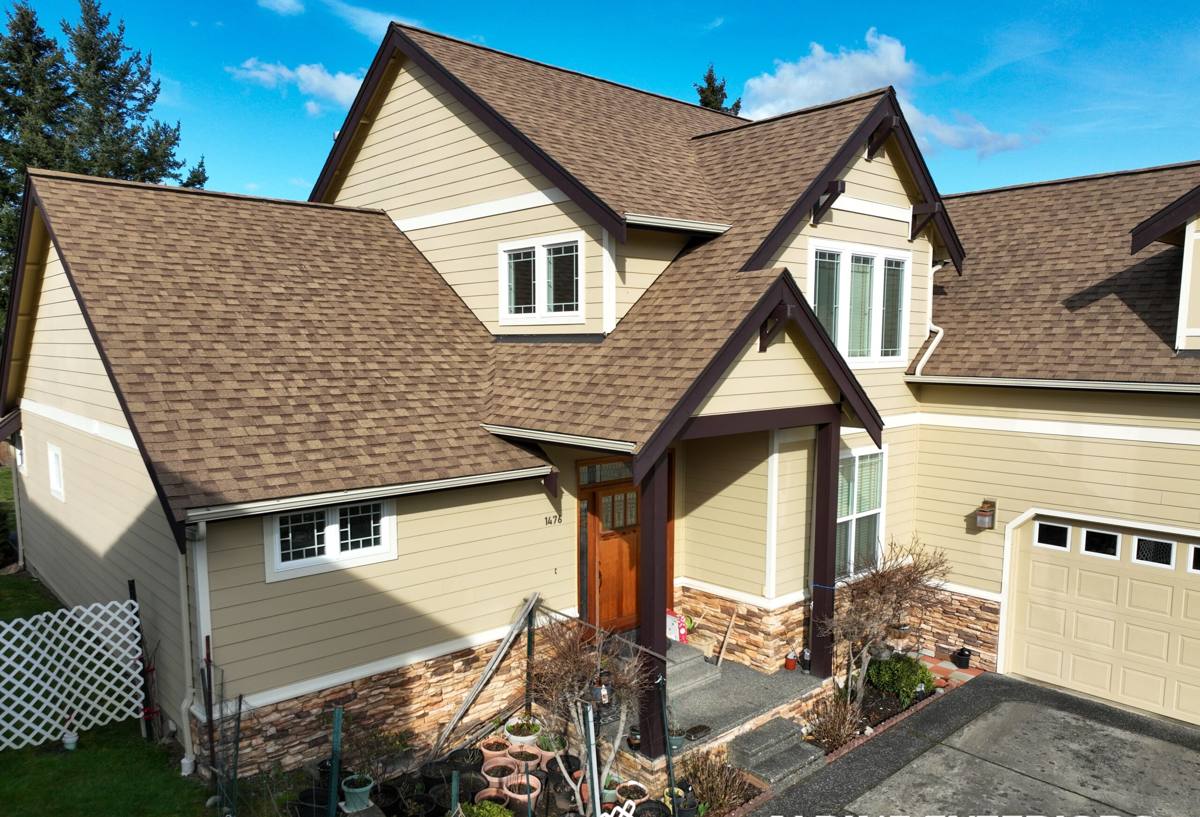
What West Everett Homes Actually Need
Exposure Varies Block to Block
West Everett isn't uniform. Homes closer to the waterfront and open bluffs take more direct wind-driven rain and salt exposure, while homes tucked behind tree cover or on the lee side of a hill deal more with shade, moisture retention, and moss creep on siding and trim around window openings. A correct window job starts with an honest read of which category your home falls into, because the flashing detail, sealant choice, and even the frame material recommendation can shift based on that.
Common Problems We See on Older Homes in This Area
- Wood or vinyl frames with sun-checked or hardened caulk lines that no longer flex with temperature swings
- Interior sill staining or soft drywall below window openings — a sign water is getting behind the frame, not just condensing on the glass
- Moss or algae buildup on the horizontal trim above windows, which holds moisture against the wall longer than bare siding would
- Single-pane or early double-pane units with failed seals, showing fog or moisture between the panes
- Warped or swollen wood trim around openings on the north and west-facing walls, which take the brunt of Puget Sound storms
Getting the Installation Right — Not Just the Window Itself
The window unit itself is only part of the job. In a climate like Everett's, the installation detailing is what determines whether that window lasts 25 years or starts leaking in five. We treat every custom window replacement or new install as a system: opening prep, flashing, air sealing, and finish work all have to work together.
Our Process
- On-site assessment. We look at the existing opening, check for hidden water damage or rot around the frame, and evaluate wall orientation and exposure before recommending anything.
- Accurate measurement and custom sizing. Openings on older Everett homes are rarely perfectly square. We measure for the actual opening, not a nominal size, so the finished install doesn't rely on excessive shimming or filler to close gaps.
- Removal and opening prep. Old units come out carefully to avoid damaging surrounding siding or trim. Any water damage, soft framing, or compromised sheathing found underneath gets addressed before a new window ever goes in — installing a good window into a wet or rotted opening just delays the same failure.
- Flashing and moisture barrier detail. This is the step that matters most in our climate. Proper sill pan flashing, correctly lapped house wrap, and sealant applied in the right order (not just caulked over everything at the end) keep wind-driven rain from tracking behind the window frame.
- Setting and leveling the window. The unit gets shimmed and fastened per manufacturer spec, checked for square and level, and tested for smooth operation before final sealing.
- Insulation and air sealing. Gaps around the frame are filled with a low-expansion foam or backer rod and sealant appropriate to the gap size — never packed tight enough to bow the frame, which causes its own operational problems.
- Exterior and interior finish work. Trim, casing, and exterior caulking are finished to match the surrounding siding, with attention to keeping horizontal trim surfaces sloped to shed water rather than hold it.
Frame Material Trade-Offs for a Marine Climate
There's no single "best" window frame material — each has trade-offs, and the right choice depends on your home's exposure, budget, and how much upkeep you want to take on.
| Frame Material | Moisture Performance | Maintenance | Notes for West Everett |
|---|---|---|---|
| Vinyl | Good — won't rot, resists moisture well | Low | Solid value option; quality varies significantly by manufacturer and welded corner construction |
| Fiberglass | Excellent — dimensionally stable in temperature and moisture swings | Low | Handles the Puget Sound's daily temperature and humidity shifts with minimal expansion/contraction |
| Wood (clad exterior) | Good on exterior, but interior wood needs protection | Moderate to high | Exterior cladding shields the wood from direct rain exposure; still needs sealed joints checked periodically |
| Aluminum | Prone to condensation without thermal breaks | Low | We generally steer clients toward thermally broken options in this climate to avoid interior condensation issues |
We don't push a single brand or material for every home. If a client wants painted wood trim to match a historic look, we'll say so honestly and explain the added maintenance that comes with it — same if a budget vinyl option isn't going to hold up on a high-exposure west-facing wall. Our job is to lay out the real trade-offs, not steer you toward whatever's easiest for us to install.
Why Moss and Algae Matter More Than People Think
Everett's long wet season means moss isn't just a roof problem. It readily takes hold on horizontal window trim, sills, and the top edges of window headers, especially on shaded or north-facing walls. Once moss establishes itself, it holds moisture against wood or composite trim far longer than the surface would otherwise stay wet, which accelerates rot at exactly the points where water intrusion does the most damage — around the window opening itself. Part of a correct custom window install is detailing trim and flashing so water sheds cleanly, and part of ongoing homeowner maintenance is keeping that moss knocked back before it gets established.
Signs It's Time to Replace, Not Just Repair
- Fogging or visible moisture between panes on double or triple-glazed units — the seal has failed and can't be restored
- Soft, spongy, or discolored trim or drywall around the window frame
- Windows that won't stay open, won't latch, or have visibly warped sashes
- Noticeable draft or temperature difference near the window even when closed
- Frame material that's cracked, delaminating, or separating at the corners
- Rising energy bills with no other explanation, especially in rooms with older single-pane glass
Not every issue means a full replacement — sometimes a repair, re-caulk, or hardware fix solves it. We'll tell you when a repair is the honest answer instead of upselling a full window replacement you don't need yet.
Why a Local Everett Crew Matters for This Job
Window installation quality depends heavily on understanding the specific weather a home will face, and that's local knowledge, not something you get from a manufacturer's generic install guide. A crew that regularly works in West Everett and the rest of Snohomish County has already seen how wind-driven rain behaves on bluff-facing homes, which wall orientations grow moss fastest, and where older housing stock in this area tends to have hidden moisture issues around openings. That experience shows up in the details — the flashing sequence, the sealant choice, the trim slope — that separate a window install that lasts decades from one that starts causing problems in year three.
We also know the practical side of working in this area: permitting expectations, typical wall construction in different eras of Everett housing, and how to plan installation timing around the region's wetter months so openings aren't left exposed longer than necessary.
What to Expect on Cost
Custom window pricing depends on frame material, glass package, size, number of openings, and how much of the surrounding trim or siding needs repair. As a broad guide, straightforward vinyl replacement units tend to sit at the lower end of the range, fiberglass and clad-wood options run higher, and jobs that uncover hidden water damage or require structural repair around the opening will cost more than a straight swap. We won't know your real number until we see the openings in person — anyone quoting a firm price over the phone for a job like this is guessing.
Get a Straight Answer for Your Home
If you're dealing with drafty, foggy, or hard-to-operate windows in West Everett, or you're planning ahead before the wet season sets in, we're happy to take a look and give you an honest read on what your home actually needs — repair, replacement, or something in between. Reach out for a free, no-pressure estimate using the form below.