 Everett
 Why Deck Replacement Looks Different in West Everett
A deck takes a different kind of abuse than the rest of a house. It's a horizontal structure sitting low to the ground, exposed on top, bottom, and sides, and tied into your house at a joint — the ledger board — that has to stay watertight for the life of the structure. In West Everett, that already hard job gets harder. Mature tree cover across much of the neighborhood keeps decking damp and shaded for long stretches, driving rain off Puget Sound drives water sideways into ledger connections and railing posts, and homes closer to the water side of the city pick up salt-tinged air that speeds up corrosion on fasteners and hardware most people never think to inspect.
None of that means a deck is doomed to fail early. It means a deck built or replaced without accounting for those specific conditions usually fails early, while one built with them in mind can hold up for decades. Most of what we see on tear-outs in this part of Everett isn't bad luck — it's a ledger detail that was never flashed correctly, joists that sat in standing water because nobody thought about drainage underneath, or fasteners that were never rated for the moisture and salt exposure this area actually sees.
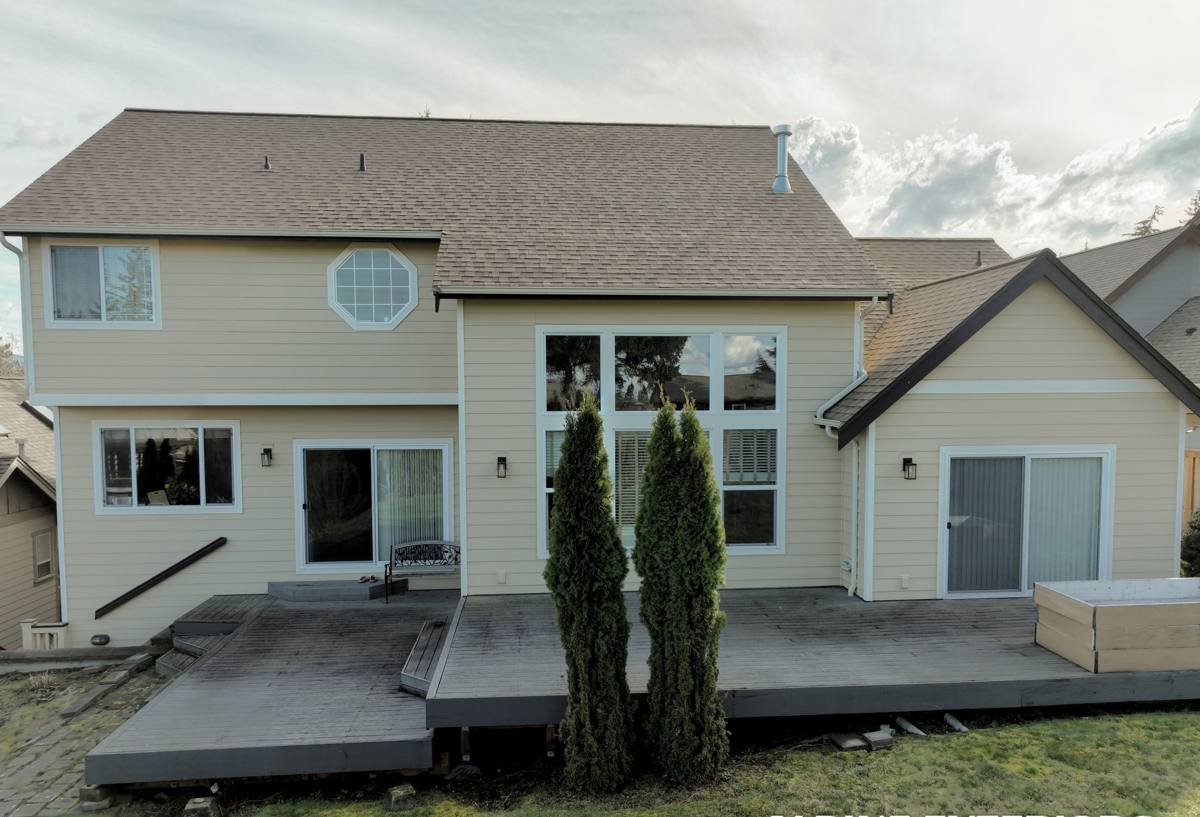
Repair or Replace? Reading the Signs
Not every tired-looking deck needs a full replacement, but a lot of decks that look fine from a few feet away are hiding structural problems underneath. Before we recommend replacement over repair, we look past the surface boards to the framing, the ledger connection, and the footings — because that's where the real decision gets made.
- Decking boards that feel spongy or flex noticeably when you walk across them, especially near the house
- Rust streaking or dark staining around fastener heads, a sign moisture has been sitting against the metal
- Visible gaps, dark staining, or soft wood where the deck meets the house siding — a likely ledger flashing failure
- Wobble in railing posts or stair stringers that doesn't tighten back up when you re-drive the fasteners
- Moss or algae buildup that returns within weeks of cleaning, suggesting the surface never fully dries between rains
- Visible movement, settling, or gaps at the deck's support posts and footings
One or two of these on their own might be repairable. Several together, especially anything involving the ledger board or the framing underneath, usually means the honest recommendation is a full replacement rather than patching a structure that's already compromised where it counts.
What a Correct Deck Replacement Actually Involves
A deck replacement is really three separate jobs stacked on top of each other: the connection to your house, the structure underneath, and the surface you actually walk on. Getting any one of them wrong shortens the life of the whole thing, no matter how good the decking material looks on day one.
Ledger Board and Flashing — the Most Common Failure Point
The ledger board is where the deck bolts directly into your house's framing, and it's the single most common place we find rot and water damage on older decks in this area. A correct install uses proper flashing — typically a metal or membrane flashing tucked up under the house's weather barrier or siding, not just caulked over the top — so water is directed away from the connection instead of trapped against it. Given how much driving rain this region sees, a ledger detail that "mostly works" in a drier climate simply doesn't hold up here over time.
Framing, Joists, and Footings
Underneath the decking, joists and beams need to be sized correctly for the span and load, spaced to code, and — just as important in wet ground — set on footings that actually reach stable, frost-resistant soil rather than resting shallow in soil that stays saturated for months of the year. We also grade and address drainage under the deck itself where needed, since standing water under a low deck is one of the fastest ways to rot framing that would otherwise last decades.
Fasteners and Hardware
Screws, joist hangers, and structural connectors need to be rated for exterior and, ideally, coastal-adjacent exposure — stainless steel or heavy hot-dip galvanized hardware, not the lighter coatings that start showing rust streaks within a couple of seasons in areas with any salt in the air. This is a small line item on an estimate that makes a real difference to how the deck ages.
Choosing a Decking Material for West Everett's Conditions
There's no single "best" decking material — there's a best material for your budget, your maintenance appetite, and how much shade and moisture your specific lot deals with. Here's how the common options compare for a climate with a long wet season and a real moss problem on shaded, horizontal surfaces.
| Material | Moisture & Moss Behavior | Maintenance | Typical Lifespan |
|---|---|---|---|
| Pressure-treated wood | Resists rot with proper sealing, but grain and gaps hold moisture and moss without upkeep | Annual cleaning and re-sealing recommended | 15–20 years with maintenance |
| Cedar | Naturally rot-resistant but softer surface; shaded, damp areas still grow moss without regular cleaning | Periodic cleaning, staining or sealing every few years | 15–20 years with maintenance |
| Composite decking | Doesn't absorb water like wood, but surface texture and shaded spots can still grow algae/moss film | Occasional washing; no sealing or staining needed | 25–30+ years, manufacturer-dependent |
| PVC/capped polymer | Fully sealed surface, best resistance to moisture absorption and staining | Lowest maintenance of the group; occasional washing | 25–30+ years, manufacturer-dependent |
On heavily shaded lots — common under West Everett's mature tree canopy — composite or capped polymer decking tends to hold up better with less upkeep, simply because it doesn't wick moisture into the board the way wood does. That said, plenty of homeowners still prefer the look and feel of real wood, and a well-built, well-maintained cedar or treated-wood deck can absolutely last if you're willing to keep up with the cleaning and sealing schedule.
Permits and Snohomish County Code Requirements
Most deck replacements in Everett require a building permit, particularly when the deck is attached to the house, elevated more than a modest height off grade, or involves guardrails and stairs. Code requirements that commonly come up on deck projects here include guardrail height, baluster spacing narrow enough to prevent a small child from passing through, proper stair rise and run, and a structurally engineered ledger attachment rather than a decorative one. Skipping the permit step might seem like it saves time, but it creates real problems later — at resale, at insurance claim time, or if the work needs to be inspected for any reason down the line. We handle the permit process as a standard part of the job rather than an optional add-on.
Our Process, From Estimate to Final Walkthrough
- Site visit and assessment: we look at the existing deck's framing, ledger connection, footings, and drainage — not just the surface boards — to give you an honest read on repair versus full replacement.
- Written estimate and material selection: we walk through decking material options, hardware, and design changes (railing style, stairs, size) against your budget and how you actually use the space.
- Permit filing: we handle the paperwork with the city or county as needed before any demolition begins.
- Tear-off and framing: the old structure comes out, and we address anything we find underneath — soft framing, poor drainage, undersized footings — before new material goes down.
- Ledger, flashing, and structural build: the connection to your house and the supporting frame get built to hold up against the rain and moisture load this area sees.
- Decking, railings, and stairs installed: per your material choice and code requirements for guardrails and baluster spacing.
- Final walkthrough: we go over the finished deck with you, including basic care guidance for whatever material you chose.
Building for West Everett's Specific Conditions
Every neighborhood in Everett deals with the same regional weather, but the specifics of a given lot change how much that weather matters. In West Everett, the two conditions we plan around most are tree cover and, for homes closer to the water side of the city, salt-tinged air. Mature trees mean more shade on the deck surface for more of the day, which slows drying time after rain and creates ideal conditions for moss and algae to take hold on horizontal surfaces — especially on wood decking that isn't sealed regularly. It also means more organic debris — needles, leaves, seed pods — collecting in gaps between boards, which holds moisture against the wood longer than open sky and clean gaps would.
For lots nearer the water, salt-laden air accelerates corrosion on any exposed metal hardware faster than it would further inland, which is part of why we spec stainless or heavy-galvanized fasteners as standard rather than an upgrade. None of this is exotic engineering — it's just building to match the actual conditions of the site instead of a generic spec sheet.
Maintaining Your New Deck
A correctly built deck still needs some seasonal attention to get its full lifespan, particularly given how long our wet season runs. A few habits go a long way:
- Sweep leaves, needles, and debris out of deck board gaps regularly, especially in fall
- Keep any gutters or downspouts above or near the deck clear so water isn't dumping directly onto it
- Wash the surface periodically to keep moss and algae from establishing, especially on shaded sections
- For wood decking, reseal or restain on the schedule appropriate to the product — don't wait until it's visibly graying or absorbing water
- Trim back overhanging branches and vegetation to let more light and airflow reach the deck surface
- Check railing posts and stair connections once a year for any looseness or rust staining
Why Hiring a Crew That Already Works West Everett Matters
Deck replacement isn't a niche skill, but building one that actually holds up in this specific climate takes more than a generic framing spec. A crew that regularly works in West Everett already knows which ledger details fail here, which fastener grades are worth the small upcharge, and how much drainage planning a shaded, tree-covered lot actually needs versus a lot in full sun. That local pattern-recognition is the difference between a deck that needs attention again in eight years and one that goes the full distance. We're also familiar with the permitting process for Everett and Snohomish County, so that part of the job moves without surprises.
If your deck is showing its age, or you're just not sure whether it needs repair or full replacement, we're happy to come take a look and put together a free, no-pressure estimate.