 Everett
 Siding Repair in West Everett Isn't a One-Size-Fits-All Job
West Everett sits close enough to Port Gardner Bay and the broader Puget Sound shoreline that its homes take a different kind of weathering than houses further inland in Snohomish County. Salt-tinged air moves across these lots, driving rain comes in sideways off the water during fall and winter storms, and shaded, tree-covered stretches of the neighborhood stay damp long after the rest of the region has dried out. Siding repair here has to account for all of that, not just patch whatever's visibly cracked or peeling.
We're a local crew that works this side of Everett regularly, which matters more than it sounds. A contractor who mostly repairs siding in drier, more sheltered parts of the county will diagnose West Everett problems the same way they'd diagnose anywhere else — and miss the moisture and salt-exposure patterns that are specific to this stretch of the city. This page walks through what actually goes wrong with siding here, what a correct repair involves, and how we approach the job.
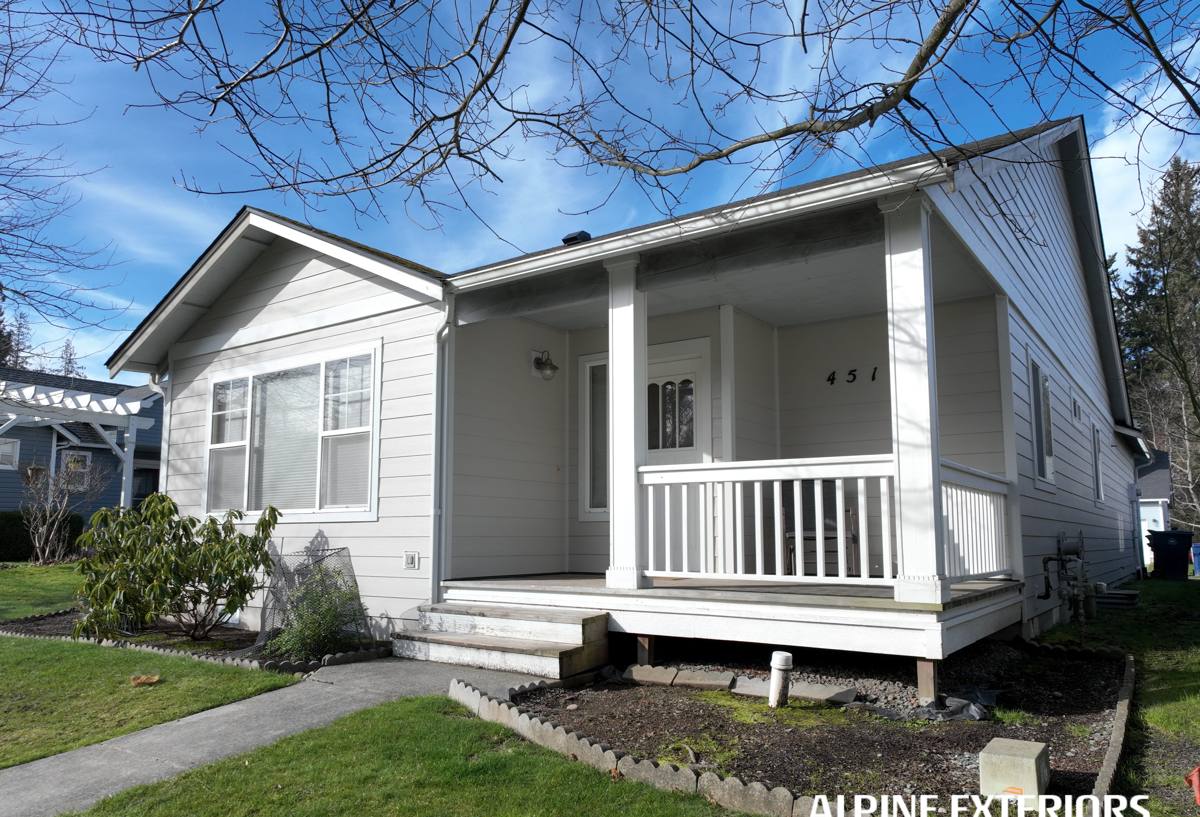
What West Everett's Climate Does to Siding Over Time
Salt Air and Waterfront Exposure
Homes closer to the water pick up salt-laden air on a near-constant basis. Over years, that salt exposure accelerates the breakdown of lower-quality caulking, weakens fasteners that aren't corrosion-resistant, and speeds up fading and chalking on siding finishes that weren't engineered for a marine-influenced climate. It's a slow process, which is exactly why it tends to go unnoticed until a repair need is bigger than it needed to be.
Driving Rain and Wind-Driven Moisture
West Everett takes real wind off the water during storm systems, and that wind pushes rain sideways into siding laps, corners, and trim joints in a way that gentler, straight-down rain doesn't. Siding and flashing details that would hold up fine in a calmer microclimate can fail here because water gets forced into gaps rather than just running down the face of the wall. This is a big part of why repair work in this neighborhood so often traces back to a flashing or joint issue rather than a flaw in the siding material itself.
Moss, Algae, and Shaded Walls
Mature tree cover is common throughout West Everett, and north-facing or heavily shaded walls stay damp for extended stretches, especially through the long moss season that runs most of the fall, winter, and spring here. Moss and algae growth on siding isn't just cosmetic — trapped moisture underneath organic growth keeps the wall assembly wetter for longer, which accelerates rot in wood-based siding and can work its way into fastener corrosion and trim damage over time.
Common Siding Repair Issues We See in This Neighborhood
| What You Notice | Likely Cause | Typical Fix |
|---|---|---|
| Soft or spongy spots near the bottom courses | Wicking moisture from grade splash-back or a failed weep detail | Cut back and replace affected boards, correct the drainage or clearance issue causing it |
| Persistent green or black staining on shaded walls | Moss and algae holding moisture against the siding face | Clean, treat, and repair any underlying damage; adjust for tree cover where possible |
| Cracking or bowing at butt joints and corners | Wind-driven rain forcing water into unsealed or degraded joints | Re-flash and re-seal joints, replace any water-damaged boards behind them |
| Paint or finish failing faster than expected | Salt air accelerating breakdown of a field-applied or lower-grade finish | Repair the substrate, refinish with a coating suited to marine exposure or transition to a factory-cured finish |
| Fastener staining (rust streaks) around nail heads | Standard fasteners corroding under sustained salt and moisture exposure | Replace with corrosion-resistant fasteners as part of the repair, not just cosmetic touch-up |
| Warping or delamination on the lower few feet of a wall | Long-term moisture wicking from grade, gutters, or downspouts | Address the water source first, then replace affected siding |
What a Correct Siding Repair Actually Involves
Diagnosing the Real Cause First
The most common mistake in siding repair — anywhere, but especially in a wet, wind-exposed neighborhood like this one — is treating the visible symptom without finding what's actually causing it. Replacing a damaged board without fixing the flashing detail or drainage issue behind it just buys a year or two before the same spot fails again. A proper repair starts with figuring out where the water is actually getting in, which sometimes means opening up more of the wall than the homeowner expected, but it's the only way to make sure the fix holds.
Matching Material and Finish
Repairs need to match not just the color of the existing siding but its profile, reveal, and texture, or the patch will be visible from the street for as long as the house stands. On homes we've sided with James Hardie fiber cement, matching is straightforward because the ColorPlus factory finish and board profiles are consistent and available. On homes with other siding materials that need a repair rather than a full re-side, we work with what's there and are upfront about how well a match is realistically going to blend.
Sealing and Flashing Details
Given how much of West Everett's siding damage traces back to wind-driven rain finding its way into joints, corners, and openings, we treat flashing and sealant work as the core of the repair, not an afterthought. That includes window and door head flashing, kick-out flashing where rooflines meet walls, and proper lapping at every horizontal and vertical joint — details that are easy to shortcut and expensive to fix later if they're done wrong.
Repair vs. Replacement — How We Decide
Not every siding problem in West Everett calls for a full re-side, and not every problem is fixable with a patch. We look at a few factors before recommending either direction:
- How much of the wall is affected — isolated damage near one downspout is a different conversation than moisture issues spread across multiple elevations
- What's underneath the siding — if sheathing or framing is compromised, a surface-level repair won't hold regardless of how good the new siding looks
- The age and condition of the rest of the siding — repairing a five-year-old wall is a different call than repairing one already near the end of its service life
- Whether the existing material is one we can source a clean match for, or whether a repair would always look patched
- The homeowner's plans for the home — a short-term fix makes sense in some situations that a full replacement wouldn't
We'll tell you honestly when a repair is the right call and when it's a temporary fix that's going to need revisiting. We'd rather lose a bigger job than talk a homeowner into replacement they don't need yet, or into a patch that won't last in this climate.
Why We Point Toward James Hardie When Replacement Comes Up
We install James Hardie fiber cement exclusively for new siding and full re-side work, and when a repair conversation in West Everett turns into a bigger replacement decision, that's the product we recommend. Hardie's fiber cement is non-combustible, its HZ5 product line is engineered for the wetter, colder climate zones the Pacific Northwest falls into, and its ColorPlus factory finish holds up against salt air and sustained moisture better than most field-applied coatings — all relevant to a neighborhood that deals with the exact conditions described above.
That's not a claim that every other siding product fails here — plenty of well-installed siding of other materials holds up fine for years. It's that when we're the ones putting a new wall together, we've standardized on the product and installation approach we trust most for this specific coastal, wet, moss-heavy climate, backed by a strong transferable warranty. If your current siding is a different material and just needs a repair, we'll repair it correctly and tell you straight whether replacement is worth planning for down the road.
Our Process for a West Everett Repair Job
- On-site inspection of the damaged area and the surrounding wall assembly, not just the spot you called about
- Moisture check behind the siding where damage suggests water has been getting in for a while
- A clear explanation of the root cause before any repair work starts
- An honest recommendation — repair, partial re-side, or full replacement — with the reasoning behind it
- Correct flashing, sealing, and fastener choices suited to a coastal, high-moisture wall
- Material and finish matched as closely as realistically possible to the existing siding
- A final walk-through so you know exactly what was done and why
Why Hiring a Crew That Already Works West Everett Matters
A contractor who repairs siding across a wide, inconsistent territory sees a little of everything and specializes in none of it. Working West Everett regularly means we've seen the same failure patterns — wind-driven moisture at corners, moss buildup on shaded north walls, salt-accelerated finish breakdown near the water — often enough to recognize them quickly instead of treating every job as a first-time guess. That familiarity shortens the diagnosis, and a faster, more accurate diagnosis is what keeps a repair from turning into a repeat visit two winters later.
It also means we're not guessing at what Snohomish County and City of Everett permitting and inspection expect for exterior repair work, or how local drainage and grading conditions in this part of the city tend to interact with a home's siding. Those are small things individually, but they add up to a repair that's done right the first time.
Get an Honest Look at Your Siding
If you're seeing soft spots, staining, cracking, or a section of siding that just doesn't look right anymore, it's worth having someone look at it before winter's next round of driving rain makes the problem worse. We offer a free, no-pressure estimate — we'll walk the affected area, tell you honestly what's causing it, and lay out your repair options with no obligation to move forward. The form below is the easiest way to get started.