 Everett
 Windows in Forest Park Face a Specific Kind of Wear
Forest Park sits close enough to Puget Sound and the Everett waterfront that homes here take a different beating than houses further inland in Snohomish County. Salt-tinged air moves through the neighborhood off the water, wind-driven rain hits west- and south-facing walls hard during fall and winter storms, and the long stretch of gray, damp months means window assemblies rarely get a real chance to dry out. None of that is dramatic on its own. It's cumulative. A window that would last three decades in a dry inland climate can start failing in half that time here if it wasn't installed with this specific environment in mind.
We work on homes in and around Forest Park regularly, which matters more than it sounds like it should. Window replacement isn't just swapping glass and frame — it's flashing, sequencing, and material choices that either work with this climate or fight it for the life of the window. This page covers what that actually looks like.
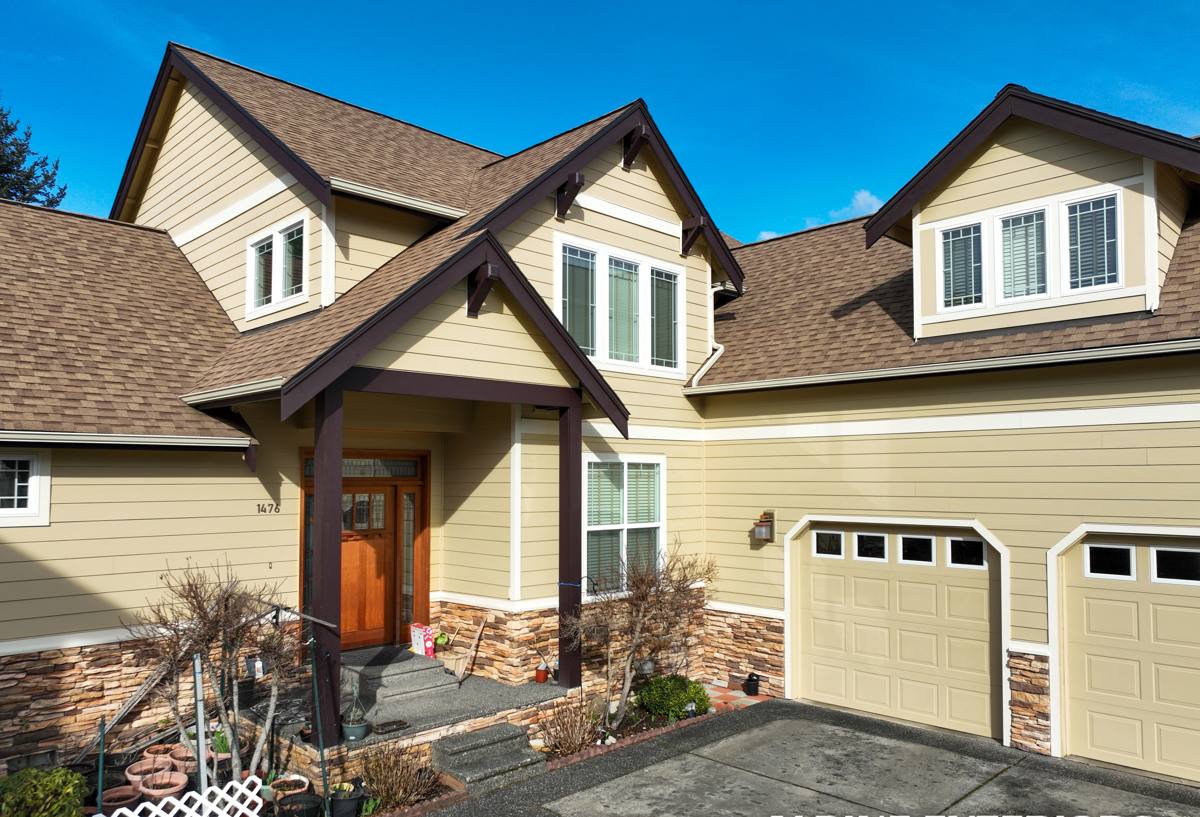
What Everett's Climate Does to Older Windows
Salt Air and Metal Hardware
Airborne salt is corrosive to unprotected metal — window balances, screen frames, hinges, and lock hardware all take slow damage over years of exposure. It's rarely the reason a window fails outright, but it's often the first sign something's wrong: hardware that used to move smoothly starts sticking, or a lock won't seat cleanly anymore. On an aging window, that's usually paired with worse problems underneath.
Driving Rain and Wind-Driven Intrusion
Everett gets rain that doesn't fall straight down. Storms off the Sound push rain sideways into wall assemblies, and older window installations — especially anything installed before flashing best practices were standardized — weren't always detailed to handle that. Water finds its way behind trim and into the wall cavity through gaps that look fine from the outside. By the time you see a stain on interior drywall or trim, the moisture has usually been there a while.
Moss Season and Prolonged Dampness
The long moss season in this part of Snohomish County means anything horizontal or slow-draining — sills, sloped trim, low-pitch header flashing — stays damp for extended stretches rather than drying quickly between rain events. Wood components in that environment are prone to slow rot if they weren't sealed and detailed correctly the first time. This is less about the glass and more about everything around it.
Signs a Forest Park Home Needs Window Replacement, Not Just Repair
Not every window problem calls for full replacement. But there are signs that point past repair territory:
- Fogging or a visible haze between panes on double- or triple-pane units — the seal has failed and the gas fill is gone
- Soft or spongy wood at the sill or lower corners of the frame
- Windows that won't stay open, won't latch, or have visibly warped out of square
- Persistent condensation on the interior glass or frame, even in a well-ventilated room
- Drafts you can feel by hand near the frame edge on a windy day
- Visible daylight or gaps around the frame from outside
- Paint that keeps failing on the same window trim no matter how often it's touched up — usually a sign of moisture underneath
One or two of these on a single window might mean a targeted repair is enough. Several of them across multiple windows, or any sign of rot in the framing, usually means replacement is the more honest recommendation — repeated patching on a compromised window just delays a bigger repair bill later.
What a Correct Window Replacement Job Involves
Removal and Structural Check
Once the old window is out, we look at the rough opening before anything new goes in — sill condition, framing, any sign of past water intrusion. This is the one point in the job where hidden damage is visible and fixable before it gets closed back up. Skipping this step is how a new window ends up installed over an old problem.
Flashing and Weather Barrier
This is the part that actually determines whether the window stays dry for the next 20-plus years, and it's also the part that's invisible once the job is done. Proper flashing integrates with the existing weather-resistive barrier in the correct shingled order — sill pan first, side flashing next, head flashing last — so water is always directed out and down, never trapped behind the window.
Insulation and Air Sealing
The gap between the new window frame and the rough opening gets sealed with the right material for the gap size — not just packed with fiberglass or overfilled with foam, either of which cause their own problems. Done right, this is what actually stops the draft, not just the new glass.
Trim and Finish
Exterior trim gets resealed or replaced as needed, with attention to any horizontal surfaces that will collect standing moisture during the wetter months. Interior finish work gets matched to the existing trim so the room doesn't look patched.
Choosing the Right Window Type for This Climate
There's no single "best" window material — the right choice depends on the home's exposure, budget, and how much upkeep the owner wants to do. Here's how the common options actually compare for a home in this environment:
| Material | Salt Air / Moisture Resistance | Maintenance | Typical Cost Range | Best For |
|---|---|---|---|---|
| Vinyl | Good — won't corrode or rot, seams need periodic inspection | Low | Lower end of the range | Most homes, especially budget-conscious full-house replacements |
| Fiberglass | Very good — dimensionally stable, holds paint well, resists warping | Low to moderate | Mid to upper range | Exposed elevations facing wind-driven rain, homes wanting a painted finish |
| Wood-clad | Depends heavily on cladding and install quality — interior wood needs protection from any moisture that gets past the clad exterior | Higher | Upper range | Homes prioritizing a traditional wood-interior look and willing to maintain it |
| Aluminum | Poor in this climate without thermal breaks — conducts cold and is prone to condensation | Moderate | Varies | Rarely our recommendation for residential replacement here |
Our default recommendation for most Forest Park homes is vinyl or fiberglass, specifically because they don't give salt air and driving rain anything to work with. We're not against wood-clad windows on principle — they can be a great look — but we're honest with clients that they come with an ongoing maintenance commitment in a climate that doesn't make maintenance easy to keep up with.
Glass Packages Worth Asking About
Beyond frame material, the glass package affects comfort and energy performance year-round:
- Low-E coatings reduce heat loss through the glass, which matters more here in winter than in summer
- Argon or krypton gas fill between panes improves insulation over plain air fill
- Double-strength or laminated glass can add a little extra durability on windows exposed to wind-driven debris
- Warm-edge spacers reduce condensation risk at the glass edge, which is where fogging and moisture problems tend to start first
Our Process Working in Forest Park
- On-site assessment — we look at every window being considered, not just the ones that are obviously failing, so the estimate reflects the whole job
- Honest recommendation — repair versus replace, and which material and glass package actually fit the home's exposure and budget
- Written estimate — clear on scope, materials, and timeline before any work starts
- Removal and structural check — old windows come out, framing gets inspected before anything new goes in
- Correct installation — proper flashing sequence, sealing, and insulation, not just a fast frame-and-caulk swap
- Finish work and walkthrough — trim matched, site cleaned up, and every window operated and checked before we call it done
Cost Factors for Window Replacement in This Area
Every home is different, so we don't quote window replacement without seeing the job, but the factors that move the number are consistent:
- Number of windows and their size — larger or custom-sized openings cost more than standard sizes
- Frame material chosen — vinyl, fiberglass, and wood-clad sit at different price points, as shown above
- Full-frame replacement versus insert replacement — full-frame costs more but is often the right call when the existing frame or flashing has failed
- Extent of any hidden rot or framing repair found once the old window is out
- Access and elevation — upper-story or hard-to-reach windows take more labor
- Trim and siding work needed to tie the new window in cleanly, especially if it's paired with siding work we're already doing on the home
Because we do siding work throughout Everett as well, we can flag if a window replacement is a good opportunity to address adjacent siding or trim issues at the same time, which usually costs less than doing the two projects separately down the road.
Why a Crew That Already Works Forest Park Matters
A window replacement crew that hasn't worked this specific area is guessing at things a local crew already knows: how exposed a given elevation typically is to wind-driven rain, what the local permitting process through the City of Everett actually requires for window replacement, and what housing stock in this part of the city tends to need — older single-pane originals, aging aluminum-frame replacements from a prior remodel, or first-generation vinyl units that are now due for another round. That familiarity shows up in fewer surprises during the job and a more accurate estimate up front, not just faster small talk on-site.
It also means we're not learning this climate's failure patterns on your house. We've seen what happens when flashing is done wrong here, and we build every install to avoid it.
If you're dealing with drafty, foggy, or sticking windows in Forest Park, or you're just planning ahead before the next wet season, we're glad to take a look. The estimate is free, there's no pressure, and you'll get a straight answer about whether you need replacement now, later, or not at all — just fill out the form below.