 Everett
 Eastmont's Climate Puts Real Demands on Your Siding
Eastmont sits within Everett, in Snohomish County, close enough to Puget Sound that salt-laden air is a constant factor in how exterior materials age. Add the region's long wet season, driving rain that comes in sideways during winter storms, and months where north-facing walls and shaded siding rarely get a chance to fully dry out, and you have a climate that is genuinely hard on siding. It is not just about rain hitting a wall. It is about how much of the year that wall stays damp, how much salt air degrades metal fasteners and coatings over time, and how quickly moss and algae take hold on any surface that holds moisture.
A siding installation that is done correctly for Eastmont has to account for all of that from the start, not patch around it later. That means the right material, the right water management behind the siding, and installation details that a lot of crews rush past because they do not show up as problems until year three or four.
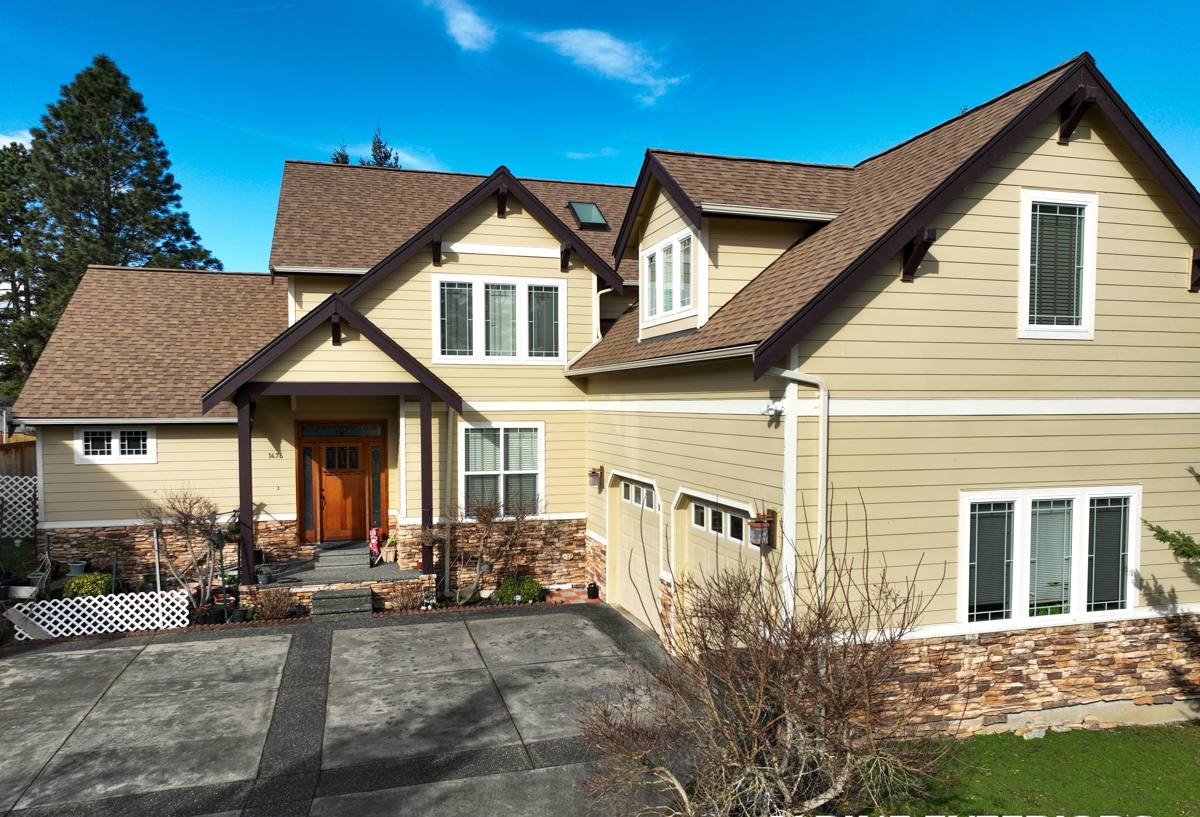
What Correct Siding Installation Actually Involves
Siding installation is often talked about as if it is just fastening panels or planks to a wall. The visible material is maybe a third of what actually determines whether the job holds up. The rest is water management underneath it, and that is where most premature siding failures in this region actually start.
Weather-Resistive Barrier and Flashing
Behind every piece of siding should be a continuous weather-resistive barrier, properly lapped so water sheds downward and out, not into the wall assembly. Every window, door, and penetration needs flashing that directs water back out to the surface, not behind it. In a climate with as much driving rain as Everett gets, a gap or reversed lap in the flashing detail is exactly the kind of mistake that turns into hidden rot behind siding that still looks fine from the street.
Fastening and Gapping
Fiber cement siding needs to be fastened at the correct pattern and depth, with proper clearance at butt joints and corners so the material can handle normal seasonal movement without cracking or trapping water. Nailing too tight, too loose, or in the wrong location is a common shortcut that shows up years later as splitting or nail popping.
Trim and Joint Sealing
Trim boards, corner details, and joints need to be sealed with products rated for the material and the exposure. In a marine climate, a joint that is sealed with the wrong caulk or left unsealed becomes a moisture entry point that accelerates moss growth right at the seam.
Why We Install Only James Hardie Fiber Cement Siding
We do not install vinyl, LP SmartSide, primed wood, or other fiber cement brands. That is a deliberate standard, not a sales preference. James Hardie fiber cement is non-combustible, holds paint and factory-applied ColorPlus finish far longer than site-applied paint on wood or composite products, and is engineered in HZ5 formulations specifically for the Pacific Northwest's wet, humid conditions. It resists moisture absorption and swelling in a way that wood-based composite products structurally cannot match, which matters directly in a climate where siding stays damp for extended stretches. It also carries a strong transferable warranty backed by a manufacturer with decades of track record on the product.
We are not going to tell a homeowner that every other siding product is worthless. Vinyl is inexpensive and low-maintenance in the right application. Wood composite products have real advantages in appearance and cost. But we have made a professional decision that in this climate, on the homes we put our name behind, fiber cement engineered for wet coastal conditions is the material that holds up the way we want our installations to hold up. That is the whole reason we standardized on it.
Is It Time for New Siding, or Just Repair?
Not every siding problem in Eastmont means a full replacement. But there are signs that point toward installation rather than patching:
- Siding that is soft, delaminating, or visibly swollen, especially near the bottom courses or around windows
- Persistent moss or algae growth that returns within weeks of cleaning, suggesting the surface stays wet longer than it should
- Paint that is peeling or bubbling across large sections rather than in isolated spots
- Visible gaps, warping, or siding that has pulled away from the wall at seams and corners
- Interior signs like staining on walls near exterior corners, which often trace back to a failed flashing detail outside
If the damage is isolated and the underlying wall assembly is sound, targeted repair can make sense. If the problems are spread across multiple walls or point to a systemic issue with the original installation, a full siding replacement is usually the more honest recommendation, since patching around a failed water management system just delays the same failure elsewhere.
Our Siding Installation Process in Eastmont
The process is the same discipline on every home, whether it is a full tear-off or new construction:
- On-site assessment of the existing wall assembly, moisture conditions, and any areas of concern specific to the home's exposure and orientation
- Removal of existing siding and inspection of the sheathing underneath for hidden rot or damage that needs to be addressed before anything new goes on
- Installation of a continuous, properly lapped weather-resistive barrier and correctly detailed flashing at every window, door, and penetration
- Installation of James Hardie siding to manufacturer fastening and gapping specifications, sized and profiled to fit the home
- Trim, corner, and joint work sealed with appropriate materials for the exposure
- Final walkthrough covering what was done, what to expect as the finish weathers in, and basic care going forward
Every step is done to James Hardie's published installation requirements, which is what keeps the manufacturer's warranty intact. A siding job that skips steps to save time can look identical on installation day and still fail early, so the value is almost entirely in details that are not visible once the wall is closed up.
Cost Factors in a Siding Installation Project
Every home is different, so we do not publish flat pricing, but these are the factors that most affect the scope and cost of a siding installation project in Eastmont:
| Factor | Why It Matters | Typical Impact |
|---|---|---|
| Full tear-off vs. new construction | Removal and disposal of existing siding adds labor and may reveal hidden repairs | Moderate to High |
| Sheathing or framing repair | Rot found once old siding is removed must be repaired before new siding goes on | Variable, sometimes High |
| Home size and wall complexity | More corners, dormers, and trim detail increase labor time regardless of material cost | Moderate |
| Siding profile chosen | Lap siding, panel siding, and shingle-style Hardie products differ in material and install time | Low to Moderate |
| Number of stories | Taller walls require more scaffolding, safety equipment, and time | Moderate |
| Trim and accent work | Custom trim, board-and-batten accents, or color changes between fields add detail work | Low to Moderate |
A written estimate after an in-person assessment is the only reliable way to know where a specific home falls on these factors.
Living With Hardie Siding After Installation: Maintenance in a Marine Climate
One of the practical advantages of James Hardie siding in this climate is how little upkeep it needs compared to wood-based products, but "low-maintenance" does not mean "no maintenance." In an area with a long moss season and salt air, a periodic gentle rinse to keep the surface free of built-up organic growth and salt residue helps the ColorPlus finish look good for the long run. Avoid pressure washing directly at joints and under trim, since forcing water behind the siding defeats the water management system that was installed to keep it out. Keep gutters and downspouts clear so runoff is not sheeting down the siding face, which is one of the more common causes of localized moss growth on an otherwise well-installed wall.
What to Ask Before You Hire
Siding installation is one of those projects where the difference between a good job and a bad one is mostly invisible until years later. Before hiring anyone for a siding installation in Eastmont, it is worth asking:
- Are you licensed and insured to do exterior work in Washington State?
- Are you a certified installer for the specific siding product you are proposing?
- Will you inspect and repair sheathing if damage is found once old siding comes off, and how is that priced?
- What weather-resistive barrier and flashing details will you use at windows and doors?
- Can you explain your fastening and gapping approach, and does it follow the manufacturer's published requirements?
- Is the manufacturer's warranty preserved by your installation method, in writing?
A contractor who answers these clearly and specifically, rather than in general terms, is usually one who actually follows the process rather than just talking about it.
Why Local Experience in Eastmont Matters
Everett's neighborhoods do not all face the same exposure. A wall that catches wind-driven rain off the Sound behaves differently than one that is more sheltered, and a crew that has installed siding across Eastmont and the surrounding Everett area over time has a feel for which details matter most on which exposures. That is not something a crew based somewhere with a drier climate picks up quickly. Local experience also means faster response if a warranty question or a weather-related concern comes up after the job is done, rather than waiting on a contractor who is not regularly working in the area.
If your Eastmont home needs new siding, or you are not sure whether what you have needs repair or replacement, we are happy to take a look and give you a straightforward assessment. Reach out for a free, no-pressure estimate using the form below.