 Everett
 Storm Damage Roof Repair for Forest Park Homes
Forest Park sits on the bluff above Port Gardner Bay, one of the older, more established pockets of Everett, with mature tree cover and homes that have weathered decades of Pacific Northwest winters. That combination of elevation, tree canopy, and proximity to the water means storm damage here doesn't always look the same as it does a few miles inland. Wind comes off the bay with real force, rain drives sideways into roof edges and valleys, and falling limbs from the surrounding trees add a layer of risk that flatter, more open neighborhoods don't deal with as often.
This page covers one thing specifically: storm damage roof repair for homes in and around Forest Park. Not a general roofing pitch, and not a sales page for a full tear-off you don't need. If a windstorm, hail event, or falling branch has left your roof compromised, here's what actually needs to happen to fix it right, and what we look for as a crew that already knows this neighborhood.
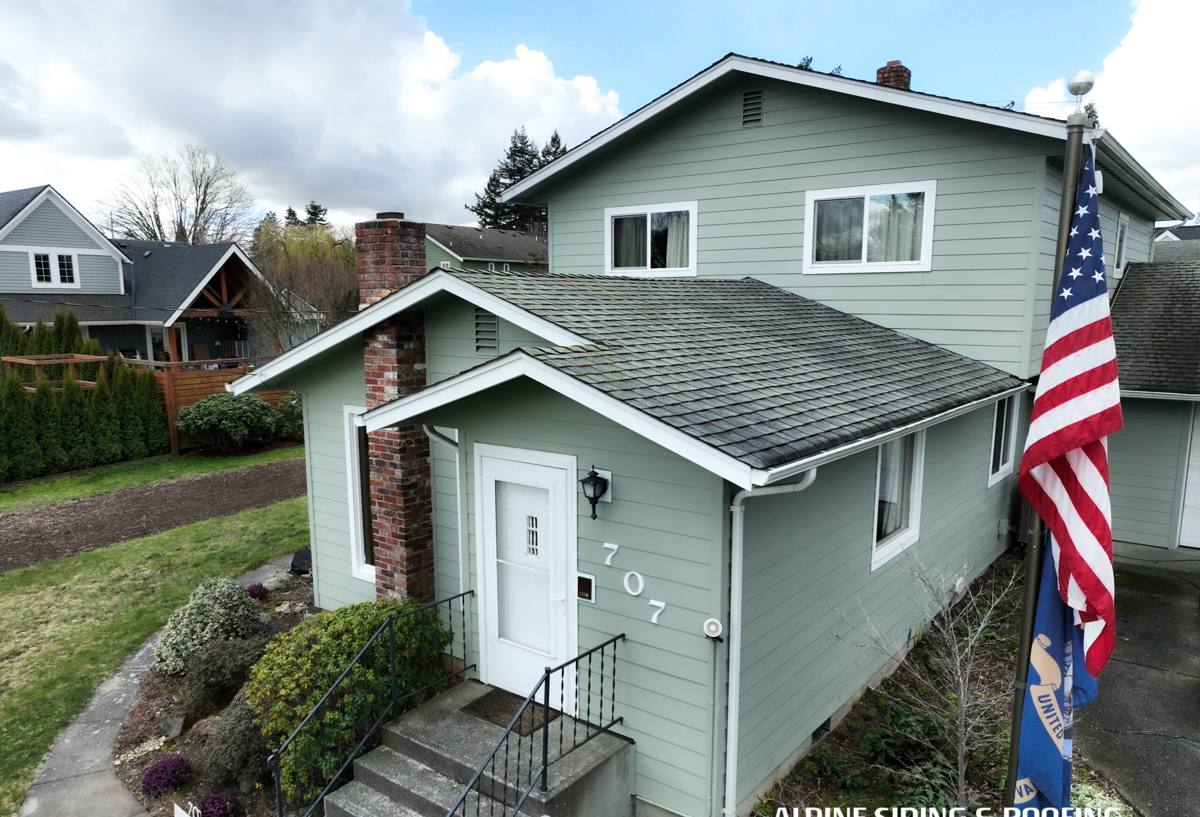
How Everett's Climate Wears on a Forest Park Roof
Wind-Driven Rain Off Port Gardner Bay
Homes on the bluff catch wind that homes further inland simply don't. During winter storms, rain doesn't just fall on a Forest Park roof — it gets pushed sideways and driven up under shingle edges, around chimney flashing, and into any gap that a calmer rain would never find. Over time, that wind-driven exposure is what turns a small, otherwise minor flaw into an active leak the first time a real storm rolls through.
A Long Moss Season Under the Tree Canopy
Snohomish County's moss season runs long, and the shade from Forest Park's tree cover stretches it even longer on north-facing slopes and shaded roof sections. Moss holds moisture directly against the roofing material for weeks at a time. After a storm has already lifted or cracked shingles, that trapped moisture is exactly what accelerates rot in the decking underneath — which is why storm repairs here need to account for moss, not just the visible damage.
Salt Air and Metal Fatigue
Being close to Port Gardner Bay means a steady, low-level exposure to salt-laden air. It's not as aggressive as a beachfront property, but it's enough over the years to accelerate corrosion on exposed metal — flashing, fasteners, gutter hardware, and vent boots. When we're repairing storm damage on a Forest Park roof, we're checking that metal condition as a matter of course, because corroded flashing is a common hidden cause of leaks that get blamed on the storm itself.
Signs Your Forest Park Roof Has Storm Damage
Some storm damage is obvious. A lot of it isn't, especially from the ground. After any significant wind event or falling debris, it's worth checking for:
- Shingles that look lifted, curled, or are missing outright, especially along ridge lines and roof edges
- Granules collecting in gutters or at downspout outlets — a sign shingles are being stripped by wind or impact
- Soft or spongy spots when the roof is walked, which usually means the decking underneath has taken on moisture
- New water stains or discoloration on ceilings or in the attic after a storm
- Bent, lifted, or separated flashing around chimneys, skylights, and roof vents
- Visible punctures, dents, or cracked shingles from falling branches or debris
- Moss or standing debris concentrated in one area, which can trap water against a spot that's already compromised
- Any sagging along the roofline, which points to a structural issue and needs prompt attention
None of these on their own are always an emergency, but after a storm, any one of them is a reason to get a proper inspection before the next round of rain finds the weak point.
What a Correct Storm Damage Repair Involves
A Full Inspection, Not Just the Obvious Spot
Storm damage rarely stays confined to one visible area. Wind lifts shingles across a whole slope even if only a few tear loose completely, and a branch strike can crack material well beyond the point of impact. A correct repair starts with inspecting the full roof — not just the spot you called about — so we're not back out again in a month for a "new" leak that was actually there the whole time.
Matching Materials and Techniques
Patch repairs only hold up if the materials and installation method match what's already on the roof. Shingle profile, exposure, and fastening pattern all matter — a repair that doesn't match the existing course can actually create a new path for wind-driven rain to get underneath. If your roof is older, we'll tell you honestly if a close material match isn't realistic and what that means for the repair.
Flashing, Underlayment, and the Details That Actually Stop Leaks
Most storm-related leaks trace back to flashing and underlayment, not the shingles themselves. A repair that only replaces damaged shingles but leaves compromised flashing or torn underlayment in place is a repair that fails again in the next storm. We treat flashing and underlayment condition as part of the repair scope, not an upsell — because on a bluff-exposed roof like the ones common in Forest Park, that's usually where the real vulnerability is.
Repair or Replace? What Actually Decides It
Not every storm-damaged roof needs full replacement, and not every roof can be responsibly patched. The honest answer depends on a handful of factors we walk through with you before recommending either path.
| Factor | Leans Toward Repair | Leans Toward Replacement |
|---|---|---|
| Roof age | Under roughly 12-15 years, still within expected service life | Near or past the manufacturer's expected lifespan |
| Extent of damage | Isolated to one section or a handful of shingles | Widespread across multiple slopes or the full roof |
| Decking condition | Solid, dry decking under the damaged area | Soft, rotted, or moisture-damaged decking |
| Repair history | First or second repair on this roof | Multiple prior repairs in different areas |
| Material availability | Close match to existing shingle still available | Discontinued material with no reasonable match |
We'll give you a straight recommendation based on what we actually find on your roof, not a default push toward the bigger job.
Our Storm Damage Repair Process
- Contact and scheduling. Tell us what happened and what you're seeing — a storm date helps, but isn't required to get started.
- On-site inspection and documentation. We inspect the full roof, not just the reported problem area, and document what we find with photos.
- Written scope and honest recommendation. You get a clear explanation of what's damaged, what needs repair versus what can wait, and why.
- Insurance coordination, if needed. If you're filing a claim, we can walk your adjuster through the documented damage.
- The repair itself. Matched materials, correct flashing and underlayment work, done to hold up through the next storm — not just pass a visual check.
- Cleanup and walkthrough. Debris cleared, work reviewed with you before we call it done.
Working With Your Insurance Company
Storm damage claims go smoother when the damage is documented clearly and honestly from the start. We photograph what we find during the inspection and can put together documentation that supports a legitimate claim — but we won't inflate a scope of work to pad an insurance payout, and we won't tell you that you need a full replacement if the actual damage doesn't warrant one. Our job is to give you and your insurance company an accurate picture of what the storm did, so the claim reflects the real repair that's needed.
Why a Crew That Already Works Forest Park Matters
Roofing in a bluff neighborhood above Port Gardner Bay is a different job than roofing on a flat inland lot. Wind exposure, tree cover, hillside access, and narrower streets all factor into how a repair gets scoped and staged. A crew that's already worked in Forest Park knows what wind-driven rain does to flashing on this side of Everett, knows how long the moss season really runs under this tree cover, and doesn't need to relearn the neighborhood's quirks on your dime.
That familiarity also means a more accurate first inspection. We're not guessing at what "typical" storm damage looks like from a training manual written for a different climate — we're checking against what we've actually seen hold up, and what fails, on roofs like yours in Snohomish County.
If a recent storm has left your Forest Park roof with damage — or you're just not sure whether what you're seeing needs attention — we're glad to take a look. Reach out for a free, no-pressure estimate using the form below.