 Everett
 Building Siding for Glenhaven's Wet Side of the Mountains
Glenhaven sits inside Everett, Washington, which means it gets the full Snohomish County weather package: winters that stay damp for months at a stretch, wind off Puget Sound, and a growing season for moss that runs far longer than most homeowners realize. Siding in this neighborhood isn't just a cosmetic choice — it's the one layer standing between your framing and a climate that never really dries out. We install James Hardie fiber cement siding here because it's the one material we trust to hold up to what this specific stretch of Western Washington throws at a house, year after year.
This page is about one job in one place: fiber cement siding for Glenhaven homes. Not a general overview of siding options, not a national climate map — what your house actually needs given where it sits.
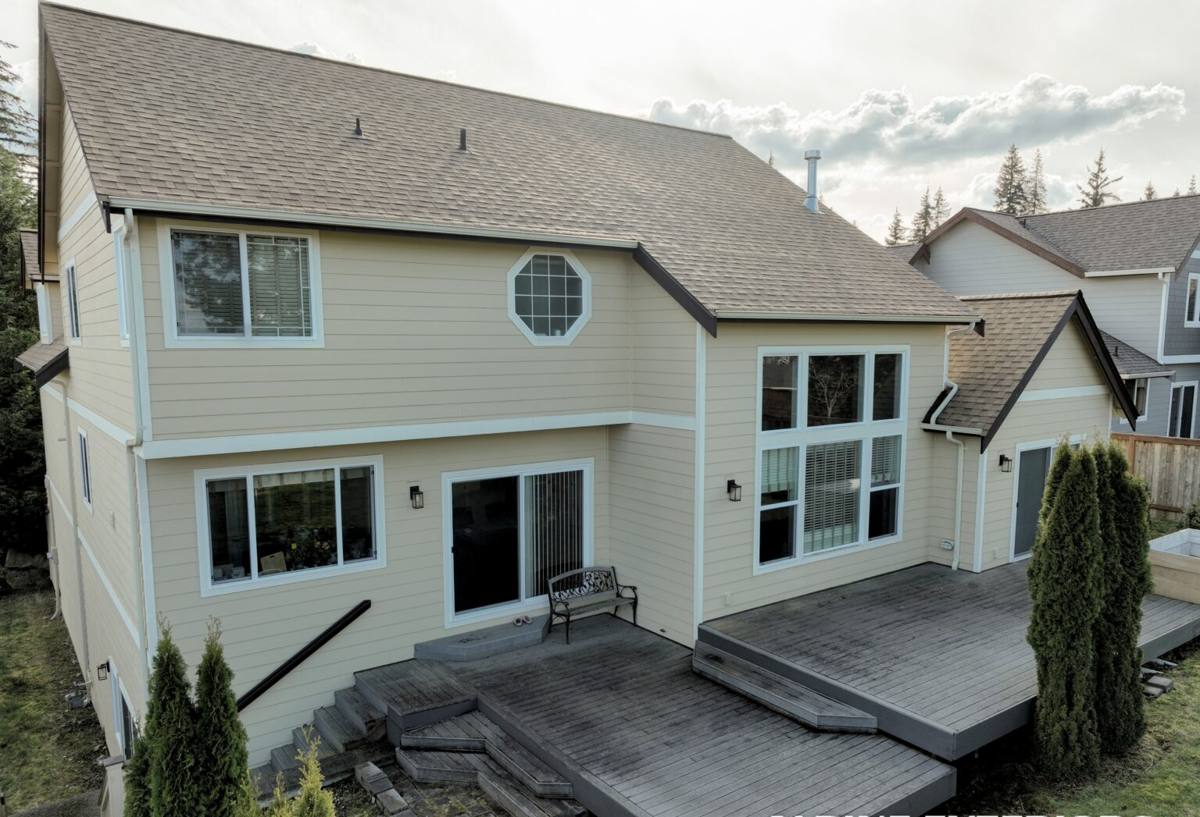
What Salt Air, Driving Rain, and Moss Do to the Wrong Siding
Every siding material eventually meets its limits somewhere. In Glenhaven, three conditions do most of the damage, and they compound each other.
Salt Air and Coastal Exposure
Everett borders Puget Sound, and homes throughout the area pick up trace salt in the air, especially on breezy days. Salt-laden moisture accelerates corrosion on fasteners, staples, and any exposed metal trim, and it works into porous or poorly sealed siding faster than plain rainwater does. Materials that depend on a surface coating to keep moisture out are only as good as that coating's ability to resist salt exposure over decades, not years.
Driving Rain and Wind-Driven Moisture
Storms here rarely fall straight down. Wind pushes rain sideways into wall assemblies, which means the details around windows, doors, and horizontal trim matter as much as the siding panels themselves. A material that swells, cups, or delaminates when it takes on moisture at a seam or cut edge is a liability in a climate where those seams get tested dozens of times a year.
Moss, Shade, and the Long Wet Season
Snohomish County's tree cover and long stretch of overcast, wet months from fall through spring create ideal conditions for moss and algae, especially on north-facing walls and anywhere siding stays shaded and damp. Moss holds moisture against a wall long after the rain stops, which is exactly the environment that rots wood-based products and stains softer surfaces. Siding here needs to resist that biological growth, not just shed water.
Why We Install Only James Hardie Fiber Cement
We don't offer LP SmartSide, vinyl, Cemplank, Allura, primed spruce, or cedar. That's a deliberate standard, not a lack of options. Wood-based composite products can perform well when kept dry and maintained on schedule, but they depend on an unbroken paint or coating layer to stay that way — and in a climate where dry stretches are short, that margin for maintenance error is thin. Vinyl is inexpensive and low-maintenance, but it expands and contracts with temperature swings, can warp or crack in wind-driven weather, and offers little protection in a wildfire-adjacent or ember-exposure scenario since it's not non-combustible.
Fiber cement is cement, sand, and cellulose fiber pressed and cured into a rigid board. It doesn't absorb water the way wood fiber composites can, it won't warp with humidity swings, and it's non-combustible. That combination is why we standardized on it — and specifically on James Hardie, because their factory finish, product engineering, and warranty structure are built around getting the material right the first time, not just supplying a board.
HZ10: Siding Engineered for the Pacific Northwest
James Hardie doesn't sell one formulation everywhere. Their HZ10 product line is engineered specifically for the wetter climate zones that include Western Washington — a different mix than what ships to drier or freeze-prone regions of the country. For a Glenhaven home, that's not a marketing distinction; it's the reason the siding is formulated to handle sustained moisture exposure and humidity rather than just tolerate it.
ColorPlus Factory Finish
Most of the fiber cement siding we install uses Hardie's ColorPlus finish — color baked onto the board in a controlled factory environment rather than field-painted on site. That matters here specifically because it removes the weakest link in a wet climate: a fresh paint job applied outdoors, in variable temperature and humidity, that then has to cure properly before the next rain. A factory finish is more consistent and comes with its own finish warranty covering peeling, cracking, and chipping, separate from the product warranty on the board itself.
What a Correct Fiber Cement Installation Involves
Fiber cement performs the way it's supposed to only when it's installed to spec. Cutting corners on the details below is the single biggest reason any siding — Hardie included — fails early in a climate like this one.
Clearances and Drainage
Siding needs proper clearance from grade, roof lines, decks, and any horizontal surface where water can pool or splash back. Skipping this is one of the most common shortcuts we see on older installs, and it's often the first place rot shows up on a home that otherwise looks fine.
Flashing and Weather-Resistive Barrier
Every window, door, and horizontal joint needs flashing that directs water out and down, over a continuous weather-resistive barrier behind the siding. In a climate with sustained wind-driven rain, this hidden layer does more work than the visible siding itself. It's also the layer that's easiest to shortcut, because nobody sees it once the job is closed up — which is exactly why it needs to be done right the first time.
Fastening and Joints
Fiber cement needs corrosion-resistant fasteners set to the manufacturer's specified depth and pattern — not vinyl or wood fasteners, and not overdriven or underdriven nails that crack the board or leave it loose. Butt joints at panel ends need to be treated correctly, whether sealed, flashed, or hidden behind a joint cover, so they don't become a moisture entry point.
Caulking and Paint Lines
Cut edges and joints need to be sealed with a product compatible with fiber cement and rated for exterior exposure, and any field-touched paint needs to match the ColorPlus system rather than fight it. Done poorly, caulking becomes a maintenance headache within a couple of years; done right, it disappears into the joint and stays sealed.
Our Process From Estimate to Finished Siding
The process doesn't change because a house is in Glenhaven specifically, but the details we check on the walk-through do — shade patterns, roof runoff, and exposure to wind off the Sound all shape the plan.
- On-site assessment: we look at your current siding, trim, flashing, and any moisture or moss damage before quoting anything.
- Scope and estimate: a written estimate covering removal, any sheathing repair needed, siding, trim, and finish — no surprise change orders for work we could see up front.
- Tear-off and inspection: old siding comes off and we check the sheathing underneath for hidden rot or moisture damage before closing anything back up.
- Weather barrier and flashing: a continuous weather-resistive barrier goes on first, with flashing detailed at every window, door, and horizontal transition.
- Hardie installation: siding is installed to manufacturer clearance, fastening, and joint specifications — the details above aren't optional steps we skip under deadline pressure.
- Finish and cleanup: trim, caulking, and touch-up work is completed, and the site is cleaned before we call the job done.
What Fiber Cement Siding Costs in Glenhaven
Every home is different, so any number here is a starting point for the conversation, not a quote. The factors below are what actually move the price on a Glenhaven job.
| Cost Factor | Why It Matters |
|---|---|
| Home size and wall complexity | More square footage and more corners, gables, and cutouts mean more labor and material waste. |
| Condition of existing sheathing | Rot found during tear-off adds repair cost but is far cheaper to fix now than to seal over. |
| Siding profile and finish | Lap width, shingle-style panels, and factory ColorPlus color options carry different material costs. |
| Trim and accessory work | Fascia, soffits, corner boards, and window trim are often replaced or repaired alongside the siding. |
| Access and site conditions | Multi-story walls, tight lot lines, or landscaping close to the house add setup and safety time. |
| Removal and disposal | Stripping old siding, especially layered-over material, adds labor and haul-away cost. |
Signs Your Current Siding Is Already Failing
A lot of siding problems in this climate stay hidden until they're expensive. Walk the outside of your house and check for these:
- Soft or spongy spots when you press on siding, especially near the bottom courses
- Persistent moss or dark staining that comes back soon after cleaning
- Paint that's peeling, bubbling, or chalking rather than just fading
- Visible gaps, cracks, or warping at panel joints and corners
- Caulking that's cracked, shrunk, or pulled away from trim and windows
- Musty smell or visible staining on interior walls that back up to exterior siding
- Siding that's noticeably cooler or damp to the touch after dry weather
Why Hiring a Crew That Already Works Glenhaven Matters
A crew that's installed siding throughout Everett and Snohomish County has already seen how homes in this specific climate age — which walls take the worst of the wind-driven rain, where moss shows up first, which older trim details need extra attention during tear-off. That local pattern recognition is what keeps a fiber cement installation from becoming a callback in three years. It also means someone answering your questions about warranty coverage, timelines, or scheduling around our wet season is speaking from experience with this exact neighborhood, not a general script.
If your Glenhaven home's siding is aging, damaged, or you're just planning ahead, we're happy to take a look and walk you through what we'd recommend. There's no pressure and no cost for a straightforward estimate — just an honest read on what your home needs.