 Everett
 Siding Repair in Lake Stevens: What the Climate Actually Does to a Home
Lake Stevens sits in the wetter, greener stretch of Snohomish County, and that has real consequences for the siding on your house. Homes here get a long wet season with driving rain that hits siding at an angle instead of falling straight down, tree cover and shade around the lake that keep north- and east-facing walls damp for days after a storm, and a moss and algae season that can stretch from fall through spring. Add in the marine-influenced air that moves through this part of Puget Sound country, and you get siding conditions that are noticeably harder on a wall system than what you'd see in a drier inland climate.
None of that means siding fails fast here. It means small problems — a gap at a butt joint, a cracked caulk line, a missing piece of flashing — get exploited faster than they would somewhere drier. A repair that would sit dormant for years in Eastern Washington can turn into rot, soft trim, or a stained wall in a single Lake Stevens winter if it's left alone.
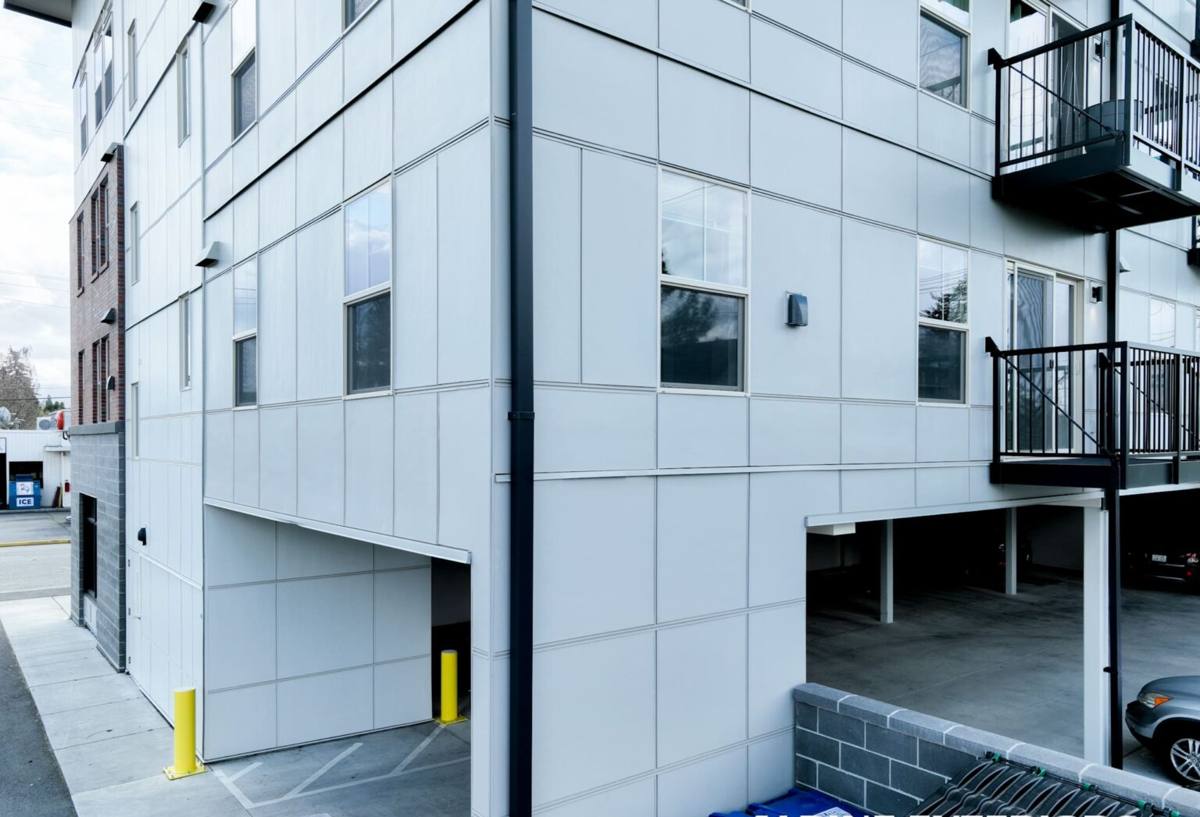
The Siding Damage We Actually Find in This Area
Moisture Intrusion at Joints and Penetrations
The most common repair call isn't dramatic damage — it's water finding its way behind the siding at a seam, a window trim gap, or a point where siding meets a deck ledger, hose bib, or vent. Once water gets behind the cladding, it doesn't dry out quickly in a climate that stays damp most of the year. That's how a small original installation gap turns into soft sheathing or a rot pocket a few years later.
Moss, Algae, and Trapped Debris
Shaded lots near the lake and mature tree cover across Lake Stevens neighborhoods mean moss and algae growth on siding, especially on north-facing walls and anywhere gutters or roof valleys dump extra water onto a wall below. Left alone, that growth holds moisture against the siding surface and accelerates whatever material is underneath it.
Impact and Wear Damage
Cracked or chipped panels from yard work, storm debris, or age show up on every siding type eventually. On fiber cement specifically, impact damage is usually a clean, repairable fix — replace the damaged piece, match the profile and color, reseal correctly. That's very different from vinyl, which tends to crack in a way that's hard to patch invisibly, or wood-based products, where impact damage often exposes bare substrate to moisture.
Failed Caulk and Sealant Joints
Caulk is not a permanent material. In a climate with this much rain exposure, sealant at trim boards, corner joints, and penetrations breaks down faster than homeowners expect. A repair visit often starts with re-caulking failed joints correctly — with the right product and joint prep — before anything else is addressed.
What a Correct Siding Repair Actually Involves
A repair that just covers the visible symptom isn't a repair — it's a delay. Here's what we check on every Lake Stevens repair call before we touch a panel:
- What's happening behind the damaged siding — is the sheathing dry, soft, or already compromised?
- Whether the house wrap or weather-resistive barrier behind the siding is intact at that location
- Whether flashing above windows, doors, and horizontal trim is doing its job or was installed incorrectly to begin with
- Whether the damage is isolated or a symptom of a wider drainage or grading issue at that wall
- Whether the replacement material will match the existing siding's profile, reveal, and finish closely enough to blend in
Skipping that diagnostic step is the single most common reason a "repaired" area fails again within a year or two. A patch over wet sheathing just traps the moisture in a new place.
Repair or Replace? How We Help You Decide
Not every siding problem in Lake Stevens needs a full re-side, and not every repair is worth doing in isolation. We look at the scope honestly and tell you which category your home is in.
| Situation | Usually a Repair | Usually Points to Replacement |
|---|---|---|
| Damage location | Isolated to one or two panels or a single wall section | Spread across multiple walls or elevations |
| Underlying sheathing | Dry and sound once opened up | Soft, delaminated, or repeatedly wet |
| Siding material and age | Fiber cement or newer material in otherwise good condition | Original material is failure-prone (older wood composite, aging vinyl) or near end of service life |
| Cause of damage | A one-time event — impact, a single failed joint | A systemic issue — poor original flashing, chronic moisture at multiple points |
| Color/material match | Close match achievable, or mismatch acceptable to homeowner | Discontinued color or profile makes a seamless patch impossible |
If your home is in the "repair" column, we won't talk you into more work than you need. If it's trending toward "replacement," we'll explain exactly why before you spend money on a fix that won't hold.
Our Process for Lake Stevens Repair Calls
- On-site assessment. We look at the damaged area and the wall system around it, not just the spot you called about.
- Honest scope and estimate. You get a clear explanation of what's actually wrong, what it will take to fix it correctly, and a written estimate before any work starts.
- Open it up. We remove the damaged siding and check the barrier, flashing, and sheathing underneath before closing anything back up.
- Fix the cause, not just the symptom. If the damage came from a flashing gap or a drainage issue, that gets corrected as part of the repair, not left for it to happen again.
- Match and finish. New material is fitted to match profile and reveal, properly fastened, and sealed at every joint and penetration.
- Final walk-through. We show you what was found, what was done, and what to keep an eye on going forward.
Why We Repair With James Hardie Fiber Cement
When a repair calls for new material — whether we're replacing a damaged panel or tying a repaired section into existing siding — we use James Hardie fiber cement. It's the only siding product we install, on repairs and full projects alike, and there's a practical reason for that in a climate like this one.
Fiber cement doesn't rot, doesn't feed moss and algae the way some organic-based sidings can, and holds up to sustained damp exposure far better than wood-based composite products. Hardie's factory-applied ColorPlus finish resists fading and doesn't require the repainting cycle that field-painted materials do, which matters when you're trying to color-match a repaired section to siding that's been on the house for years. Hardie also engineers specific product lines (its HZ5 line, built for wetter climates) for exactly the kind of exposure Snohomish County sees. When a repair is done with the right material, it behaves like the rest of the wall instead of becoming the next weak point.
We don't patch Hardie siding with vinyl, LP SmartSide, or other composite products, and we don't recommend mixing materials on a single wall. Different products expand, contract, and age differently, and a mismatched patch usually shows and sometimes creates a new moisture path at the seam.
Why It Matters That We Already Work in Lake Stevens
Siding repair is a trade where local experience shows up in the details. A crew that regularly works Lake Stevens homes already understands which elevations tend to take the worst rain exposure, how tree cover and shade affect moss growth on a given lot, and what correct flashing and drainage detailing looks like for homes built to the standards common in this part of Snohomish County. That local pattern recognition is what separates a repair that solves the problem from one that just covers it up for a season.
It also means straightforward logistics — scheduling that doesn't require a long drive-in charge, familiarity with the permitting and inspection expectations that apply locally, and a crew that can come back if a follow-up question comes up after the work is done.
Signs Your Lake Stevens Home Is Due for a Siding Repair Estimate
- Visible cracks, chips, or holes in any siding panel
- Soft spots when you press gently on siding or trim near the bottom of a wall
- Persistent moss, algae, or black staining that keeps returning after cleaning
- Gaps, peeling, or missing caulk at joints, corners, and window or door trim
- Paint or finish that's bubbling, peeling, or discolored in a localized area
- A musty smell or visible staining on an interior wall that backs up to exterior siding
- Warped, buckled, or separated siding panels anywhere on the home
If any of these sound familiar, it's worth having someone look before the next wet season adds to the damage. We offer free, no-pressure estimates for Lake Stevens homeowners — we'll walk the affected area with you, explain what we find in plain terms, and give you a straightforward repair scope and price. Use the form below to get started.