 Everett
 Why Deck Building in Lynnwood Takes More Than a Standard Framing Job
Lynnwood sits in one of the wetter corners of Snohomish County, close enough to Puget Sound that salt-laden air reaches yards and decks year-round, and far enough into the Pacific Northwest weather pattern that a deck here spends more months damp than dry. Add a moss season that can stretch from late fall through spring, and it becomes clear why a deck built to a generic national standard often struggles here. Framing lumber that would hold up fine in a drier climate can start showing rot at connection points within a few years. Fasteners rated for general use can corrode faster than expected once salt air gets into the mix. None of this means a deck in Lynnwood has to be high-maintenance or short-lived — it means the build has to account for the climate from the ground up, not as an afterthought.
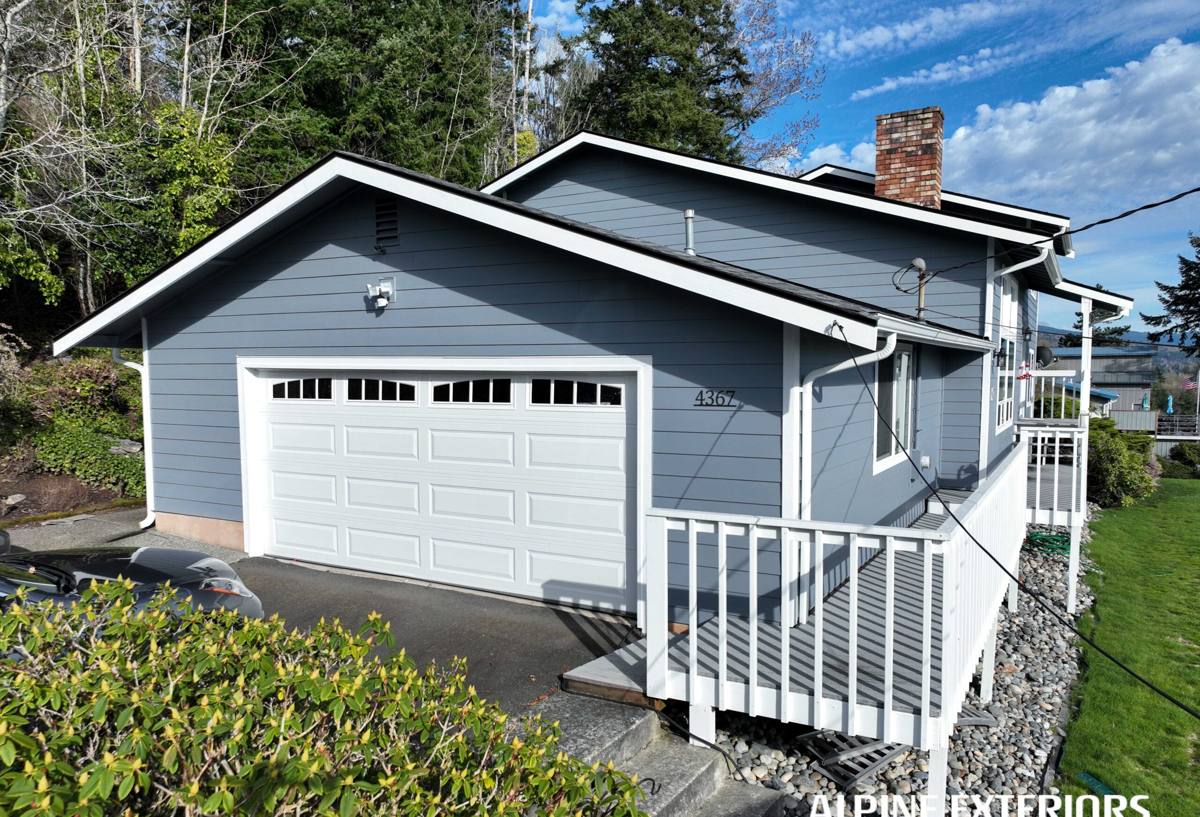
What a Correctly Built Deck Looks Like in This Climate
Footings and Framing Below the Boards
Everything visible on a deck — the boards, the railing, the stairs — depends on what's underneath. Footings need to be sized and set below frost depth per local code, and framing needs enough clearance from grade to allow air to move underneath the structure. Decks built low to wet or poorly draining soil are the ones we see rotting from the inside out first, long before the surface boards show any sign of trouble.
Fasteners and Hardware That Won't Corrode
In a coastal-influenced climate, the hardware holding a deck together matters as much as the lumber itself. Structural connectors, ledger bolts, and joist hangers should be rated for exterior and, where salt exposure is a factor, corrosion-resistant coatings or stainless steel. Standard interior-grade fasteners are one of the most common shortcuts we see on decks that need early repair — the wood is often fine, but the hardware holding it together has failed.
Choosing the Right Decking Material
There's no single "best" decking material for every home — it depends on budget, how much maintenance you're willing to do, and how the deck will be used. Here's how the common options compare for a Lynnwood property:
| Material | Moisture & Moss Resistance | Maintenance | Typical Lifespan |
|---|---|---|---|
| Pressure-treated wood | Good if sealed regularly; moss can gain a foothold if neglected | Annual cleaning and periodic sealing | 15-20 years |
| Cedar | Naturally moisture-resistant but still needs upkeep in shaded, damp areas | Regular cleaning and finish maintenance | 15-25 years |
| Composite decking | Very good; doesn't absorb water like wood, though surface cleaning is still needed to prevent moss | Low — occasional washing | 25-30+ years |
| PVC/capped polymer | Excellent; fully moisture-sealed surface | Lowest — rinse as needed | 25-30+ years |
We're upfront with homeowners about the trade-offs. Wood costs less up front but asks for more of your time every year. Composite and PVC cost more initially but hold up with far less attention in a climate that gives moss and moisture every advantage. Neither choice is wrong — it depends on what you'd rather spend, money now or maintenance later.
Moss, Algae, and Salt Air: Design Choices That Cut Down on Maintenance
Most of the moss and algae problems we see on Lynnwood decks aren't a material failure — they're a design and airflow problem. Boards installed too tight, decks built low to the ground without ventilation, and shaded areas that never fully dry out are where moss takes hold fastest. A few build decisions make a real difference over the life of the deck:
- Proper board spacing so water sheds through rather than pooling on the surface
- Adequate clearance and airflow beneath the deck frame, not just around the perimeter
- Fasteners and connectors matched to the exposure, not the cheapest option that meets minimum code
- Flashing at the ledger board that actually directs water away from the house, not just a bead of caulk
- Material choice that matches how shaded or exposed the deck's location actually is
None of these add significant cost to a build. They're the difference between a deck that needs a power wash once a year and one that's growing moss in the shaded corners by its second winter.
Permits and Code Considerations for a Lynnwood Deck
Most attached decks and any deck above a certain height require a building permit, along with inspection of the footings and ledger attachment before the decking goes on. Guardrail height, stair geometry, and ledger-to-house attachment are all governed by code, and inspectors in this region pay particular attention to ledger flashing given how much moisture the siding and rim joist behind a deck are exposed to. Requirements can vary depending on whether a property falls under city or county jurisdiction, so we confirm the specifics for your address before any work starts rather than assuming. A permitted, inspected deck also matters at resale — an unpermitted structure can become a negotiating problem when the home sells.
Our Deck Building Process
We run the same process on every Lynnwood deck, whether it's a simple ground-level platform or a multi-level deck with stairs and railing:
- Site evaluation — grading, drainage, sun/shade exposure, and how the deck ties into the existing structure
- Design and material selection — sized to how you'll actually use the space, with an honest conversation about material trade-offs
- Permitting — handled with the local jurisdiction before any digging starts
- Footings and framing — set to code depth, with hardware rated for the exposure
- Ledger attachment and flashing — the single most important connection on an attached deck, done to keep water out of the house structure
- Decking, railing, and stairs — installed with fastening methods appropriate to the material
- Final walkthrough — inspection sign-off and a clear explanation of what maintenance, if any, the deck needs going forward
We don't skip steps to hit a lower number on a quote. A deck that's fast to build and slow to fail is the goal, not the other way around.
Common Problems We Find on Existing Lynnwood Decks
A large share of our deck work in the area is repair or partial rebuild, not new construction — and the failures tend to follow a pattern. Watch for these warning signs on a deck that's a few years old:
- Soft or spongy decking near the house, often where the ledger board meets the siding
- Rust staining running down from screw heads or connector hardware
- Moss or algae building up faster than a yearly cleaning can keep up with
- Gaps or movement where the ledger board attaches to the house
- Railing posts that flex or feel loose when pushed
Any of these usually point back to the same root causes: undersized or corroding hardware, missing or failed ledger flashing, or framing that was never given enough clearance to dry out between rain events. Caught early, most of these are a repair. Left alone through another wet season, they tend to become a rebuild.
What Affects the Cost of a New Deck
Every deck is priced around the same handful of variables. Knowing what drives cost up or down helps you plan the project realistically:
| Factor | Why It Matters |
|---|---|
| Size and shape | Larger and more complex footprints mean more framing, footings, and material |
| Decking material | Composite and PVC cost more up front than wood but need far less upkeep over time |
| Height and levels | Elevated or multi-level decks need more framing, stairs, and often taller guardrails |
| Railing style | Cable, glass, and metal railing systems cost more than standard wood or composite baluster railing |
| Site access | Backyards with limited equipment access can add labor time |
| Permit and inspection scope | More complex structures may require engineering review, adding time and cost |
We give a straightforward, itemized estimate rather than a vague lump sum, so you can see exactly where the cost is coming from and where there's room to adjust the scope if the budget needs it.
Why Hiring a Crew That Already Works in Lynnwood Matters
A deck built to a generic spec sheet can look fine on day one and still be the wrong deck for this address. Local building departments, typical soil and drainage conditions in Snohomish County, and how fast moss and salt air work on an under-built deck are things you learn by doing the work here repeatedly, not by reading a manual once. As a siding contractor already doing exterior work across Everett and the surrounding communities, we look at a deck as part of the whole exterior — how it ties into the siding, how water moves around the house, and how the materials we recommend will actually hold up given everything else the property is exposed to. That's a different starting point than a crew building the same deck design in every climate they work in.
If you're planning a new deck or dealing with an existing one that's showing its age, we're happy to take a look and give you a straightforward, no-pressure estimate — no inflated scope, no pressure to upgrade past what actually makes sense for your home and budget. Use the form below to get started.