 Everett
 Why Roofs in Marysville Wear Differently
Marysville sits close enough to Puget Sound that salt-tinged air is a normal part of the weather, not an occasional event. Add in the driving, wind-pushed rain that rolls through Snohomish County most of the fall and winter, plus a moss season that can run half the year in shaded, north-facing sections of a roof, and you get a climate that's genuinely tougher on roofing than a lot of homeowners realize until they're dealing with a leak. This isn't a scare story — it's just the reason a roof that would last three decades in a dry inland climate often needs attention sooner here, and why the details of the installation matter more than the marketing on the shingle wrapper.
We work on homes throughout the Everett area, and Marysville roofs show a consistent pattern: moss and algae staining on the north and east-facing slopes, granule loss around valleys and eaves where water concentrates, and soft or delaminating decking under roofs that were never given enough ventilation to dry out between storms. A correct replacement addresses all three — not just the shingles you can see from the driveway.
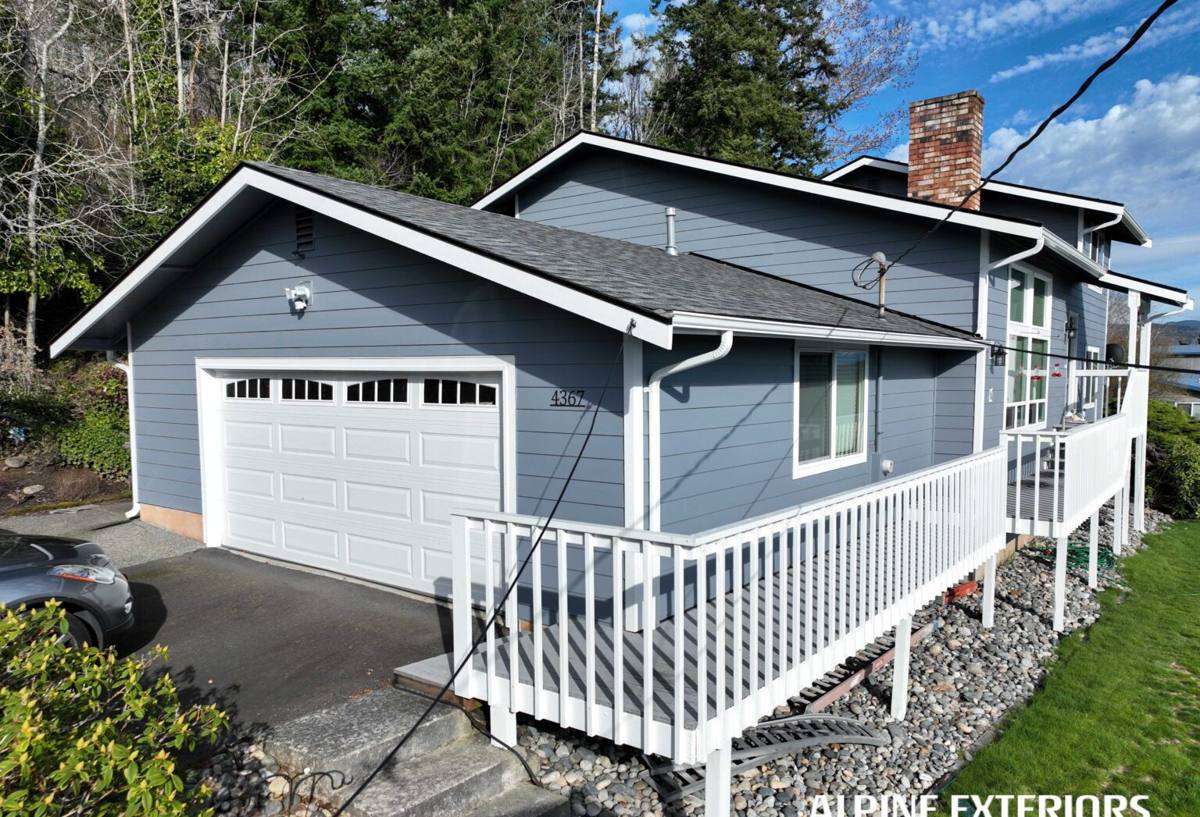
How to Tell a Roof Needs Replacing, Not Just Patching
What You Can See From the Ground or Attic
Some damage is obvious. Some isn't visible until you're up close or standing in the attic during a rainstorm. A single missing shingle or a cracked pipe boot is usually a repair. Widespread granule loss, curling shingles across multiple slopes, or daylight showing through the roof deck are signs the roof has reached the end of its useful life.
- Shingles that are cupping, curling, or cracking across more than one section of the roof
- Heavy, persistent moss growth that comes back within a season of cleaning
- Granules collecting in gutters or at downspout outlets
- Soft spots, sagging, or visible waviness in the roof plane
- Water stains, mold, or musty odor in the attic after heavy rain
- Daylight visible through the roof deck from inside the attic
- A roof approaching or past 20-25 years old for asphalt shingle products
- Two or more previous repair patches in different areas within a few years
Age Is a Guideline, Not a Rule
A well-ventilated, well-installed asphalt roof can outlast a poorly ventilated one by a decade or more in this climate, even with the same shingle product. That's why we look at the whole system during an inspection — decking condition, ventilation, flashing, and shingle wear together — rather than just counting years since the last installation.
What a Correct Roof Replacement Actually Involves
Tear-Off and Deck Inspection
We remove the old roofing down to the deck rather than layering new shingles over old — layering traps moisture and hides deck damage, which is exactly the wrong move in a climate that already struggles to dry roofs out. Once the deck is exposed, we check every sheet of sheathing for soft spots, delamination, or rot, particularly around valleys, chimneys, and any area that showed staining from inside the attic. Damaged sections get replaced before anything new goes down; there's no way to do this step "later."
Underlayment and Water-Entry Points
Synthetic or felt underlayment goes down next, with self-adhering ice-and-water barrier at the vulnerable spots — eaves, valleys, and around any roof penetration — where wind-driven rain is most likely to find a way in. This layer is what actually keeps a roof dry when a storm pushes rain sideways under the shingle tabs, which happens regularly during Snohomish County's wetter months.
Flashing Details
Flashing around chimneys, skylights, sidewalls, and vent pipes fails more roofs than shingle wear does. We replace flashing rather than reusing old pieces, and we pay particular attention to step flashing at wall intersections and any location where two roof planes meet — these are the spots that leak first when corners get cut.
Ventilation, Not an Afterthought
Balanced intake and exhaust ventilation lets the attic and roof deck dry out between rain events, which slows moss regrowth, extends shingle life, and prevents the trapped moisture that leads to soft decking. On a lot of older Marysville roofs we open up, ventilation was undersized or blocked entirely — insulation stuffed into soffit vents, or a ridge vent that was never cut properly. We correct this as part of the replacement, not as a separate upsell.
Choosing the Right Material for This Climate
There's no single "best" roofing material — the right choice depends on your roof's exposure, your budget, and how long you plan to stay in the home. Here's how the common options compare for a Marysville roof:
| Material | Typical Lifespan Here | Moss & Moisture Behavior | Relative Cost |
|---|---|---|---|
| 3-tab asphalt shingle | 15-20 years | Lower profile sheds debris less easily; needs regular moss treatment | Lowest |
| Architectural (dimensional) shingle | 20-30 years | Thicker mat and better granule adhesion resist moisture damage longer | Moderate |
| Impact-rated / algae-resistant shingle | 25-30+ years | Copper-infused granules slow algae and moss regrowth | Moderate to higher |
| Standing seam metal | 40-50+ years | Smooth surface sheds moss and needles well; minimal maintenance | Highest |
Most Marysville homeowners land on architectural shingles as the practical middle ground — a meaningful upgrade over 3-tab in wind resistance and lifespan without jumping to metal pricing. Algae-resistant shingles are worth the modest upcharge on heavily shaded roofs where moss has been a repeat problem, since the copper granules genuinely slow regrowth rather than just hiding it. Metal makes the most sense for homeowners planning to stay long-term or dealing with a steep, hard-to-access roof where fewer future service trips matter.
What Actually Drives the Cost
Beyond the material itself, a handful of factors determine what a given roof replacement runs:
- Roof size and number of planes — more squares and more valleys mean more material and labor
- Pitch and access — steep or high roofs take longer and require more safety setup
- Layers to remove — tearing off two layers of old roofing costs more than one
- Deck condition — plywood or board replacement is priced as it's found, since it can't be estimated with certainty until tear-off
- Ventilation upgrades — adding intake or exhaust venting where the existing system is inadequate
- Flashing and penetrations — chimneys, skylights, and multiple vent pipes add labor
We walk through each of these with you during the estimate so the number you're given reflects your actual roof, not a generic per-square rate that changes once the crew is on site.
Our Process, Start to Finish
- Free on-site inspection and measurement, including attic ventilation check
- Written estimate covering material options, scope, and a firm price
- Scheduling that accounts for Snohomish County's rain patterns, so tear-off happens on a day we can get the roof dried in
- Property protection — tarps over landscaping, magnetic sweeps for nails, gutter protection
- Tear-off and deck inspection, with any rot or soft sheathing replaced before underlayment goes down
- Installation of underlayment, flashing, ventilation, and shingles or metal to manufacturer specification
- Final walk-through inspection with you before we consider the job finished
- Cleanup, haul-away, and warranty paperwork
Why a Crew That Already Works Marysville Matters
Roofing done right depends on knowing the specific conditions of the area you're working in, not just the trade in general. A crew that regularly works Marysville and the greater Everett area already understands which slopes tend to hold moss longest, how much wind exposure a given neighborhood typically sees off the water, and what permitting looks like through Snohomish County and the City of Marysville. That familiarity shows up in small decisions — how much ice-and-water barrier to run at the eaves, how aggressively to ventilate a shaded north slope — that a crew unfamiliar with the area might get wrong on the first pass.
It also means we're not guessing about scheduling. Roofing in a wet climate is as much about timing tear-off around weather windows as it is about the installation itself. A roof torn open ahead of an unexpected rain system is a bad day for everyone; local, weather-aware scheduling avoids that.
Protecting Your New Roof After Installation
A correctly installed roof still needs basic upkeep to hit its full expected lifespan in this climate. None of it is complicated, but skipping it shortens the roof's life:
- Clean gutters at least twice a year so water isn't backing up under the eaves
- Treat or have moss removed from shaded slopes before it builds up, rather than after
- Trim back branches that overhang the roof to reduce shade, debris, and physical wear
- Check attic ventilation isn't blocked by added insulation over time
- Do a visual check after major storms for lifted shingles or damaged flashing
- Schedule a professional inspection every few years, even without visible problems
If you're weighing repair versus replacement, or just want an honest read on where your roof stands, we're happy to take a look. The estimate is free, there's no pressure attached to it, and you'll get a straight answer about what your roof actually needs — use the form below to get started.