 Everett
 North Everett's Siding Has a Harder Job Than Most People Realize
North Everett sits close enough to the water and the marine air that moves through Snohomish County that its siding takes a different kind of beating than siding a few hours inland. The combination of salt-tinged air, long stretches of driving rain off the Sound, and a moss season that can run from fall through spring means exterior walls here are almost never fully dry. Wood-based products absorb that moisture. Cheap coatings chalk and fade faster under it. And anything with seams, laps, or fasteners that weren't detailed correctly becomes a slow, hidden entry point for water behind the wall — the kind of problem that doesn't show up until the sheathing underneath is already compromised.
This page is about one thing: what it actually takes to do James Hardie fiber cement siding right on a North Everett home, and why the difference between a correct install and an average one matters more here than it would in a drier climate.
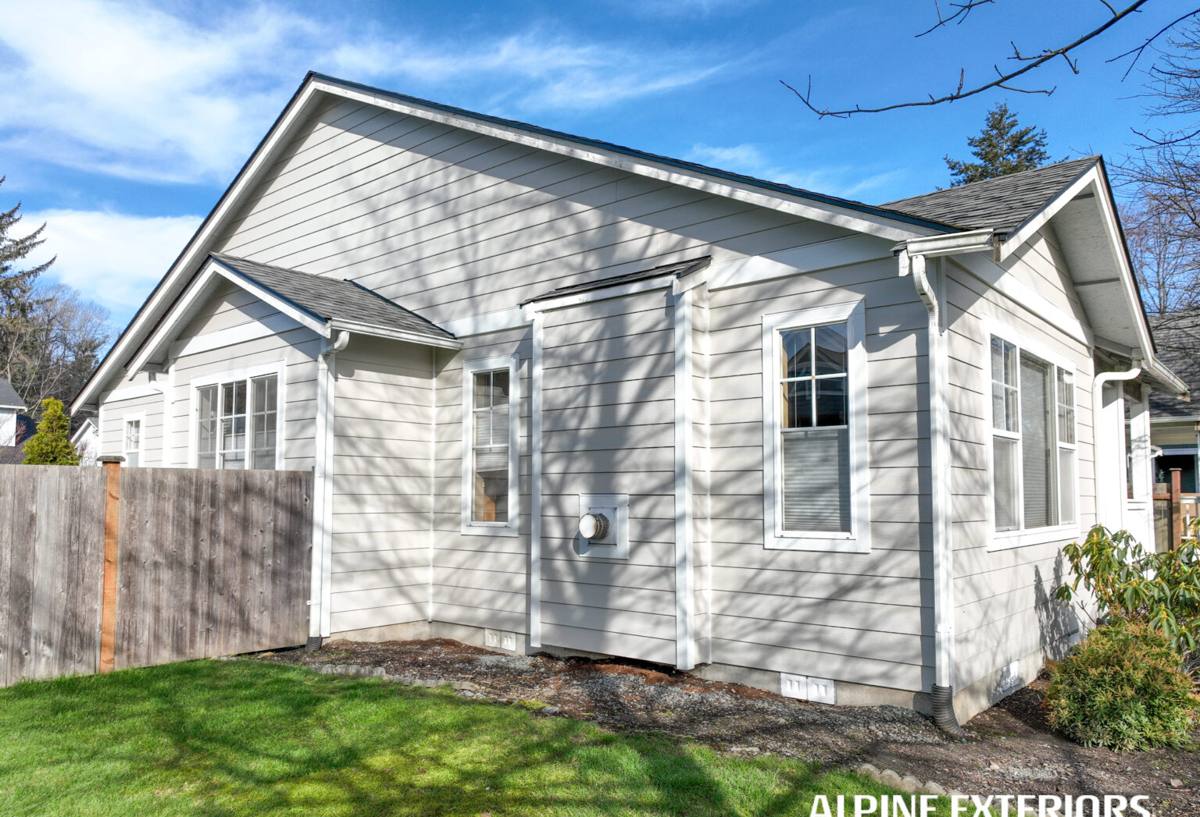
Why Fiber Cement Is the Right Starting Point Here
James Hardie siding is Portland cement, sand, and cellulose fiber pressed and cured into a dense, dimensionally stable board. It doesn't absorb bulk moisture the way wood-based siding does, it won't ignite or feed a fire the way some alternative siding materials can, and it holds its shape through the wet-dry cycling that's constant in this part of Washington. That stability matters most in exactly the conditions North Everett deals with: siding that swells and shrinks with every rain event eventually works its fasteners loose and opens gaps at the joints, and once a gap opens, wind-driven rain off the water finds it.
None of that means fiber cement is maintenance-free or install-proof. It means the material gives a correctly done installation a much longer runway before moisture becomes a structural issue instead of a cosmetic one.
Why We Only Install James Hardie
We don't install LP SmartSide, vinyl, Cemplank, Allura, primed spruce, or cedar. That's not a knock on every homeowner who has one of those products on their house — plenty of them perform fine when installed and maintained correctly. It's a standard we hold for our own work: we want to stand behind a product system with a track record we trust in this specific climate, a factory finish that outperforms field-applied paint, and a warranty structure that's actually transferable if the home sells. Hardie is what we've chosen to put our name behind.
What Correct Installation Actually Involves
The material is only half the equation. A James Hardie install that's going to hold up through a North Everett winter depends on details most homeowners never see once the siding is up:
- Water-resistive barrier and flashing sequence — house wrap and flashing installed so every layer sheds water downward and outward, never trapping it behind the cladding
- Proper fastener placement — Hardie-specified nailing patterns, blind-nailed where possible, at the correct distance from panel edges so boards aren't held too rigid or left loose
- Gapping and caulking at the right joints only — butt joints, trim, and penetrations sealed per manufacturer spec, without over-caulking seams that are designed to allow slight movement
- Clearance at grade and hard surfaces — bottom edge of siding kept above soil, decking, and roofing per code, so splash-back and standing moisture don't wick into the board
- Rainscreen or furring where conditions call for it — a small air gap behind the siding that lets any moisture that does get in dry out instead of sitting against the sheathing
Skip or shortcut any one of these and the siding can look correct for years while moisture works on the framing behind it. This is the gap between a crew that's hung a lot of siding and one that's hung a lot of siding correctly in a wet marine climate specifically.
Picking the Right HZ Product Line for This Microclimate
James Hardie engineers its HZ5 product line for climates with significant moisture and freeze-thaw cycling, which fits Western Washington generally and North Everett's exposure to the water specifically. Beyond the HZ engineering, the choice of profile matters too:
| Product Style | Best Fit For | Local Consideration |
|---|---|---|
| Lap siding (plank) | Most single-family homes, traditional or craftsman styling | Wider exposure sheds driving rain well; most common choice for full re-sides |
| Board and batten (vertical) | Modern facades, gable accents, garages | Vertical joints need extra care in flashing to avoid water tracking down seams |
| Shingle/shake panels | Craftsman or cottage-style homes, accent walls | More seams than lap siding — installation quality matters even more here |
| Trim and fascia boards | Window and door surrounds, corners, fascia | Often the first place moss and staining show; correct flashing is critical |
There's no single "best" product line — the right call depends on the home's design, its exposure to weather off the Sound, and what's already failing on the existing siding.
ColorPlus Finish: Why It Matters More in a Climate Like This
Hardie's ColorPlus finish is baked on at the factory in a controlled environment, then cured with a process that field-applied paint simply can't replicate on a jobsite. In a climate with long wet stretches and a real moss season, that matters for two practical reasons. First, factory-applied finish adheres better and resists the fading, chalking, and peeling that field paint is prone to when it's applied in less-than-ideal humidity and temperature. Second, ColorPlus is backed by its own finish warranty separate from the substrate warranty — so the color and the board are both covered, not just one.
Homeowners sometimes ask whether primed boards painted on-site are a reasonable cost-saving option. They can be, but in a marine climate where the paint has to cure and then perform through wet winters almost immediately, factory-cured finish has a real, practical edge — not just a cosmetic one.
Moss, Algae, and Salt Air: What Ongoing Exposure Does to Siding
Even the right product installed correctly still lives in North Everett's environment year-round, and a few things are worth understanding going in:
Moss and algae growth
Shaded, north-facing walls and areas under tree cover stay damp longer and are where moss and algae tend to establish first. This is mostly cosmetic on fiber cement — it doesn't feed on the board the way it can on wood siding — but left unaddressed for years it holds moisture against the surface longer than it should.
Salt air exposure
Homes closer to the water deal with airborne salt settling on exterior surfaces. This mostly affects metal components — fasteners, flashing, and trim hardware — more than the fiber cement itself, which is another reason correct, corrosion-resistant fastener and flashing choices matter in the initial install.
Driving rain
Wind-driven rain off the Sound doesn't just fall on a wall, it pushes against it. That's why lap exposure, caulking discipline, and flashing at every horizontal transition (window heads, belly bands, roof-to-wall intersections) carry more weight here than they would in a sheltered inland location.
Our Process for a North Everett Project
- On-site assessment — we look at the existing siding, sheathing condition where accessible, trim, flashing, and any signs of past moisture intrusion before quoting anything
- Product and profile selection — matched to the home's style and its specific exposure to wind and rain
- Tear-off and inspection — old siding removed, sheathing checked and repaired as needed before anything new goes up
- Water-resistive barrier and flashing — installed to manufacturer and code specification, not shortcuts
- Hardie installation — correct fastening, gapping, and clearances at every course
- Trim, caulking, and paint touch-up — finished per ColorPlus and manufacturer guidelines
- Final walkthrough — reviewed with the homeowner before we consider the job done
What Drives Cost on a Project Like This
| Factor | Why It Moves the Price |
|---|---|
| Tear-off scope | Full removal and disposal of existing siding vs. installing over an already-clean substrate |
| Sheathing condition | Hidden rot or moisture damage found during tear-off requires repair before new siding goes on |
| Home complexity | Number of gables, dormers, windows, and trim details adds labor time regardless of square footage |
| Product line and profile | Lap vs. shingle vs. board-and-batten carry different material and labor requirements |
| Access and site conditions | Slopes, tight lot lines, and staging space around the home affect crew efficiency |
Any honest quote for a North Everett home should walk through these factors specifically, not just quote a flat per-square-foot number without inspecting the house first.
Why It Matters That a Crew Already Works This Neighborhood
A crew that regularly works North Everett has already seen how homes in this area age under this specific exposure — which walls take the worst of the driving rain, where moss tends to establish first, and what Snohomish County permitting and inspection actually require before a project can move forward. That familiarity shortens the guesswork on assessment day and reduces surprises mid-project. It also means the crew showing up to install your siding has installed Hardie products in this exact climate before, not just read the installation manual.
Questions Worth Asking Before You Hire
- Will you tear off the old siding and inspect the sheathing, or install over it?
- What water-resistive barrier and flashing details will you use at windows, doors, and roof lines?
- Which HZ product line and profile do you recommend for this specific home, and why?
- Is the ColorPlus factory finish included, or will trim be field-painted?
- What does the warranty actually cover — the board, the finish, and the labor — and is it transferable?
- Can you walk me through your fastening and gapping approach before the crew starts?
If your North Everett home's siding is showing its age — or you just want an honest look at whether James Hardie is the right fit before committing to anything — we're happy to come take a look. The estimate is free, there's no pressure, and you can use the form below to get started.