 Everett
 Board & Batten Siding, Done Right, for Riverside
Board and batten has become one of the most requested looks in Everett — the tall, vertical lines read as clean and modern on a new build, and they read as classic farmhouse on an older one. It's a striking style. It's also one of the least forgiving siding profiles to get wrong, because every seam, every batten strip, and every panel joint is a place water can find its way behind the cladding if the installer cuts corners. In Riverside, close to the Snohomish River and not far from the salt air moving in off Puget Sound, those corners don't stay hidden for long.
This page covers what board and batten siding needs to hold up in Riverside specifically — the moisture load, the install details that actually matter, and why we install it exclusively in James Hardie fiber cement rather than the wood-based or vinyl board and batten systems that are also on the market.
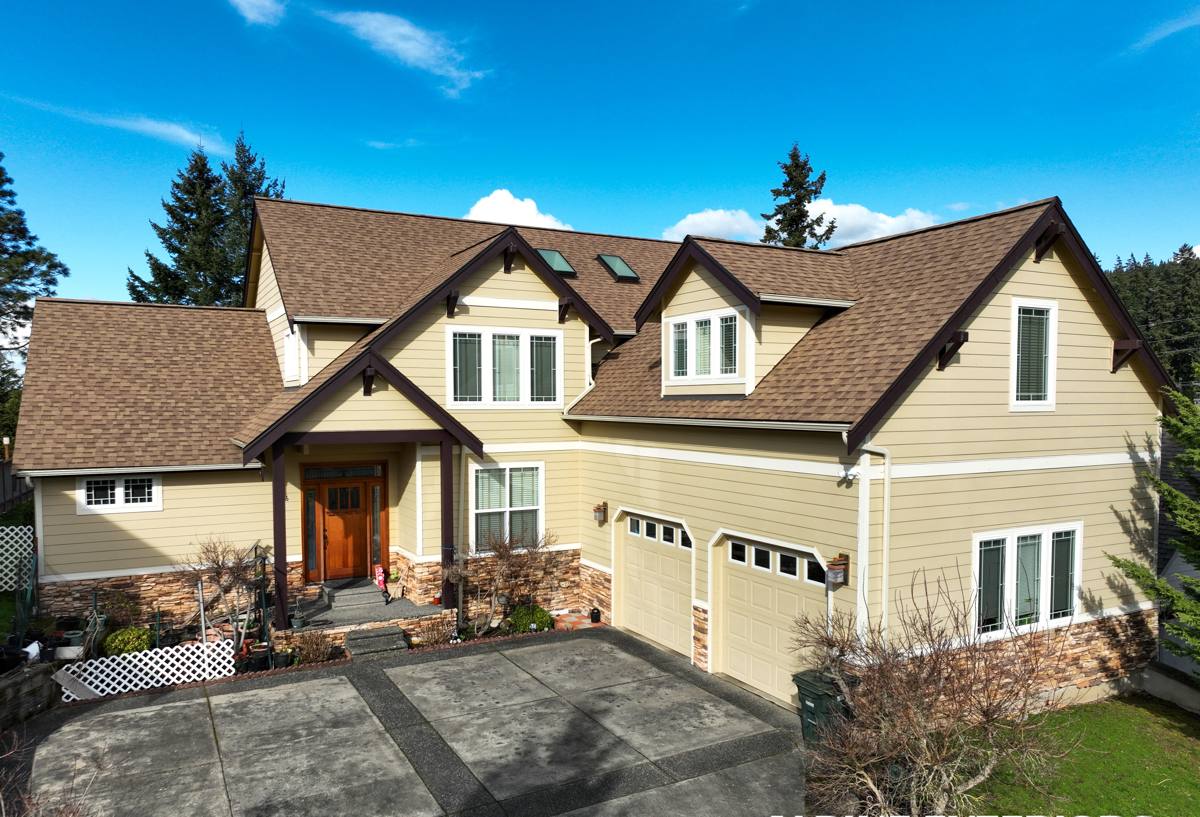
What Riverside's Location Asks of a Vertical Siding System
Riverside sits near the water, and that proximity shapes the maintenance load on every home in the neighborhood, siding included. Three factors matter most for board and batten specifically:
Salt Air
Homes closer to Puget Sound and the river corridor deal with a fine mist of salt-laden moisture that settles on exterior surfaces over time. It doesn't rot wood by itself, but it accelerates the breakdown of paint films and caulk, and it corrodes unprotected or low-grade fasteners — which matters a lot on a board and batten wall, where fastener count per square foot is higher than on standard lap siding.
Driving Rain
Everett's storms don't just fall straight down; wind off the water pushes rain sideways into wall assemblies. A board and batten wall has more vertical seams than a horizontal lap wall, and each one is a potential entry point if the drainage plane behind it isn't built correctly. This is an installation issue, not a material issue — but it's one that shows up faster on vertical profiles than on lap siding.
A Long Moss Season
Snohomish County's wet season runs long, and shaded or north-facing walls in Riverside stay damp for extended stretches. That's exactly the environment moss and algae need. On siding with a factory-cured finish, growth wipes off with routine cleaning. On field-painted wood-based panels, moss can work into hairline cracks in the paint film and hold moisture against the substrate, which is where slow rot starts.
Where Board and Batten Installs Actually Go Wrong
Most board and batten failures we get called out to inspect in the Everett area trace back to a handful of repeatable mistakes, not to the siding material itself:
- Battens fastened directly over panel seams without a functioning drainage gap behind them, trapping any water that gets past the seam
- No rain screen or furring strategy, so the siding sits tight against the weather-resistive barrier with nowhere for incidental moisture to drain or dry
- Horizontal joints between panel courses left uncapped or under-flashed, which matters more on tall gable walls common in board and batten accents
- Battens spaced or nailed inconsistently, leaving some panel edges under-supported and prone to flexing, cracking caulk lines over time
- Inside and outside corners caulked instead of properly trimmed and flashed, relying on sealant as a primary water barrier instead of a backup
None of that is unique to any one brand of siding. It's a description of what happens when board and batten is treated like a cosmetic upgrade instead of a water-management system with a pattern on top of it.
How We Install Board and Batten Correctly
The process doesn't change dramatically from house to house, but every step is there for a specific reason:
1. Wall Assessment and Tear-Off
We pull the existing cladding and inspect the sheathing underneath for water damage before anything new goes up. On a re-side, this is the step that catches problems the old siding was hiding — soft sheathing, prior flashing shortcuts, or trim that was never sealed correctly.
2. Weather-Resistive Barrier and Drainage Plane
A code-compliant water-resistive barrier goes on first, followed by a drainage gap behind the siding. In a wet, wind-driven-rain climate like Everett's, this gap is what lets incidental moisture drain and the wall assembly dry, rather than sitting trapped behind a tight-fitted panel.
3. Flashing at Every Transition
Windows, doors, horizontal panel joints, and roof-to-wall intersections all get properly lapped, code-compliant flashing — installed so water sheds outward at every level, not just caulked and hoped for.
4. Panel and Batten Installation
Panels are hung plumb and fastened per the manufacturer's schedule, with batten strips run over the seams at consistent spacing and fastened into framing, not just into the panel face. Field cuts get factory-sealed edges so raw material isn't left exposed to weather.
5. Final Detailing and Walkthrough
Corners, trim, and caulk joints get finished, and we walk the job with the homeowner before calling it done — this is when small punch-list items get caught, not six months later.
The James Hardie System We Use for Board and Batten
We install James Hardie fiber cement exclusively, and for a board and batten look that means HardiePanel vertical siding run with batten strips over the seams — a system engineered as fiber cement from the start, not a wood product cut to imitate the profile.
A few things about it matter specifically for a Riverside install:
- Climate-engineered formulation. James Hardie makes region-specific formulations, and the Pacific Northwest formulation is built around this area's damp, mild, wet-winter climate rather than a one-size-fits-all mix.
- ColorPlus factory finish. The color is baked on in a controlled factory environment rather than field-applied on site, which gives a more consistent, moss-and-mildew-resistant surface than job-site paint and holds up longer against the salt air and UV this area gets.
- Non-combustible core. Fiber cement doesn't feed a fire the way wood-based siding can, which matters for insurance conversations as much as it does for safety.
- Dimensional stability. Fiber cement doesn't swell, cup, or split the way wood-based panels can when they take on repeated moisture cycles — which is the exact stress a long Snohomish County wet season puts on a wall.
- A strong, transferable warranty. Coverage that's meant to hold up over decades of ownership, not just the first owner.
We don't install LP SmartSide, Cemplank, Allura, primed spruce, or cedar board and batten. Some of those are reasonable products in the right application, and we're not here to trash them — but every one of them asks more of the homeowner in maintenance, moisture sensitivity, or long-term finish upkeep than we're willing to sign our name to on a Riverside job. Fiber cement, installed correctly, is the version of this look we're comfortable standing behind.
Comparing Board and Batten Material Options in a Wet Coastal Climate
| Material | Moisture Behavior | Finish Durability | Long-Term Maintenance |
|---|---|---|---|
| James Hardie fiber cement | Dimensionally stable, doesn't swell or rot from moisture cycling | Factory-cured ColorPlus finish resists fading and moss staining | Occasional wash; repaint not required for the life of the finish |
| Wood-based panels (LP SmartSide, primed spruce) | Engineered wood core is more moisture-sensitive; edges are the weak point if not sealed and maintained | Field or factory paint film that needs monitoring for cracking | Periodic caulk and paint touch-up to keep water out of the wood core |
| Cedar | Natural material; moves with moisture and needs consistent finish upkeep to resist rot | Stain or paint that weathers and needs reapplication on a set cycle | Regular refinishing; more labor over the ownership life of the home |
| Vinyl board and batten | Won't rot, but can warp or distort in temperature swings and doesn't manage a rain-screen assembly the same way | Color is through the material but can chalk and fade over time | Low upkeep but limited repairability if a panel cracks or fades unevenly |
Living With Board and Batten Through a Snohomish County Wet Season
Correctly installed fiber cement board and batten is low-maintenance, not no-maintenance. A short seasonal routine keeps it looking right and catches small issues before they become expensive ones:
- Rinse siding with a garden hose and soft brush once or twice a year, focusing on shaded and north-facing walls where moss takes hold first
- Walk the exterior each fall before the wet season sets in and check caulk joints at corners, trim, and window returns for cracking or separation
- Keep gutters clear and downspouts directed away from the wall — a surprising amount of siding damage starts with overflow running down a wall face, not with rain itself
- Trim back shrubs and landscaping that hold moisture against the lower courses of siding
- Have any impact damage or loose battens looked at promptly rather than waiting — a small gap is a quick fix; a season of water intrusion behind it is not
Why a Crew That Already Works Riverside Matters
Board and batten forgives less than lap siding does, and a crew's familiarity with a specific area shows up in the details: knowing how Everett's wind-driven rain tends to hit a given wall orientation, knowing what the permitting and inspection process looks like for the City of Everett and Snohomish County, and having already worked through the microclimate quirks that come with being close to the river and the Sound. That's the difference between a crew that installs board and batten from a general spec sheet and one that installs it for this specific neighborhood's conditions.
If you're weighing board and batten for a Riverside home, we're glad to take a look, walk you through what a correct install involves on your specific house, and put together a straightforward, no-pressure estimate. There's no cost and no obligation to get that conversation started — use the form below to reach us.