 Everett
 Roofing in Riverside: A Different Set of Problems
Riverside sits low near the Snohomish River, with mature tree cover and enough humidity in the air most of the year that roofs here rarely get a real chance to dry out between storms. That combination — shade, moisture, and proximity to the water — is exactly what shortens the life of a roof faster than the manufacturer's warranty card would suggest. Add in the salt-tinged air that rolls in off Puget Sound and the long, gray stretch of driving rain that defines a typical Snohomish County winter, and you've got a roofing environment that punishes shortcuts.
A roof replacement in Riverside isn't just about swapping old shingles for new ones. It's about building a roof system that can shed constant rain, resist moss colonization under a tree canopy, and hold up to slow corrosion from salt-laden air without turning into a maintenance headache five years down the road.
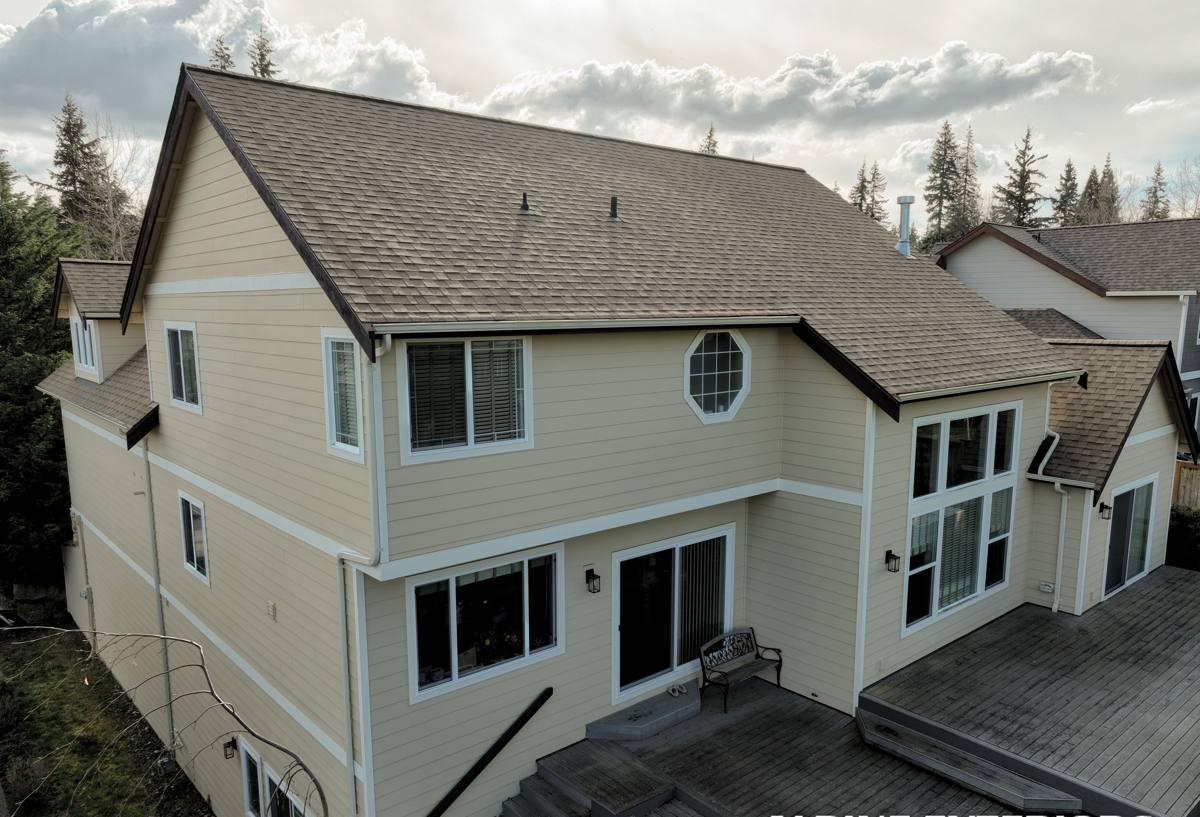
Why Roofs Wear Out Faster Here Than the Brochure Says
Salt Air and Metal Components
Everett's location on Puget Sound means airborne salt reaches roofs closer to the water more than homeowners expect, even a few miles inland. Salt accelerates corrosion on exposed fasteners, flashing, and any unprotected metal edge. Over time, that shows up as rust streaking, loosened fasteners, and flashing that fails before the shingles around it do.
Driving Rain and Wind-Driven Water
Storms here don't always come straight down. Wind-driven rain pushes water sideways and upward under shingle tabs, around vents, and into any seam that wasn't sealed with that kind of weather in mind. A roof that would perform fine in a drier climate can leak here simply because it wasn't detailed for horizontal rain.
Moss and Tree Cover
Riverside's tree canopy is a mixed blessing — great for shade and character, tough on roofs. Moss and algae thrive in the shaded, damp conditions under a full canopy, and once moss gets established on asphalt shingles, it lifts the tabs, holds moisture against the roof deck, and speeds up granule loss. A roof that looks fine from the ground can already have moss working underneath the surface layer.
Signs a Roof Needs Replacement, Not Another Repair
Not every roof problem calls for a full tear-off, but there's a point where patching becomes a waste of money. Homeowners in Riverside should watch for:
- Granules collecting in gutters or at downspout outlets in large amounts
- Shingles that are cupping, curling, or cracking, especially on south- and west-facing slopes
- Moss or algae streaking across more than a small section of the roof
- Soft spots in the decking felt when walking the roof, or sagging visible from the ground
- Daylight visible through the attic roof boards, or damp insulation after a storm
- Repeated flashing leaks around chimneys, skylights, or vent pipes despite prior repairs
- A roof that's already had two or more patch repairs in the last few years
If a roof is showing two or more of these at once, that's usually the signal that the underlying materials are failing system-wide, not just at one weak point.
What a Correct Replacement Actually Involves
A roof replacement done right is a system, not a single product. Skipping any one of these steps is where most premature failures in this climate come from.
Full Tear-Off and Deck Inspection
We remove the existing roofing down to the deck rather than layering over it. That's the only way to find soft or rotted decking — common under long-standing moss growth or old flashing leaks — and replace it before it's covered up again.
Underlayment Built for Wind-Driven Rain
Given how much of Snohomish County's rain arrives at an angle, we use underlayment and ice-and-water membrane at eaves, valleys, and penetrations sized for that reality, not just the local building code minimum.
Flashing and Metal Details
Every chimney, skylight, sidewall, and vent penetration gets new flashing, correctly lapped so water sheds outward at every layer. This is the single most common source of leaks on an otherwise sound roof, and it's where salt-air corrosion does the most damage over time.
Ventilation
Balanced intake and exhaust ventilation keeps the attic close to outdoor temperature and moisture levels. Without it, trapped humidity condenses on the underside of the deck, which rots wood from the inside and undermines the new roof from below — regardless of how good the shingles above it are.
Moss-Resistant Strategy
For roofs under heavy tree cover, we talk through options like zinc or copper strip installation at the ridge, which lets rain carry trace metal ions down the roof slope to inhibit regrowth, along with material choices that hold up better to shade and moisture in the first place.
Material Comparison for Riverside's Climate
| Material | Moss Resistance | Salt Air Durability | Typical Lifespan Here |
|---|---|---|---|
| Architectural asphalt shingles | Moderate — improves with algae-resistant granules | Good with properly rated fasteners and flashing | 20-25 years |
| Standing seam metal | Strong — sheds moisture quickly, little surface for moss to grip | Very good with coastal-rated coatings and fasteners | 40-50 years |
| Composite/synthetic shakes | Good — resists moisture absorption better than wood | Good | 30-40 years |
| Wood shake | Poor without frequent maintenance in shaded, damp areas | Fair — needs regular treatment | 15-25 years, shorter under heavy tree cover |
There's no universal right answer — a sun-exposed roof and a heavily shaded one under mature trees a few streets apart can reasonably call for different materials. We walk through the trade-offs for your specific lot rather than defaulting to one product for every job.
Our Replacement Process
- On-site inspection — we walk the roof and attic, check the deck, flashing, and ventilation, and take photos of anything you should see before we start.
- Written estimate — a clear scope of work and pricing, with material options explained in plain terms, not just a single number.
- Scheduling around weather — we plan tear-off days around the forecast so your home is never left exposed longer than necessary.
- Tear-off and deck repair — full removal of the old roof, with any damaged decking replaced before anything new goes down.
- Underlayment, flashing, and ventilation installed — the parts that determine whether the roof actually performs in this climate.
- Final material installation — shingles, metal panels, or composite material installed to manufacturer specification.
- Cleanup and final walkthrough — magnetic sweep for stray fasteners, debris hauled off, and a walkthrough so you know exactly what was done.
Cost Factors Homeowners Should Understand
Every roof is different, so we won't quote a number without seeing the job, but a few factors consistently move the price:
- Roof pitch and accessibility — steep or multi-story roofs take longer and require more safety setup
- Deck condition — hidden rot found during tear-off adds material and labor to replace it properly
- Material choice — asphalt, metal, and composite options carry different upfront costs and lifespans
- Number of penetrations — chimneys, skylights, and multiple vents each add flashing work
- Tear-off layers — removing multiple old roofing layers takes more labor than a single-layer tear-off
We break these out in the estimate so you can see exactly what's driving the cost, rather than one lump sum with no explanation.
Why It Matters to Hire a Crew That Already Works Riverside
A roofer who works this specific area regularly already knows how the tree canopy along the river affects moss growth on different roof orientations, how far salt air reaches into this part of Everett, and how Snohomish County permitting and inspection typically go for a residential re-roof. That familiarity shows up in fewer surprises during the job and a roof detailed for the conditions it will actually face, not a generic install pulled from a manual written for a different climate.
It also matters for warranty follow-through. A local, established crew is the one you can actually reach in five or ten years if a flashing detail needs a second look — not a name that only shows up during storm season and is gone by the time an issue surfaces.
Ready to Talk About Your Roof?
If your Riverside roof is showing its age, or you just want an honest read on how much life it has left, we're happy to take a look. We'll give you a straightforward assessment, walk you through material options suited to this climate, and provide a free, no-pressure estimate — no obligation, just a clear picture of where things stand. The form below is the easiest way to get started.