 Everett
 Why Decks Wear Out Faster in Silver Lake
Silver Lake sits in south Everett, and the neighborhood's namesake lake, along with the mature trees that ring much of it, shapes what a deck out here actually has to put up with. Homes near the water and under heavy tree cover deal with more sustained dampness than a lot on an open, sunny block a few miles away, and that dampness doesn't let up for long stretches of the year in this part of Snohomish County. Add in the salt-tinged air that moves inland off Puget Sound on a regular basis, driving rain that comes through sideways during storms, and a moss season that can run most of the year on a shaded surface, and you have a set of conditions that ages an outdoor deck faster than most homeowners expect when they first build.
A deck replacement done right for a Silver Lake property is not just about tearing off old boards and nailing down new ones. It is about recognizing why the original deck failed, usually moisture, corrosion, or both, and building the replacement so it does not fail the same way on the same timeline. This page covers what actually wears a deck down in this neighborhood, how to tell when replacement is the right call instead of another round of repairs, what a correct replacement involves, and why a crew that already works Silver Lake gets those details right the first time.
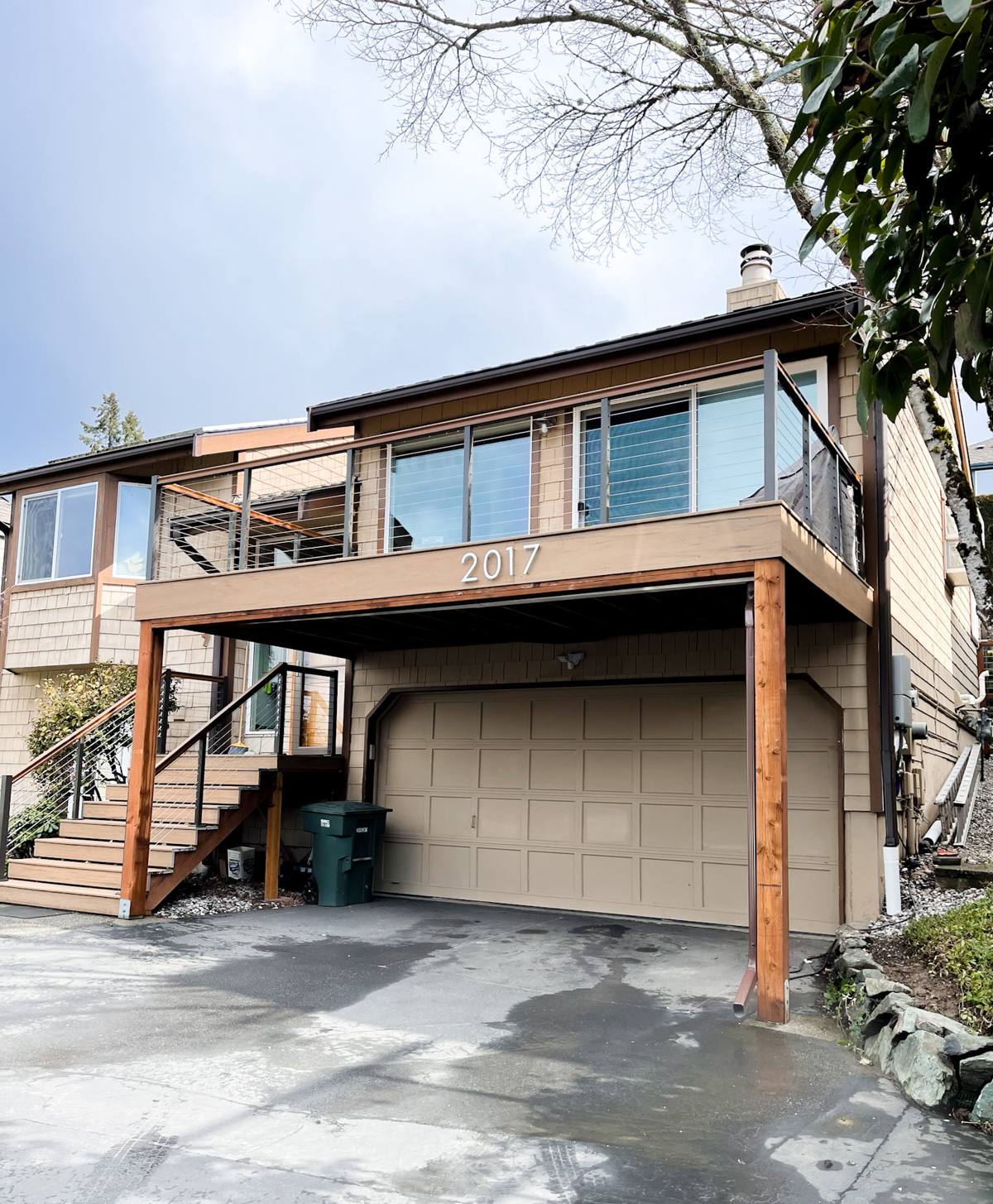
Signs Your Deck Has Reached Replacement, Not Repair
Every deck reaches a point where patching individual problems stops making sense, and figuring out where that line sits is the real first step, not just picking a decking material. A few signs tend to show up consistently on decks in this neighborhood once they are past the point of a worthwhile repair.
Structural Signs Worth Acting On
Soft or spongy spots in the decking surface, especially near the ledger board where the deck attaches to the house, usually point to rot that has already spread into the framing underneath. A railing that flexes noticeably, support posts that have shifted or settled, or joist hangers showing heavy rust are all signs the structure itself, not just the surface, has been compromised. None of these get better with another coat of sealant.
Cosmetic Wear That Does Not Mean Replacement
Grayed wood, a faded composite surface, or moss on the boards themselves is usually cosmetic and does not automatically mean the deck needs to come out. Cleaning, refinishing, or replacing a handful of boards can handle that without touching the substructure, provided the framing underneath is still sound. The honest read on which category a deck falls into is worth getting from an actual inspection rather than a guess from the surface.
Age and Original Build Quality
Decks built more than fifteen to twenty years ago in this area were often framed to standards that have since changed, with fastener grades and flashing details that do not hold up as well against sustained moisture as current practice calls for. A deck that has been repaired repeatedly and is now nearing the end of its structural life is often a better candidate for full replacement than another round of targeted fixes, since the same underlying issues tend to keep resurfacing.
What a Correct Deck Replacement Involves
Full Tear-Out and an Honest Look Underneath
A real replacement starts with removing the old decking, railing, and, where needed, the substructure down to the footings, rather than building a new surface over old framing that has not been checked. That tear-out is also when we get the clearest look at what actually failed, whether that is moisture at the ledger connection, undersized or rotted joists, or footings that have settled or shifted, and that information shapes the new build instead of repeating whatever the original deck got wrong.
Framing and Footings Sized for Sustained Moisture
Footings and posts need to be sized and set correctly for the load and for this region's ground moisture, and framing lumber needs to be rated for the sustained exposure a shaded, lake-adjacent lot sees compared to a drier location. Joist spacing gets matched to whatever decking product goes on top rather than a generic layout, since span ratings vary by material.
Fasteners and Hardware That Actually Hold Up
Standard fasteners and hangers corrode faster in this climate's combination of sustained moisture and salt-tinged air than most homeowners expect, and a fastener losing holding strength does not always show on the surface before it becomes a problem. We use stainless steel or coastal-grade hardware throughout a replacement, along with hidden fastener systems on the surface where the decking product supports it, which cuts down on exposed metal and gives a cleaner walking surface.
Ledger Flashing and Drainage Details
The ledger connection, where the deck ties into the house, is one of the most common points of moisture failure on the deck being replaced, and it is also one of the easiest to get right the second time with correct flashing. Board gapping, grading underneath the deck, and ventilation all get built in from the start so water has somewhere to go instead of sitting against the framing between storms.
Bringing an Older Deck Up to Current Code
Older decks in this neighborhood were often built to standards that have since been updated, particularly around railing height, guard spacing, and stair requirements. A full replacement is the natural point to bring those details up to current code rather than carrying forward an old design that technically still stands but would not pass inspection today.
Choosing the Right Decking Material for Silver Lake
Material choice matters more here than it would on a dry, open, sun-exposed lot, because shaded and lake-adjacent conditions widen the gap between a well-suited product and a poorly-suited one. The three main categories homeowners weigh are wood, capped composite, and cellular PVC.
Wood
Cedar and pressure-treated lumber remain a popular choice for their look and lower upfront cost, but both need regular sealing or staining to hold up against sustained shade and moisture, and both show moss and graying faster on a shaded Silver Lake lot than they would somewhere sunnier and more open.
Capped Composite
Capped composite boards use a plastic shell around a wood-fiber core, which resists moisture absorption and moss growth far better than wood or uncapped composite. On a shaded, damp lot, that cap layer is doing real work rather than just adding a sales pitch. It is the difference between occasional washing and an ongoing sealing schedule.
Cellular PVC
PVC decking has no wood fiber at all, so it does not absorb moisture the way even capped composite can at cut edges or fastener holes. It costs more and can flex a bit more under heavy point loads, but for a deck that sits in heavy shade most of the day, some homeowners find the extra moisture resistance worth it.
| Material | Moisture & Moss Resistance | Handling Salt-Tinged Air | Upkeep |
|---|---|---|---|
| Cellular PVC | Excellent — no wood fiber to absorb moisture | Excellent | Occasional washing |
| Capped composite | Strong — cap layer resists moisture and moss | Strong | Occasional washing |
| Uncapped composite | Moderate — some absorption at exposed fiber | Moderate | Periodic cleaning |
| Cedar | Moderate — needs sealing to resist shaded moisture | Moderate | Regular oiling or sealing |
| Pressure-treated wood | Weak without regular treatment | Weak over time | Regular sealing or staining |
Design Considerations for Silver Lake Lots
Beyond material, a few site-specific questions are worth working through before the build starts. Tree cover affects which decking colors and finishes will hold up best against moss and staining, since a deck shaded most of the day needs different priorities than one that gets regular sun. Grade and drainage around the house affect how water moves once it leaves the deck, especially on lots that slope toward the lake or a greenbelt. Proximity to mature trees also affects how much debris, needles, leaves, seed pods, collects between boards, and how often that needs clearing to keep drainage working the way it was designed to.
How Our Deck Replacement Process Works
We start with a site visit to assess the existing deck's condition, probing for soft spots, checking the ledger connection and footings, and getting a sense of how shade, drainage, and grade are affecting this specific lot. From there we walk through decking material options that fit the budget and how the space actually gets used, and pull the necessary permit before any tear-out begins.
Once permitted, the sequence follows what is outlined above: full tear-out, footing and framing work sized for the site's actual exposure, then decking, railing, and any stairs or trim. We finish with a walkthrough covering what the specific material you chose needs going forward, which for most modern decking is minimal, but not nothing.
Keeping a New Deck Looking Right in This Climate
- Rinse the deck surface periodically to clear moss spores, pollen, and organic buildup before it works into the material
- Keep gaps between boards clear of leaves and debris, especially under mature trees, so water and airflow can move through as designed
- Check railing posts and visible hardware once a year for early corrosion or looseness, particularly heading into the wet season
- Trim back branches or landscaping that overhang the deck or block sun and airflow across shaded sections
- Address any soft framing or standing water underneath right away — that is a structural issue, not a cosmetic one
- Reseal or refinish wood decking on a regular schedule, since shade and moisture here shorten the interval compared to a sunnier lot
Why It Matters That We Already Work Silver Lake
A crew that mostly builds decks in drier, more open parts of the county can still put one together competently, but a Silver Lake replacement has variables that come up more often on a shaded, lake-adjacent lot than elsewhere in Everett: moss pressure that runs longer under tree cover, drainage details tied to grade near the lake and surrounding greenbelts, and corrosion-grade fastener requirements from this region's moisture and salt-tinged air working together rather than one or the other alone. Working this neighborhood regularly means we are not guessing at those requirements on your project. We have seen which decking materials actually hold up against a shaded Silver Lake lot's specific mix of moisture and moss, and which framing and fastener details are worth the extra attention rather than an upsell.
That familiarity also shows up in smaller judgment calls, like how to orient a deck around the trees a particular lot already has, or being straightforward about what a replacement here realistically needs to last versus what is just an extra line item.
Get a Straight Answer About Your Deck
Whether your current deck has an obvious problem or you are just not sure if repair or replacement is the right call, we are glad to walk the site and lay out the options honestly, including if the answer is that repair is enough for now. Reach out below for a free, no-pressure estimate.